1. Understanding The Chasm
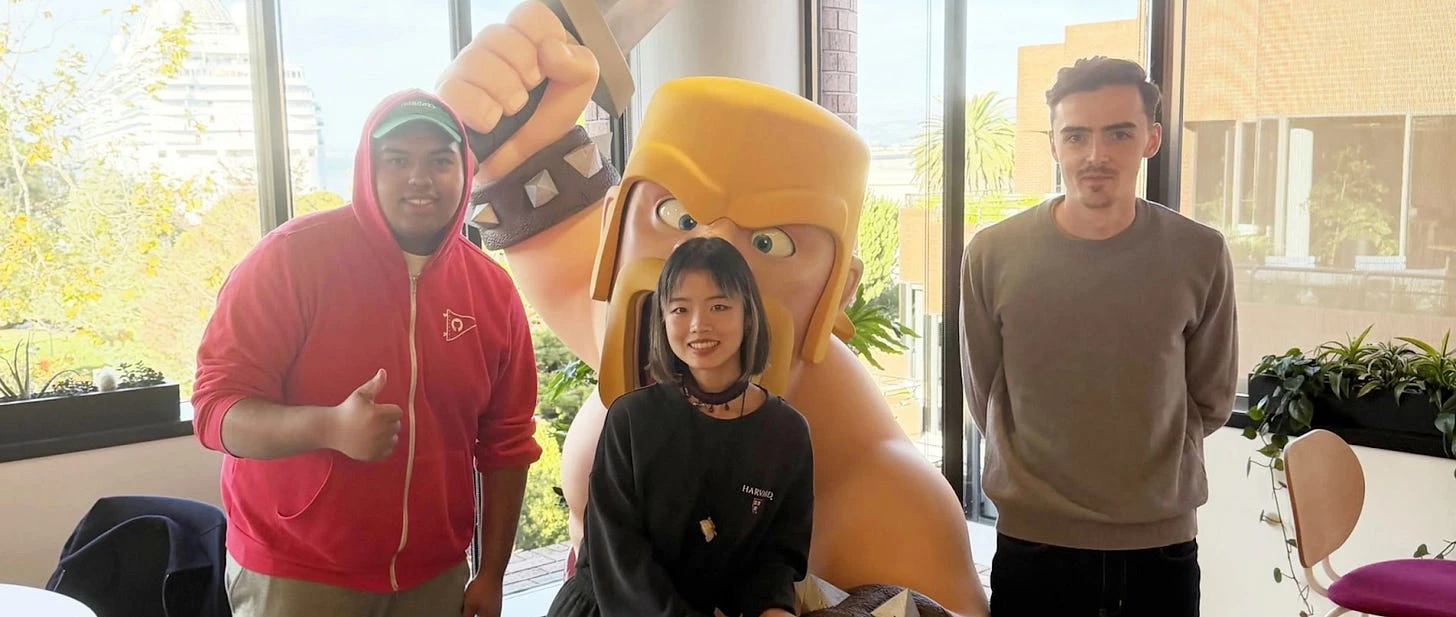
My need to dig into this topic started with Rémi Kaito’s success at the Supercell gaming hackathon in San Francisco. In less than 48 hours he and his team built an environment generator that cleverly combined several AI technologies to create an AI Gaussian Splatting world generator for video games. In other words, their project called 🌎Venture could take a text prompt and produce an explorable 3D world with a voice narrator and some puzzles in about 25 minutes of computing. Obviously, nothing could run safely in a production environment. Hackathons are laboratories for boldness and creativity, not commercial code. And this time, Rémi, Jessy Tang, and Carlos D. Mejia pulled off enough boldness and creativity to take the title.
As a tech enthusiast (or, as some would call it, a nerd), I was initially going to frame this essay as a straightforward overview of how AI will revolutionize the gaming industry from a purely technical angle. Then I realized the dangerous growing chasm that separates the excitement of people working in AI and the fear and hostility within the industry, and decided to get to the bottom of it.
During my research, some of the people I spoke with agreed to talk only on the condition of remaining anonymous, convinced that their views are seen as so controversial they could harm their careers, even though you should lower your expectations for sensationalism: What follows is not a series of dramatic claims. But the simple thought of generating even a single animation or still image with AI can end up in a PR shitstorm.
Anyway, I did my best to give a fair representation of all points of view, while adding my own at the end.
TL;DR
-
The gaming industry faces a major disconnect between public outcry against AI and widespread private adoption. While studios face backlash, most companies are quietly integrating AI tools throughout their production pipelines.
-
Chinese studios are completely uninhibited in adopting AI, creating competitive pressure on Western developers who must balance innovation with PR risks.
-
AI for productivity tasks such as coding and project management is widely accepted, but AI touching player-facing content like art or voices triggers immediate controversy.
-
Independent developers are caught in an economic bind. Some report creative candidates declining once AI policies are disclosed, yet financial survival may require AI adoption.
-
This mirrors historical technology adoption cycles. Photography did not kill painting and Photoshop did not eliminate photographers, and AI will ultimately democratize game creation rather than destroy it.
-
Game design remains fundamentally human centered because AI cannot experience games the way humans do. It lacks the emotional, physical, and experiential understanding that drives great game design.
2. Public Outcry, Private Adoption
When AI in Video Game Was Cool
Since its creation, the industry has wrongly used the term “AI” to describe the behavior of the NPCs. In reality, it always has been scripts, state machines, behavior trees, pathfinding, or tuning of fixed heuristics meant to give a sense of intelligence in the NPC you played against or with. Even games like Half-Life, F.E.A.R. or Red Dead Redemption 2 where the so-called “AI” blew people’s minds at the time were just a better mix of these techniques than the competition.
The term was synonymous with progress and for decades, every game studio did its best to get as close to what we have access now. I believe the only use of proper AI running in games until this day is Creatures released in 1996 which used real-time AI in its gameplay loop. Yep, 1996. The character under the player’s supervision called Norn (chaotically) behaved independently thanks to a self-organizing neural network (~952 neurons, 5,000 connections) divided into specialized “lobes” (brain areas) dedicated to perception, decision, attention, drives (hunger, fear, etc.), and more.
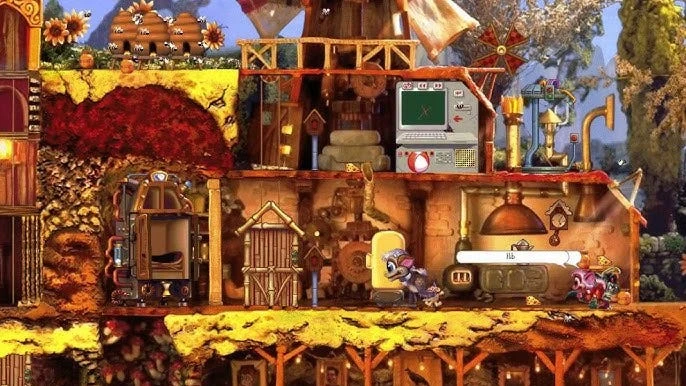
There was nothing but fascination and excitement at the time, the Norn was a super Tamagotchi, and the Creature’s developers were seen as innovators and not gravediggers stealing people’s jobs.
Of course, the AI we talk about today is very different. It will certainly bring new sources of innovation to games by improving or even creating new genres. But it has also become a commoditized tool based on stolen data and built by external mega-corporations, meant primarily to disrupt production pipelines and perceived as replacing human roles with a stream of tokens.
Uproar In The Industry
Before embarking on this, I was already aware of how negative the reaction to AI can be in a video-game context, especially in large productions where scandals keep emerging as generated content appears, intentionally or not, inside games, and nobody is spared.
One of the most impressive games of the year, ARC Raiders, released by an underdog company called Embark Studios, instantly stole the spotlight. The game is a remarkable achievement on every level: stunning visuals, immersive and iconic sound design, perfectly balanced mechanics, and an Unreal Engine 5 optimization that makes much of the industry look amateur.
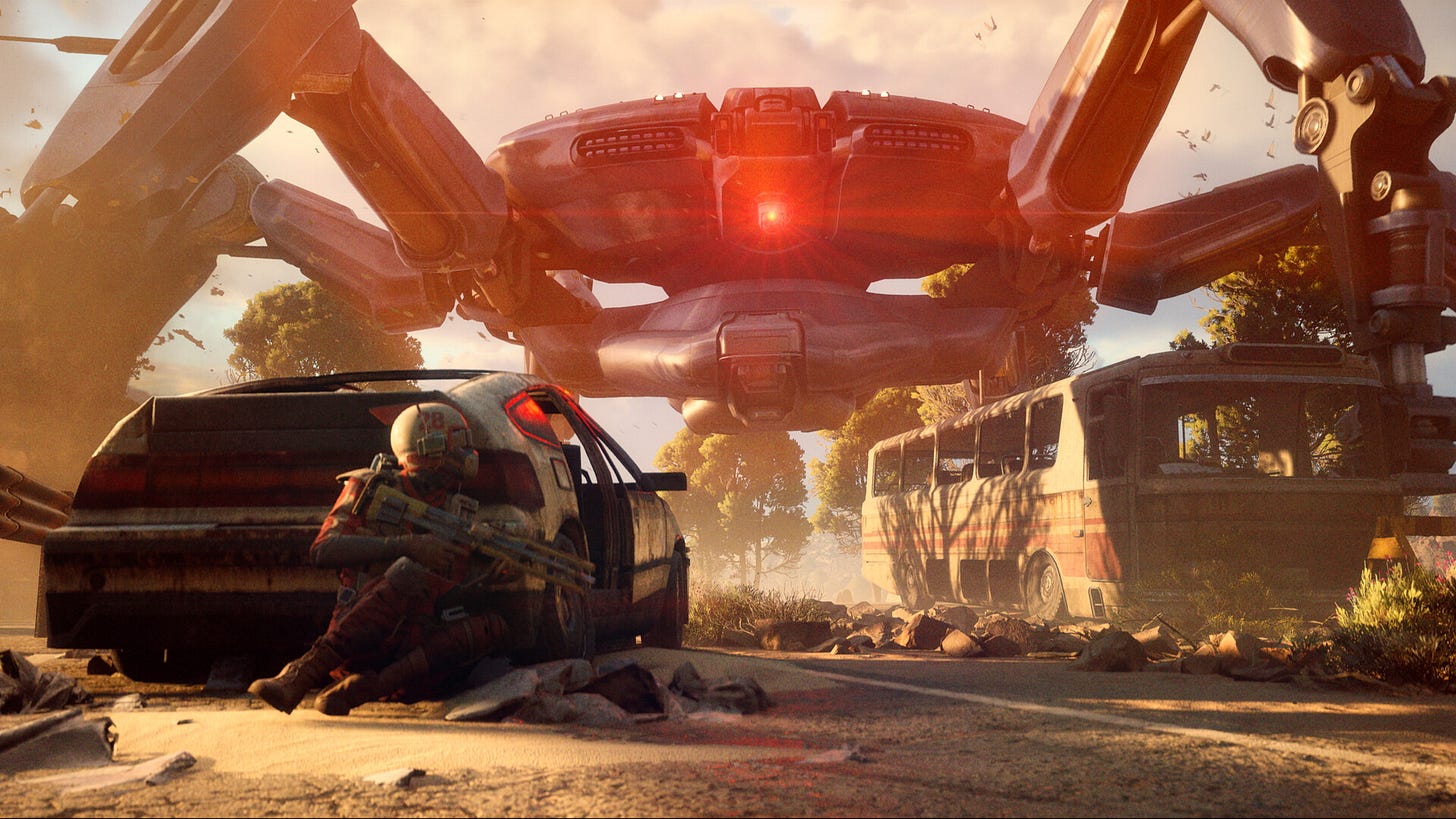
With a level of openness rare in the ecosystem, Embark Studios even open sourced several libraries and were unusually transparent about their use of AI in two key areas. First, the animation of the giant robotic spiders, driven by reinforcement learning, which they detailed in a solid Medium post. Second, the use of Text-to-Speech (TTS) for the non-playable-characters (NPC) voices. While the machine learning components raised some concerns, it was the AI voices that drew most of the outrage.
Some reviews and comments started to argue that an ethical line had been crossed, despite the fact that Embark did everything by the book. They worked with contracted actors and justified their choice TTS for practical reasons, allowing them to iterate quickly on missions and adjust the rare NPC dialogues throughout development with consistency. It’s worth noting that ARC Raiders is a multiplayer action game against drones where the NPCs’ voices represent a tiny part of the overall atmosphere.
Adding to the confusion, the use of reinforcement learning for the spiders’ motion led some players to believe the exceptional behavior of drones were controlled with Gen-AI with continual learning, which I personally think would be awesome. Shams Jorjani, CEO of a well-known studio, Arrowhead, came to Embark’s defense, stating “that people jump to extreme takes” and ARC Raider is “a very interesting use case that actually makes gaming better.”
Anyway, this anti-AI reaction didn’t seem to affect the commercial outcome much. Embark Studios has sold 4 million copies of ARC Raiders in two weeks, and rapidly eclipsed Battlefield 6 with almost half a million concurrent players every weekend since.
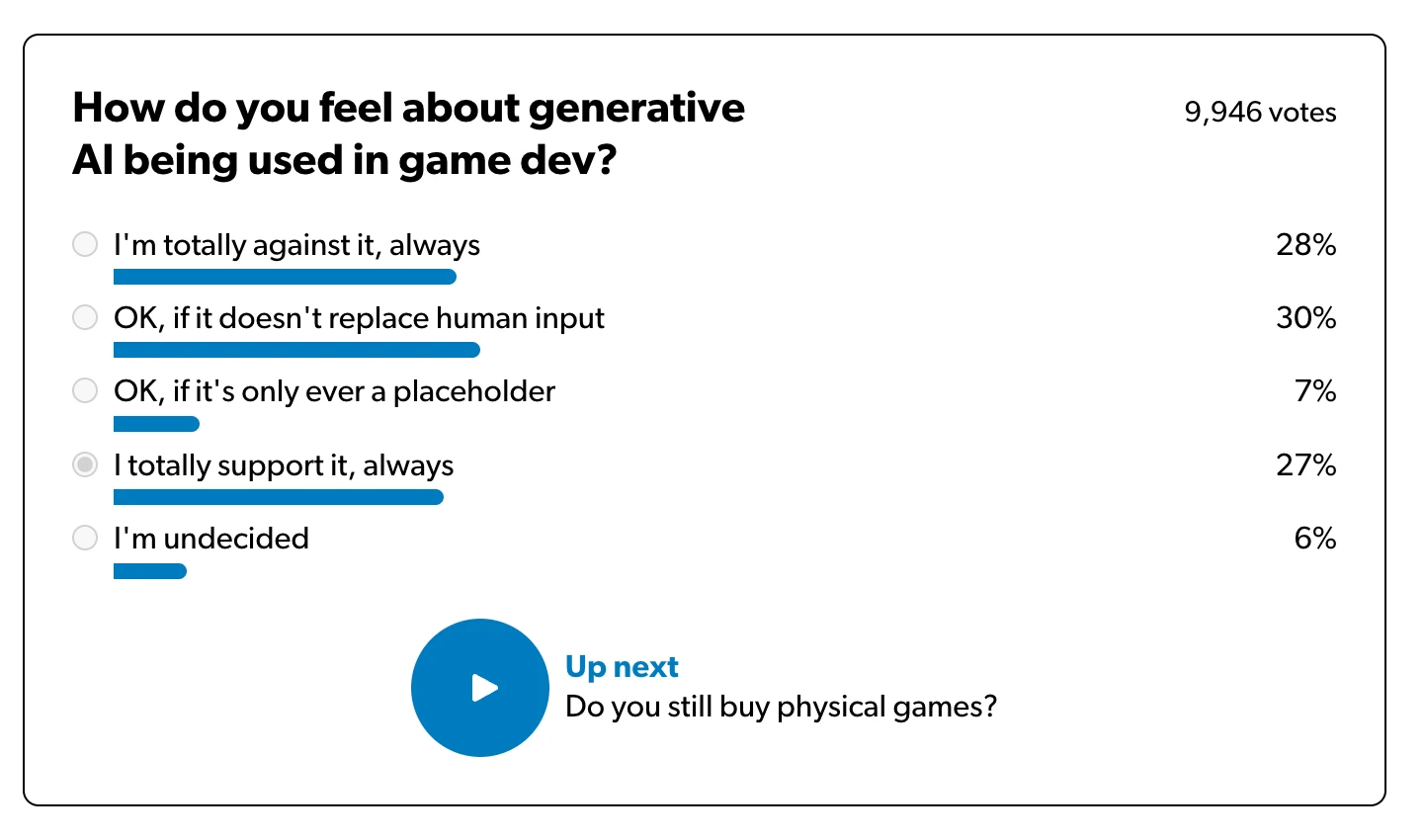
The Credibility Crisis
Reception is even worse when undisclosed AI-generated content is spotted by players after the launch. Take The Alters, or Anno 117 a few days ago, caught with illustrations or textures obviously generated with AI, both followed by the now-standard excuse that it is a forgotten placeholder that should’ve been replaced during the development.
And this is likely true, as Thomas Altenburger, a French indie game developer, explains on Bluesky: “This is real. You can assume that 100% of shipped games have a placeholder that slipped in. That’s how things go. Games take years to make, as vigilant as you’re trying to be, people forgot, shit happens, and things backfire. Been there, done that. Gen-AI sure makes this more probable to happen.”
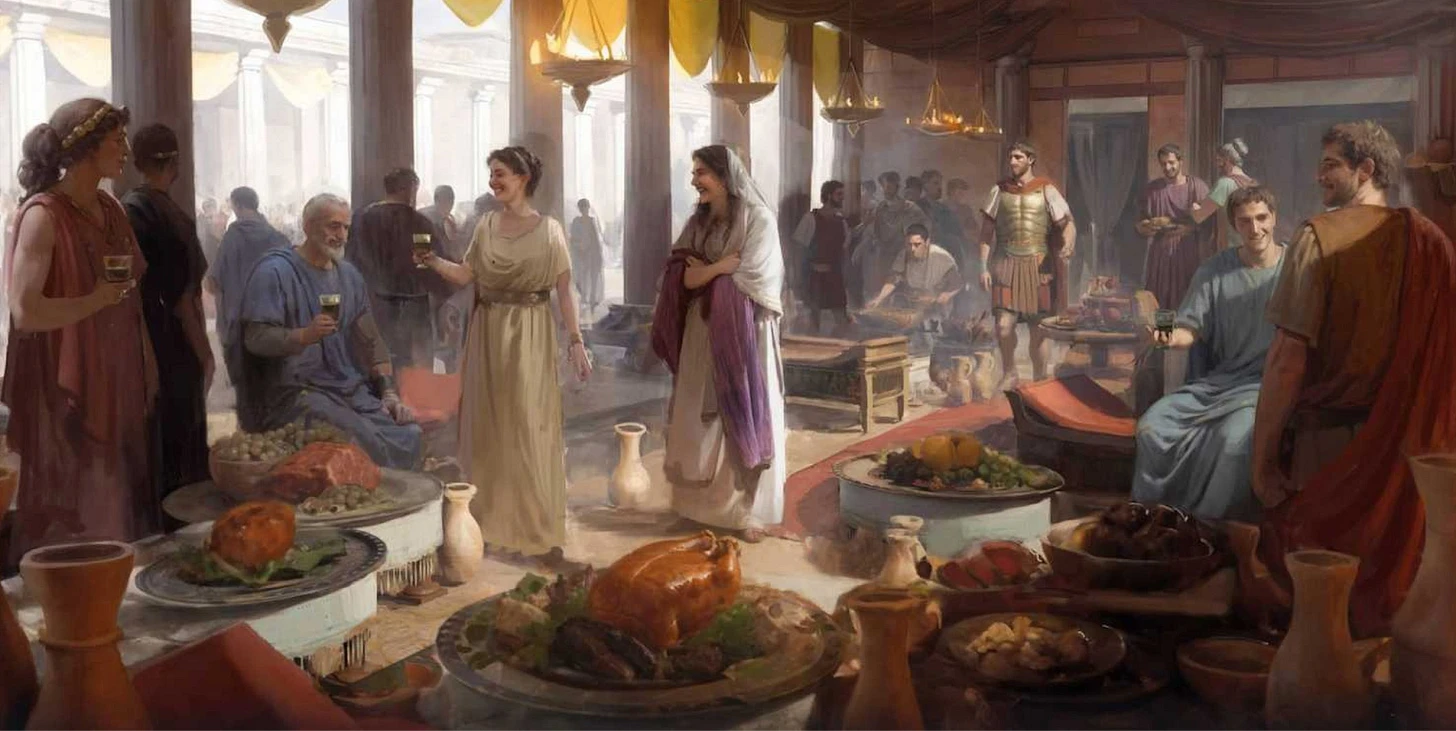
But some remain deeply skeptical, which fuels a growing sense of distrust. Katya Ryabova, a passionate freelancer from Ontario, voiced it in a Substack rant. “These were placeholders, they said. No one was supposed to see it, they said. We were pressed for time, they said. The usual bullshit.” She’s calling for a boycott of products and companies using Gen-AI without disclosure, while admitting she’s selective since it’s everywhere, including in her favorite game.
The game in question is Clair Obscur Expedition 33, the game of the year, celebrated for its artistic style, was caught using an AI-generated placeholder, fixed swiftly after being noticed by players. Ryabova wrote “I cannot find it in me to boycott Clair Obscur. Practically, yes, I’ve already bought the game, played the game, loved the game, and wrote about the game. I do so want to give Sandfall the benefit of the doubt. I want to believe that they’re different, they’re the good guys.”
The one who best embodies this hostility is Luke Plunkett on his website Aftermath, speaking about Anno 117: “The presence of this stuff inside a game (and in such an obvious case) sends a very clear message to your fans and customers that you do not give a shit. You don’t care that this technology is threatening art jobs (and beyond), that it’s dehumanising the medium, that it’s creating slop that makes your own product look like garbage.”
The Business Imperative
Players and journalists may complain, but AI is advancing everywhere, even if not everyone is adopting it at the same pace.
During my research, I’ve had the chance to speak with a video game executive who prefers to remain anonymous. Let’s call him Brian. Brian has spent his entire career in the industry, working for three major publishers across the U.S., Europe and China, the last one being unsurprisingly the leader on the topic. “Clearly China, and Asia in general, is completely uninhibited about this. I spent months on production floors there. They have zero hesitation when it comes to using models, and they invest massively. Some of their models are public, but they also gave our R&D teams access to others they’ve never talked about publicly.”
This contrasts with Europe, where resistance is strong. “It’s a very sensitive topic, and highly dangerous from a managerial standpoint to even bring it up,” the head of an independent French studio told me off the record. Even in the United States, the current leader of the AI revolution, the use of generative models still triggers periodic PR backlash, hostile game reviews, angry tweets, and has now become part of the public debate.
As AI begins to affect jobs at scale, the topic has naturally turned political in the US. Congressman Ro Khanna spoke out a few days ago against Activision for its use of generative AI in the latest Call of Duty. “We need regulations that prevent companies from using AI to eliminate jobs to extract greater profits. Artists at these companies need to have a say in how AI is deployed. They should share in the profits. And there should be a tax on mass displacement.”
Facing Chinese competitors fully committed to AI like Tencent, Electronic Arts sees AI adoption as existential and is aggressively pushing its nearly 15,000 employees to use it. The strategy is becoming increasingly divisive internally. Many employees report heavier workloads and pressure to train AIs on their own creative output, which they believe could ultimately replace them. The gap between enthusiastic leadership and wary staff clearly reflects a misalignment of interests between the two sides, and has led to morale issues and bad publicity.
For Brian, that’s just the surface. AI is already everywhere in the production pipeline. He explained that not everyone is hostile, or at least that radical. He has some teams fully comfortable with AI and that rely on it to build prototypes quickly, if not more. “And these are real creators through and through. They’ve fully embraced it. They’re not afraid. They use every tool they can find and try everything because they’re not worried about losing their position. They’re confident in their skills and use AI to make themselves even better.”
And this claim can’t be overstated: if the current AI models can help novices to create bits of code, random assets and visuals, they become lethal in the hands of experienced engineers and artists once mastered.
A Discreet But Quick Adoption
Emmanuel de Maistre has built Scenario on this thesis. His platform already empowers artists in the creative industry by providing an actionable AI pipeline for non-technical profiles, giving users access to more than 150 foundation models across image, video, 3D, editing and sound. The level of granularity in the solution, covering design, workflow, legal considerations and operations, reflects the industry’s evolving maturity.
Since the official launch of Scenario at the Game Developer Conference 2023 in San Francisco, the industry has moved from legal fears to quality concerns and now toward mass adoption. Emmanuel confirms Brian’s point that there is a clear gap between public discourse and what is actually happening with clients and in ongoing discussions across the gaming industry, including with teams of hundreds of artists.

Because of copyright risks, traceability has become essential. “They want to be able to go back and say: here’s where we were, what was the previous step, who did it, who prompted it, did they mention Pixar in the prompt?” Emmanuel said, adding that studios are vetting each model carefully to mitigate future legal exposure.
This level of enterprise readiness signals a fundamental transformation, making broad adoption inevitable. “Managers have a responsibility. Not letting teams test, experiment or even talk about it is not doing them a service. Someone who won’t have AI capabilities and skills in the coming years…”
When Players Become the Problem
But Gen-AI can be less polarizing in the industry. For instance when it’s improving its fake counterpart, the in-game AI in charge of the non-playable-characters.
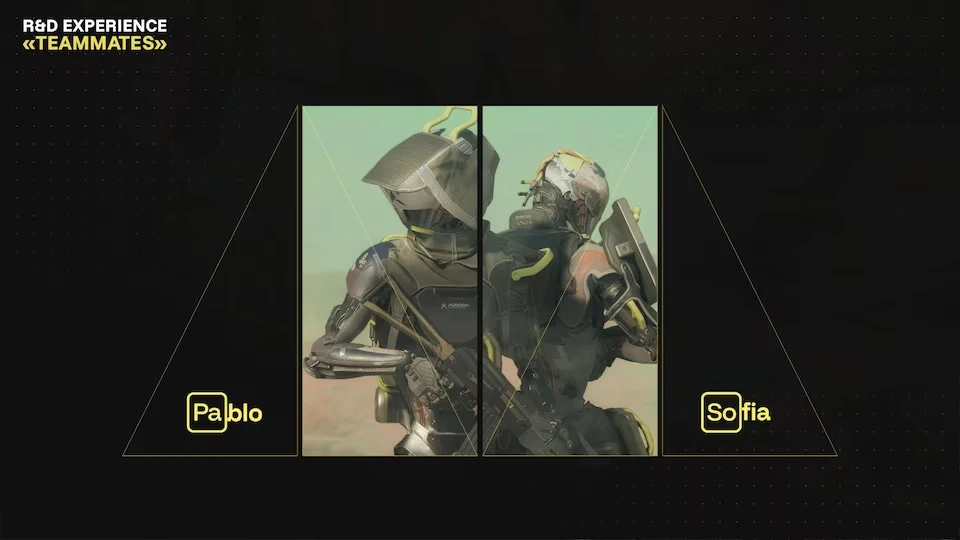
Ubisoft showcased last week their latest innovation called Teammates AI. In the demo titled “Outpost”, language models give life and personalities to your teammates Sofia and Pablo, and bring a different vibe to usually scripted dialogues.
The idea is nothing new. Côme Demarigny is the co-founder and CEO of X&Immersion, and has been working on helping game studios integrate AI since the release of GPT-3, which makes him a precursor in the field. And as an expert, he is well aware of the obstacles involved in putting such innovation, running in a controlled environment, into production.
Gamers instinctively try to break or exploit any interactive system you give them. “It’s called TTP, the time-to-penis,” Côme told me with a mischievous look while twirling his iconic mustache. “It’s how long it takes from the moment a player enters a game to the moment he manages to draw a penis.” I have played long enough to know exactly what he meant. At the first hands-on of the Nintendo DS at E3 2004 with the drawing app, the TTP was probably close to one second. It is usually much longer, of course, but the risk is never zero.

Generative AI pushes this risk to another level. Players can divert a model from its intended purpose, whether for fun or to harm a studio’s reputation with the help of social networks. A model can also drift unintentionally, breaking immersion. And let’s not forget about the cost: millions of players interacting through chat or generating images is something no business model can sustain.
Ubisoft’s impressive demo, for instance, runs on servers, leveraging closed models like GPT or Gemini. This makes it impossible to run locally on the player’s gaming system. And this is exactly what X&Immersion has decided to solve: on-device execution.
During a gathering with indie game creators, Côme showed us a demo of a hostage negotiation with an Evil Queen powered by a mix of an LLM for dialogue and a text-to-speech model with lipsync for immersion. It was a pretty convincing demo, and it ran entirely on the laptop’s computational power, meaning zero server cost for a publisher.
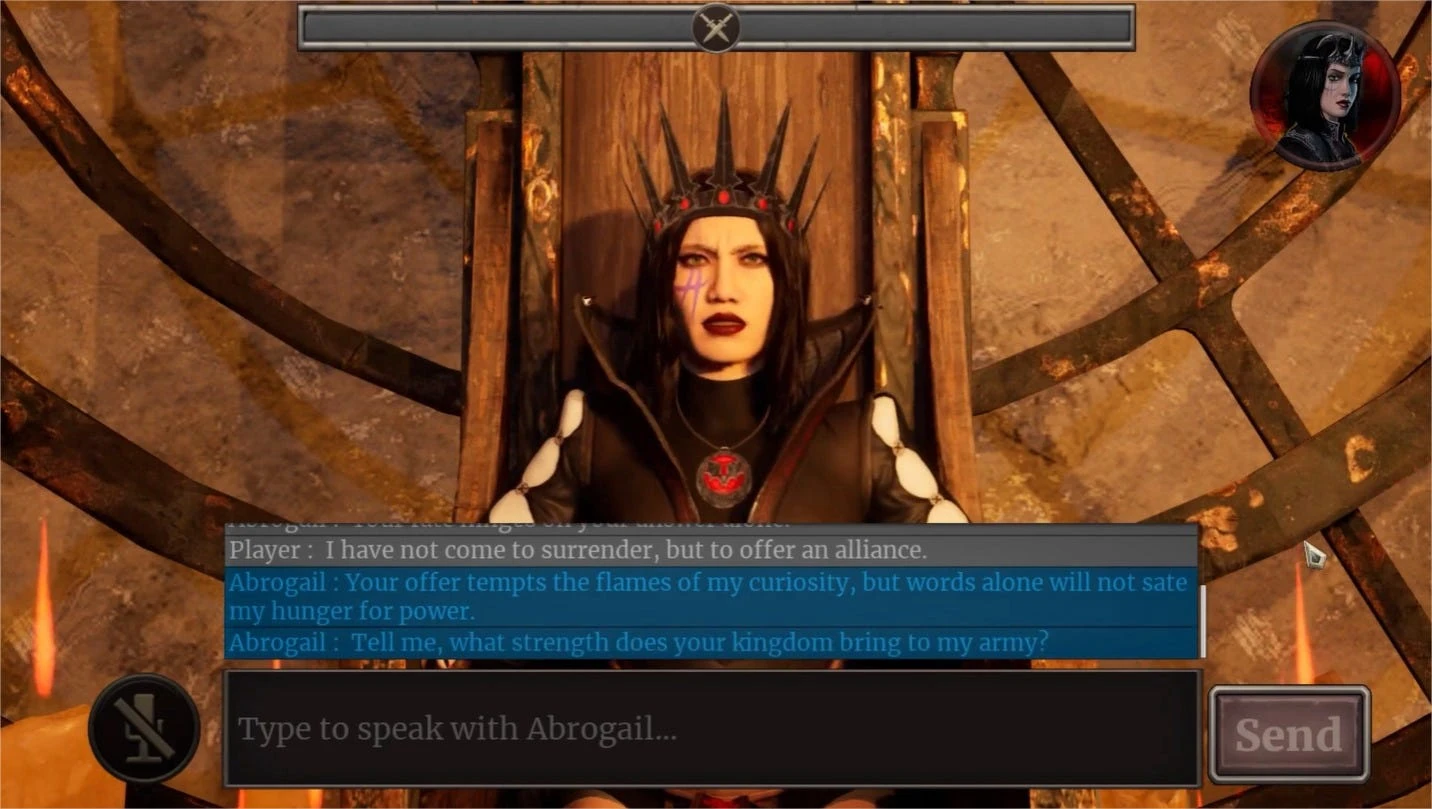
This does not come out of the box. Games are voracious when it comes to CPU, GPU, and VRAM usage. But the reality is usually more subtle, and this is where Côme’s team expertise comes into play. Depending on the game, they adapt the models to rely more on two of those three components, which inevitably affects its capabilities, making the integration highly customized in collaboration with the creative team.
Naturally, with enthusiasm we tried to derail it and find the TTP. We couldn’t push it completely off-topic, but after several attempts we managed to ask random questions within the lore and got the Queen to describe a sword in a context where it made no sense. Don’t get me wrong, this was a great demo, and the strategy we used is probably fixed by now, but it illustrates the intrinsic challenges for the industry when using non-deterministic technology, and why more time and specialists are required.
This is why Côme thinks AAA games (high-budget, high-production-value titles) won’t go full scale on this yet, and why Ubisoft is not giving public access to use it. Too much is at stake. Rockstar already lost millions (estimated between 20 and 50 million dollars) in fines and endured a long lawsuit over sexual in-game content that could be intentionally unlocked. Putting emerging generative tools in players’ hands right now would be suicidal for a big franchise.
For now, Côme and his team focus entirely on creative, immersive experiences aimed at mid-sized studios where the need to stand out is paramount and the reputational risk is far lower.
3. In The Trenches
Voice From The Indies
Independent studios may not have the scale of publishers like Ubisoft or Electronic Arts, but the issue remains the same, balanced between ethical concerns, artistic ambition and productivity pressure. In other words, financial survival.
Corto Laly is the founder of Wild Wits Games, creating titles with a highly refined artistic direction developed over years in close collaboration with artist Antoine Tabouret-Loudeac. His first game, Crown Gambits, is a card game whose core strength includes its distinctive visual identity.
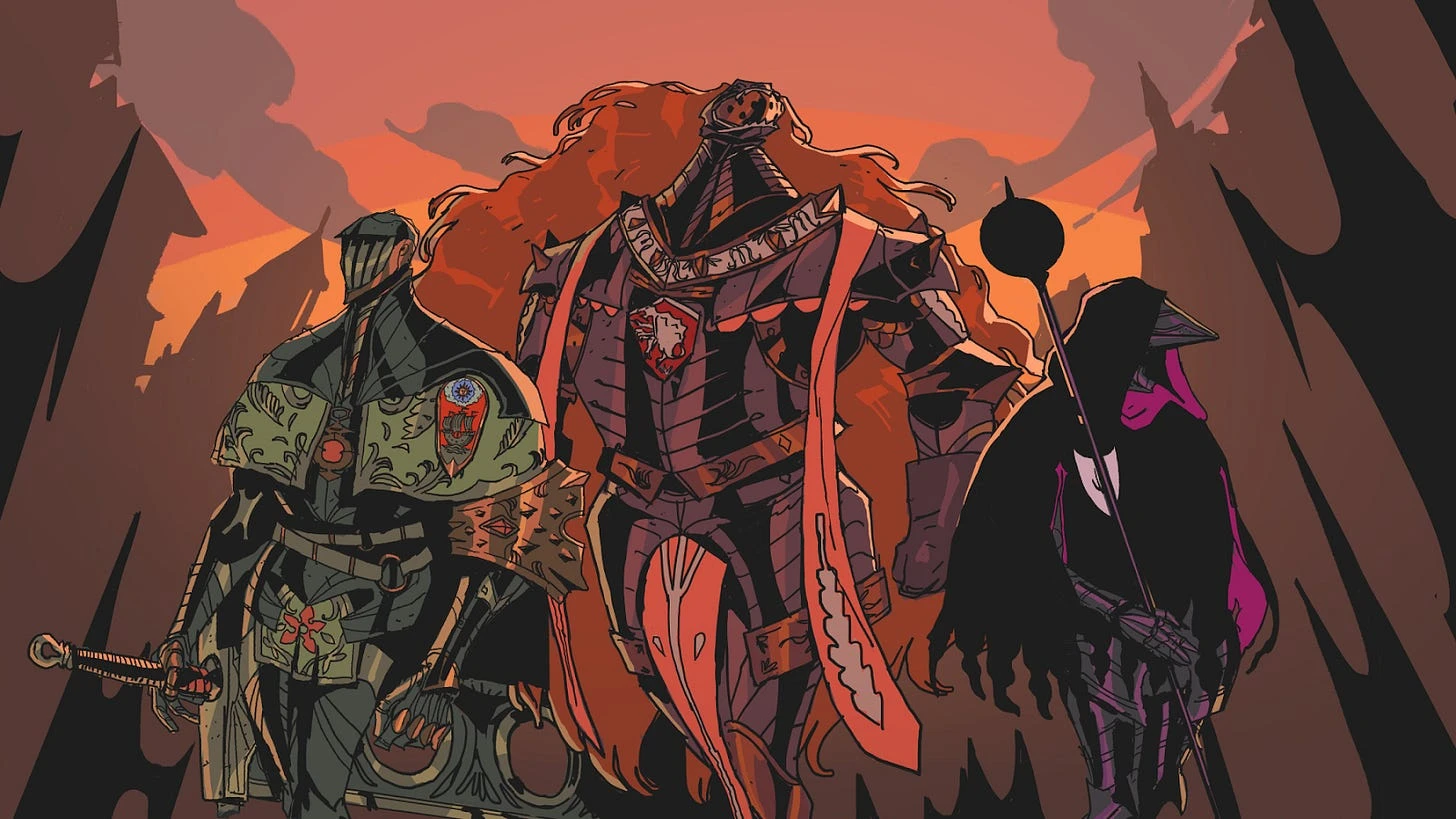
For Crown Gambits, using AI for anything art-related makes no sense and nothing in their pipeline is generated, and each visual is crafted as a tile within a larger piece of artwork. He adds that they do use AI for everyday productivity tasks like anyone else, as well as using completion agents for coding. “If we need to generate a diagram from a plan, we use AI, for instance. Not using AI for project management, that’s clearly stupid.” But his policy is quite explicit. “Nothing (built with AI) should ever reach the player.”
His title’s budget is just under half a million euros, and the art component is the most expensive part of it. Cost-wise, Corto thinks that in the long term “it’s a risk in specific areas such as animation and voice-over. Maybe also for narrative work in terms of execution speed, though not in terms of quality.” But he adds that the real risk is also using it improperly and turning the community against you with sloppy work.
Rémi Malet from Irregular Shapes is nearing completion of his first game, City Tales: Medieval Era, currently in early access on Steam. Development began in 2022 and the team grew to ten people, with a total estimated cost of 1.2 million euros. Aside from using coding agents toward the end of production, 100% of City Tales is hand-made. They almost added some AI-generated elements at the last minute to animate artwork during dialogues, including lipsync but half of the team opposed it, as did the publisher.
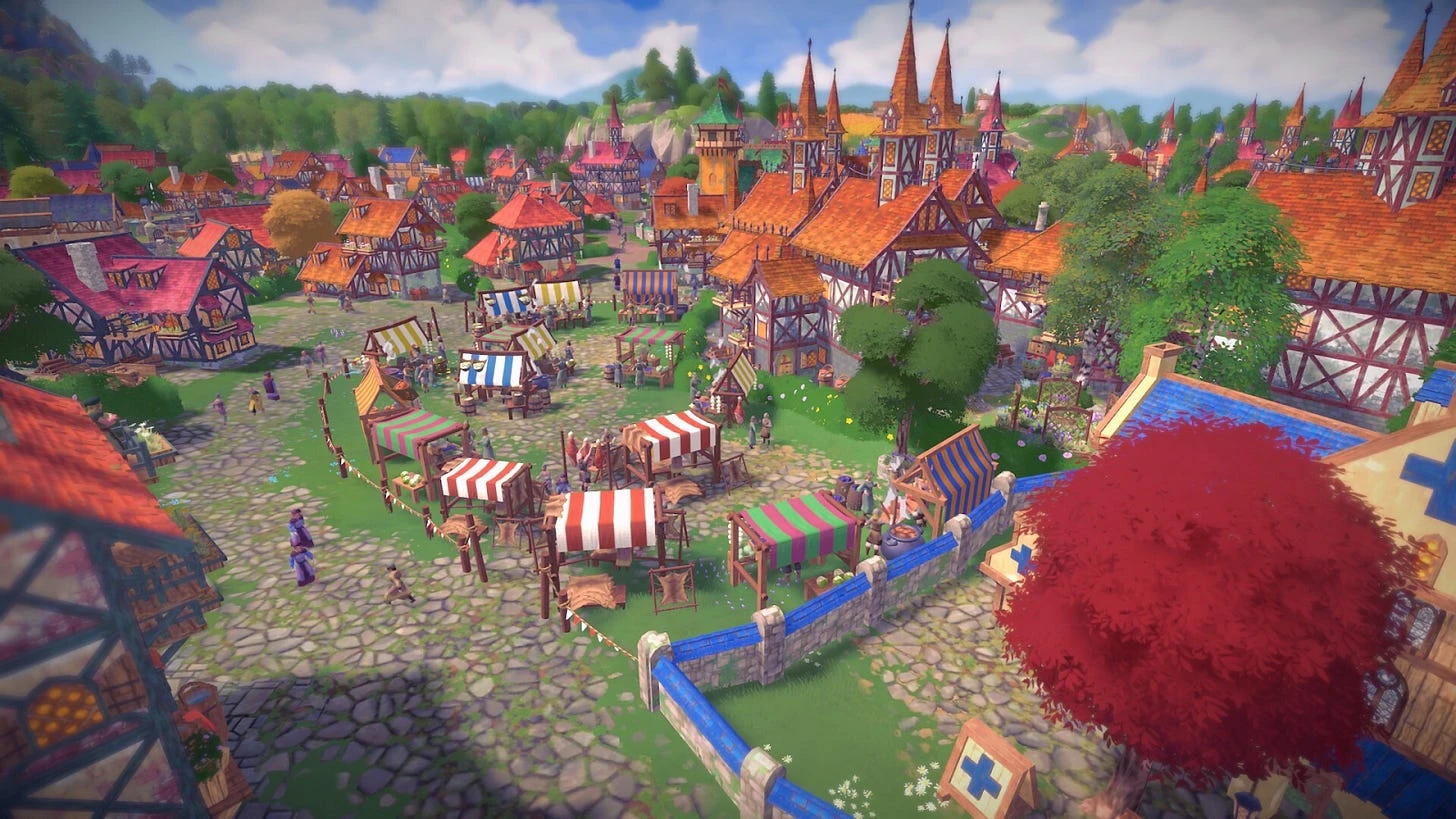
Rémi cannot imagine going through the same production process for the second game he is about to start, especially for economic reasons. “City Tales was an ambitious project. A city builder is a genre that requires you to excel on so many dimensions, and in a niche and crowded market. I’ll hopefully make back half of it. The dream scenario would be to break even. But we’ve learned a lot from it, and our next game will also be a city builder because this is what we love.”
Therefore, AI will play a larger role this time, likely not in player-facing parts, but Rémi does not have to decide yet. “Production will start at the end of 2026. We’ll see. I believe it’s ultimately a matter of timing and I have no doubt AI will be adopted massively.” Irregular Shapes is a tiny structure and could fail if he cannot get the unit economics right for the next production. “Using Gen-AI may not even be a competitive advantage soon, you just don’t want to be the only one not doing it.”
Budget was not the biggest issue for Lucas Bouyoux and Bruno Gregoire from Kafi, who spent the last two years in a tunnel, crafting their title on their own. The Headliners, a co-op horror game, became a hit almost overnight, selling more than 1 million copies in a few months, despite a massive clash with their community when they used a couple of AI-generated images to make funny & fake ads in the game without properly declaring it in Steam’s “AI Generated Content Disclosure.” This traumatizing episode has shaped the development of their second title.
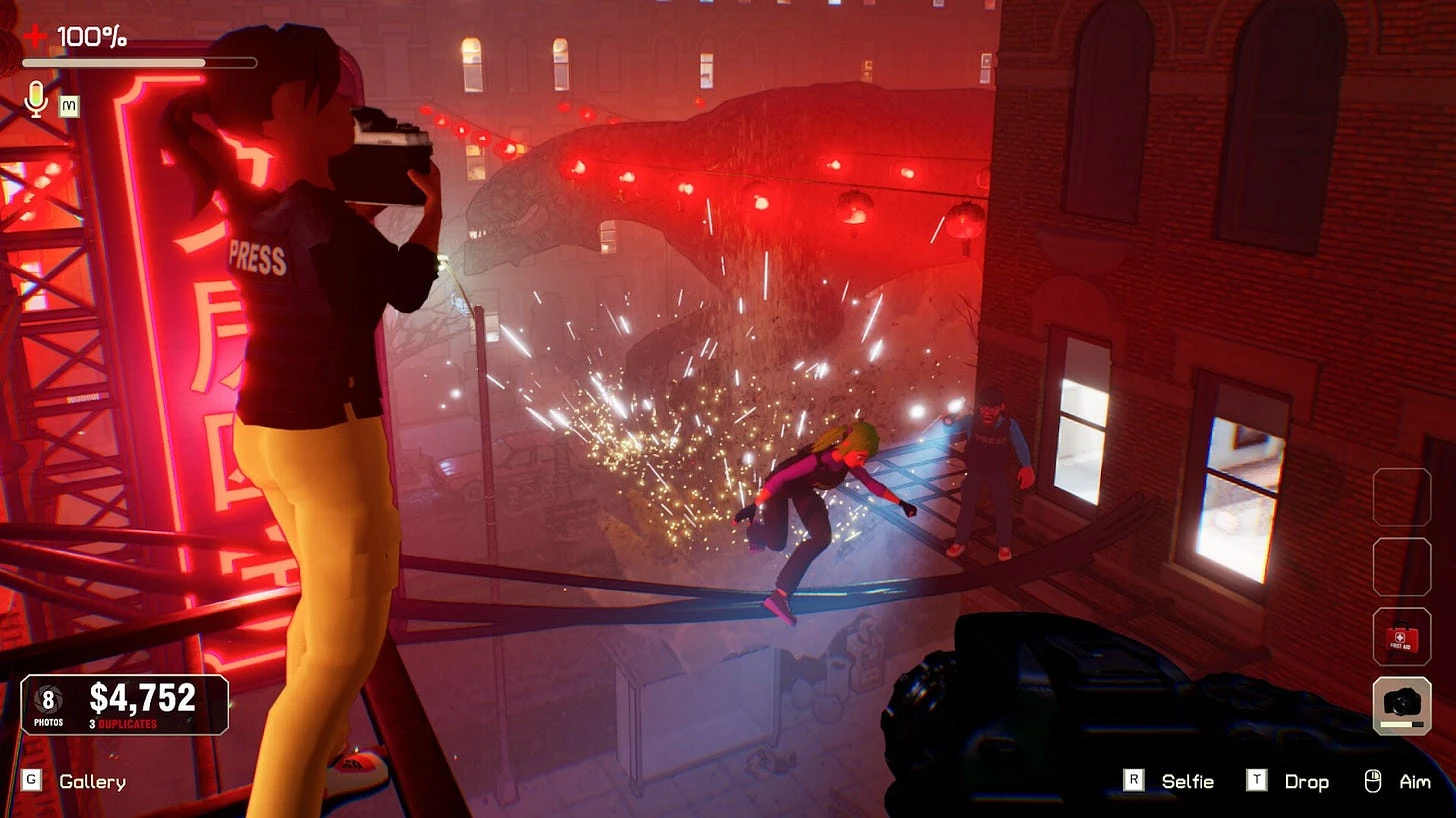
Lucas and Bruno chose to keep the same recipe: stay small, agile and creative, with only a few hires planned. But they will be extremely cautious about how they use AI. They see it as an accelerator for pre-production and will likely use it heavily for prototyping, but not for the final product. A stance that might look conservative for startups, yet is already highly problematic in the gaming industry. Ninety-five percent of creative candidates decline once the studio’s AI policy is disclosed.
Supercell, The Cautious Giant
The Finnish studio Supercell may target a different audience with their free-to-play hits such as Clash Royale, Clash of Clans or Brawl Stars, but they are very aware of the climate surrounding generative AI. Although they have a massive community of players and revenues ($3b in 2024), the company does not seem to face the same challenges as traditional big publishers like Electronic Arts, Ubisoft, Sony or Activision, to name a few.
A game designer working there described to me a culture very different from what he was used to, built around surprisingly small teams for such global successes: usually 15–20 people, with some going up to 80. For perspective, you can multiply these numbers by a factor of ten to reach the typical size of a regular AAA game or a large franchise. At Supercell, these small teams operate with full independence. Knowledge is shared, and failure is openly embraced (“champagne for failure, beer for success”), but teams decide entirely on their own which tools to use and which business models to adopt.
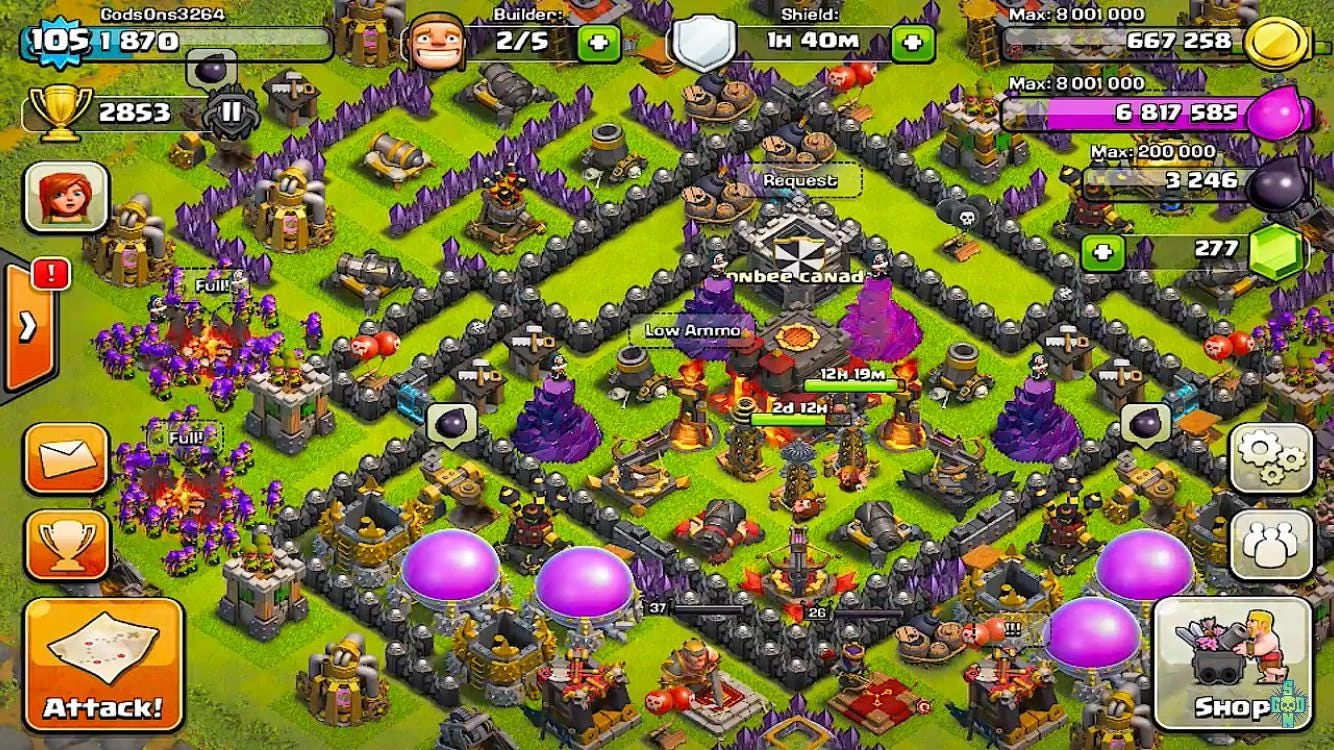
Even at a mobile gaming company, the AI topic is far from neutral. Frank Keienburg, General Manager of Brawl Stars, recently felt the need to clarify his team’s position on X: “[We] do not utilize generative AI for Art, Music or VO and we are taking great pride in the art our Artists create. This includes Freelancers and Agencies on the outside, which have a contractual obligation to create all artwork for us by hand.” He also acknowledged past mistakes and the use of AI for certain advertising assets. In the same spirit as the game designer I talked to, he added that while they have access to a Supercell AI team for support, “it is up to the individual game teams to decide if and how to utilize [it],” leaving the door open to future integration if it makes sense.
The stance is pragmatic rather than dogmatic. Teams may eventually change their position on AI, and new teams fully committed to generative technologies may join. Supercell has opened an AI Lab where small teams can be incubated for a few weeks to explore how AI could be leveraged to create new gaming experiences.
Mixed Feelings from a Pioneer
To prepare this article, I had to speak with Cédric Lagarrigue to gather his perspective. I’ve known Cédric for years and have watched his flawless evolution in the industry as a publisher, advisor to some of the best independent studios of the last decades (Cyanide, Nadeo, Dontnod, Spiders, Asobo, Tindalos, Eugen Systems, Streum On), and now head of his own studio, ZDT, currently cooking Darwin’s Paradox.
Born in the 70s like me, Cédric has lived through the same revolution. His insatiable curiosity for innovation and sharp business acumen allowed him to turn a small French publisher called Focus Entertainment into a global and competitive player with far smaller financial resources than the incumbents, thanks to a bold strategy built on early and intensive use of the internet for communication and distribution.
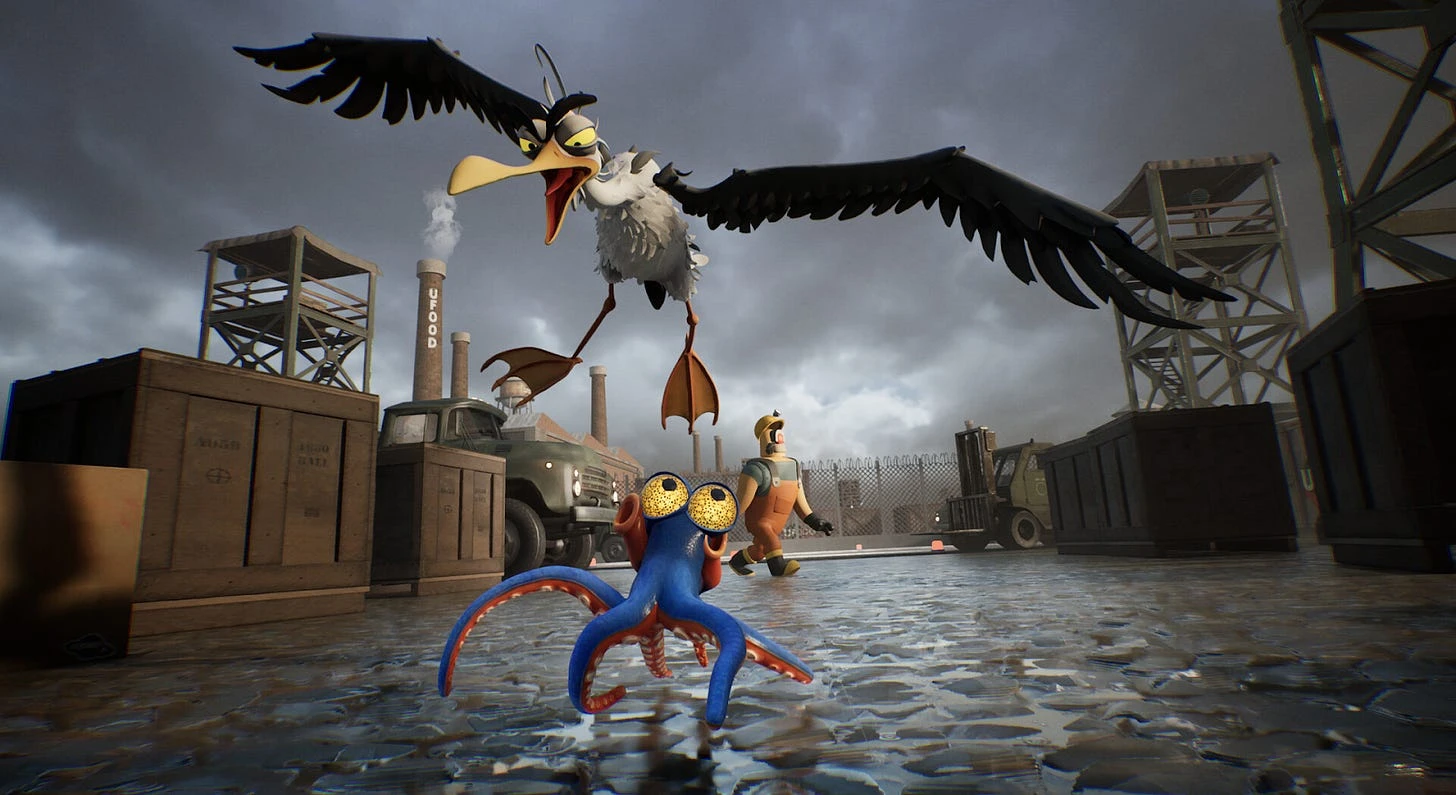
Like most, Cédric is ambivalent about the AI revolution. He uses it daily for administrative tasks, follows new model capabilities closely and finds it extraordinary from a technical standpoint, but is concerned about the long term impact on society.
“We’re already seeing games on Steam made by one or two people with no real production experience. That’s just the beginning.” he said, with mixed feelings. On one hand he sees the benefits, like the democratization of creation and the possibility that small creators could one day compete with big publishers thanks to innovation, the way he did with Focus. But on the other hand he fears the fast slide toward the AI slop and the ultra individualisation of the user experience. “The next step is the disappearance of culture. The shared catalogue we all consume and talk about together will vanish. Everything will be tailor made.”
He’s not just anxious about the video game industry but about the danger we all face together as citizens. “We’re entering a job apocalypse that’s starting across every sector. At some point capitalism has a problem if there are no consumers left.”
Where They Draw The Line
With all these testimonies from people with different backgrounds, working at different scales and in different roles, a clear pattern emerges. Productivity tools used to write emails, organize schedules, generate drafts, restructure plans, assist with coding, offload QA tasks or produce quick previews all rely on generative models, and are now broadly accepted as part of an efficient workflow.
Things become more complicated when it comes to artistic matters, and more generally anything that comes into direct contact with the player. In those areas, AI quickly becomes unpopular, to put it mildly. The reasons vary: ethical concerns (artists’ work scraped to train AI models, job displacement), artistic objections (results perceived as low-quality), and managerial or reputational risks (bad press, team morale, hiring challenges).
A New Breed Of Game Editor
Some entrepreneurs have decided not to bother with the objections, like Rémi Kaito or Hugo Hernandez, and have chosen to lead the revolution with the intention of reimagining and redefining everything from the ground up.
Rémi, who opened this essay, is passionate about innovation and video games and has no attachment to the old world. At 22 he is old enough to build and run his company and young enough to be fearless, and able to see the opportunity with fresh eyes.
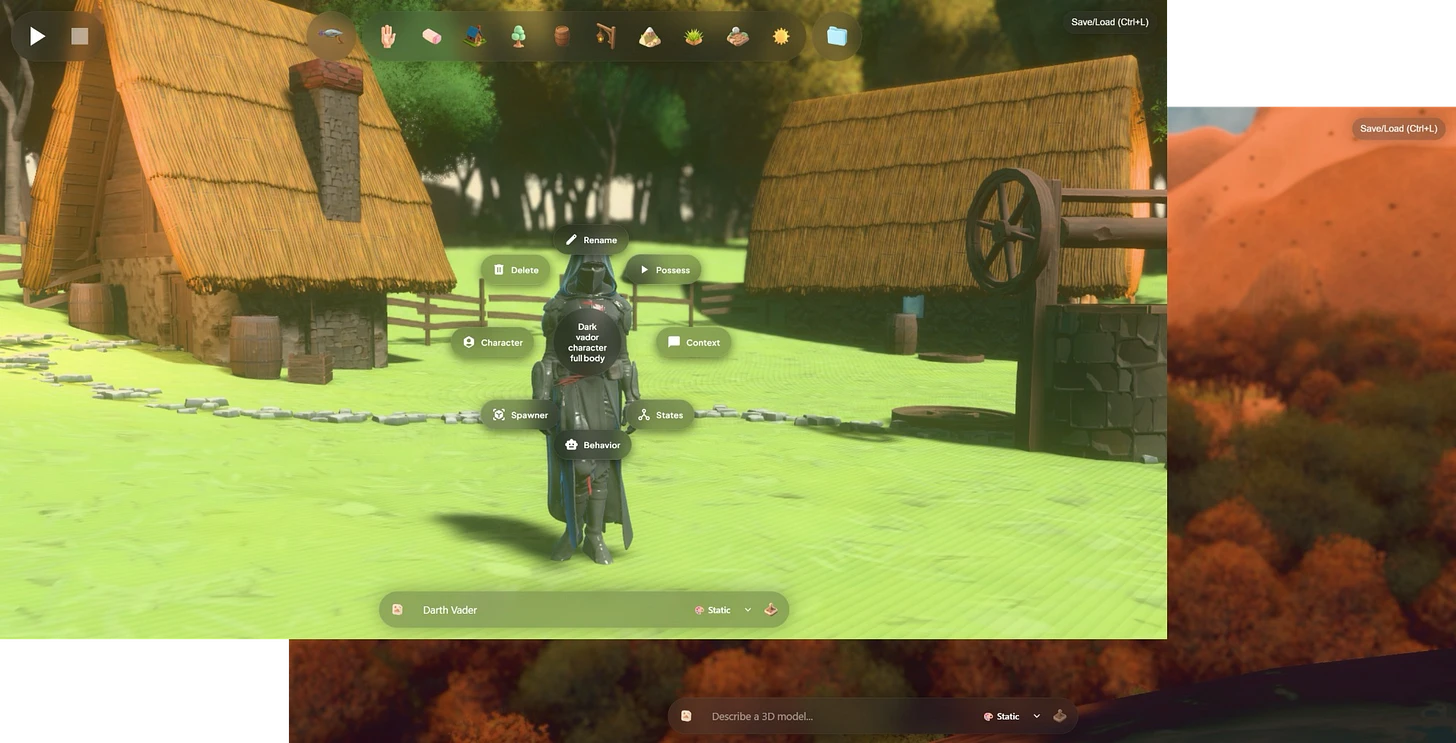
Like most founders, Rémi is consumed by his goal: unleashing people’s creativity by making video game creation frictionless and intuitive for anyone. To this end he is building Arcade AI, a complete game editor that combines and simplifies the best of Minecraft, Tiny Glade, and Garry’s Mod, leveraging the full capabilities of new models while delivering a seamless creative experience.
Soon after the Pre-seed round (which we led), Rémi flew to San Francisco to be where AI has no limits in people’s minds. He met his peers, and the Supercell hackathon’s victory gave him even more insight and conviction that everything will move faster than he expected. “I strongly believe that within a year people will be able to ship good games directly from their browser,” he told me, with an excitement that sharply contrasts with the cautious Rémi I met eight months ago who was still cautious of current limitations.
A few hours after our call, Meta released SAM 3D, a pair of models that pushes the boundaries of turning 2D into 3D mesh models, giving even more thrust to his vision.
The World (Model) is Yours
Hugo Hernandez shares the same dream, but prefers helping game studios “break the cost curve of game creation”. For Hugo, “the economic and artistic equation is tightening, and studios are becoming less and less willing to take risks. We can observe a creative impoverishment that follows. Either we keep doing things the same way or we use new tools to explore further.”
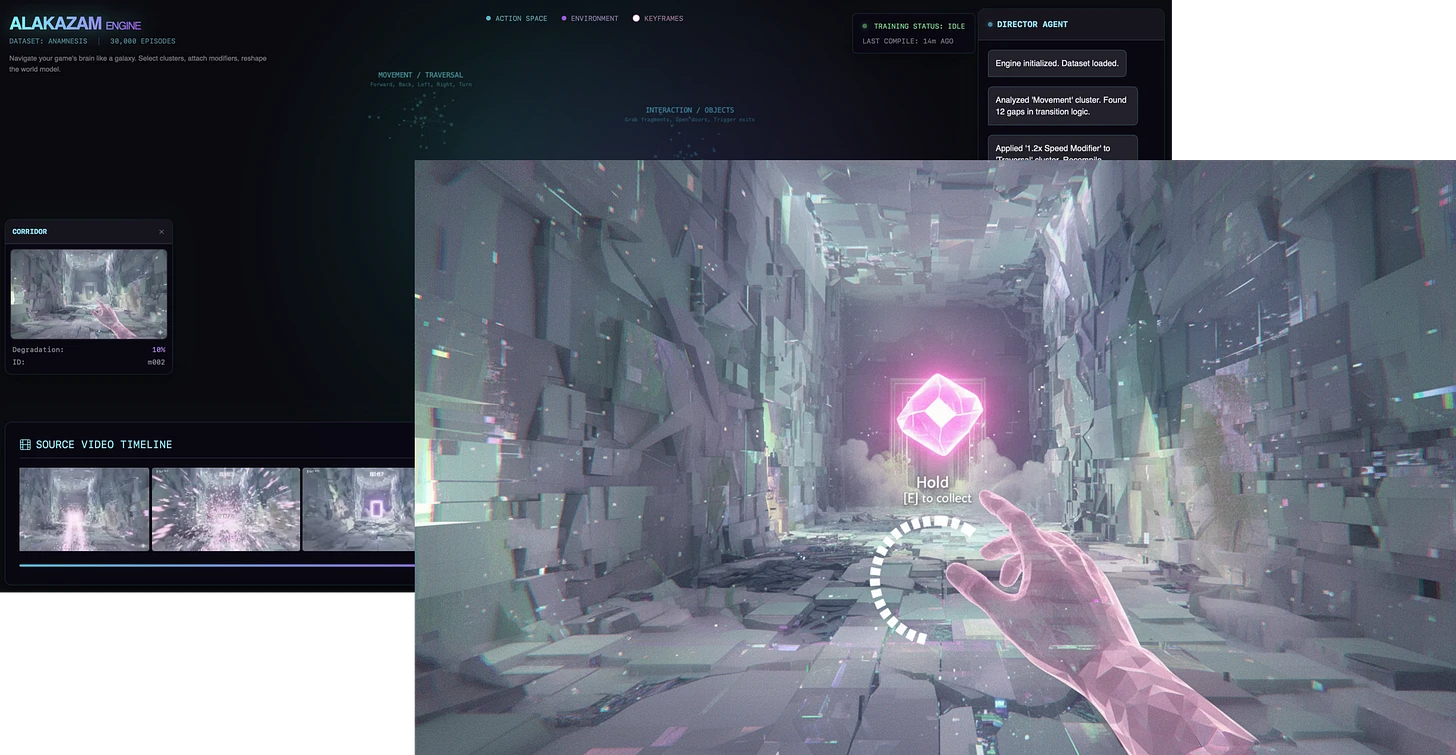
He didn’t hold off with his project Alakazam, exploring the concept of world models. “Game engines have integrated AI processes, but they don’t alter them fundamentally” says Hugo, and maybe the game engine itself is the obstacle to creation. “AI is not just a productivity tool but a tool for creation and expression. It can open new forms of games and design that have barely been explored. When people see what can be done, perspectives will change.” he said with passion.
For those who are not familiar, a world model in AI (like Google Genie 3) is a generative simulation of an environment where an agent (the player or any entity) can live in, act inside, and predict the consequences of its actions. This contrasts with regular video games where you have separate assets like 3D models or sprites, textures, sounds, all connected through a game engine made of compiled code.
As you would expect, the pipeline is nothing like what you’ve seen before. To build a demo on Alakazam, Hugo used video models like Google Veo 3 or tools like VACE or Morphic to generate long videos (2 to 3 minutes) of gameplay sequences with consistent continuity, as the foundation of the dataset, then fed a world model with these sequences to teach it the concept of the game.
Despite the complexity, Hugo likes to say that this is indeed complex, but it’s an engineering problem, not a research one. He also believes this technology will first be used for very specific kinds of games before becoming more diverse. While there is still a lot to do, this is the most frontier approach I’ve seen so far.
4. Where I Stand: My Case for Optimism
The fourth part will be very personal, based on my view, my experience and my relationship with games. Some positions might shock many people, but these are my unfiltered thoughts and they are likely to change, since things move so fast.
I have put aside the economic factor and environmental impact. These are difficult topics, since all technological revolutions have faced job displacement and environmental consequences, and this is the first time we see it at this scale and across so many industries.
I decided instead to focus on the impact on creativity, and why I am optimistic on that side.
Where I’m Coming From
First of all, I believe it’s important to share a bit of my background, which explains my interest in the industry. I have been an avid game enthusiast since early childhood.
Born in the late 70s, I have owned or played most systems available or imported in Europe at the time, including many computers such as the Apple II, the Amstrad CPCs, the Amiga 500, every PC generation since my monochrome 8088 XT, and even abominations like the Atari Jaguar or the 3DO. Even though I am fundamentally a PC player, the Super Nintendo (Super NES in the US), the Sega Dreamcast, and the Neo Geo from SNK still hold a special place in my heart.
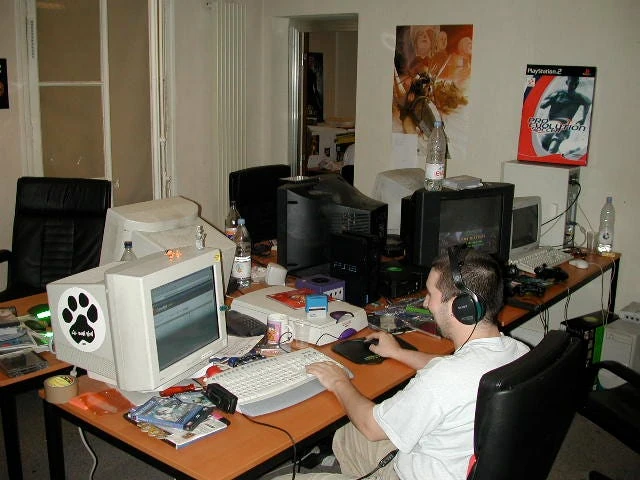
I cofounded in 2000 the second-largest video game media website in France, called Gamekult, which was eventually sold to CBS Interactive (owner of Gamespot) seven years later. Oddly enough, this experience progressively contributed to distancing myself from the industry as we knew it at the time for almost two decades, with a strong disinterest in AAA games or almost anything released by major studios.
The COVID lockdown helped me reconnect with gaming through almost exclusively independent productions on PC, sometimes absolutely niche games or fantasy consoles nobody heard of, which I usually find far more interesting, creative and refreshing. In my opinion, they are the true heroes and the heart of the industry.
Overall, I can say that games have given me more emotion, sparked better discussions, and connected me to more people than movies or music.
The Most Complex Medium
From the outside, video games might look silly, but they are the most complete medium to date, a multidisciplinary craft par excellence. And their conception, even when a game looks simple, is in reality deeply complex.
Some call them art. Personally, I would say they combine multiple art forms (narrative, visuals, sound, music, animation) entirely in the service of something called game design, which I tend to view as a science of its own.
If you are not familiar with games, explaining “game design” is quite tricky, but we could describe it, in a rather dry way, as the set of rules, interactions and player actions that define how a game is actually played. This combination of thousands of parameters and both technical and artistic choices, from the most obvious elements to the tiniest subtleties, can make the overall experience radically different.
And It may be a highly controversial opinion, but I do believe the core of video games is the game design itself, and everything else exists in service of it. Let me explore this idea through the lens of visual design where the criticism is most intense.
Rant of A Boomer
Older generations have spent weeks and months playing games like Ultima III Exodus on Apple II and went through the same range of emotions you could have on modern games. Dwarf Fortress, officially released in 2006, has sold 1 million copies and is still captivating hundreds of players every month on Steam with daily peaks around 1,600. The game, developed by two brothers, is notoriously complex and visually crude, consisting only of ASCII characters, but celebrated for its depth and emergent gameplay.
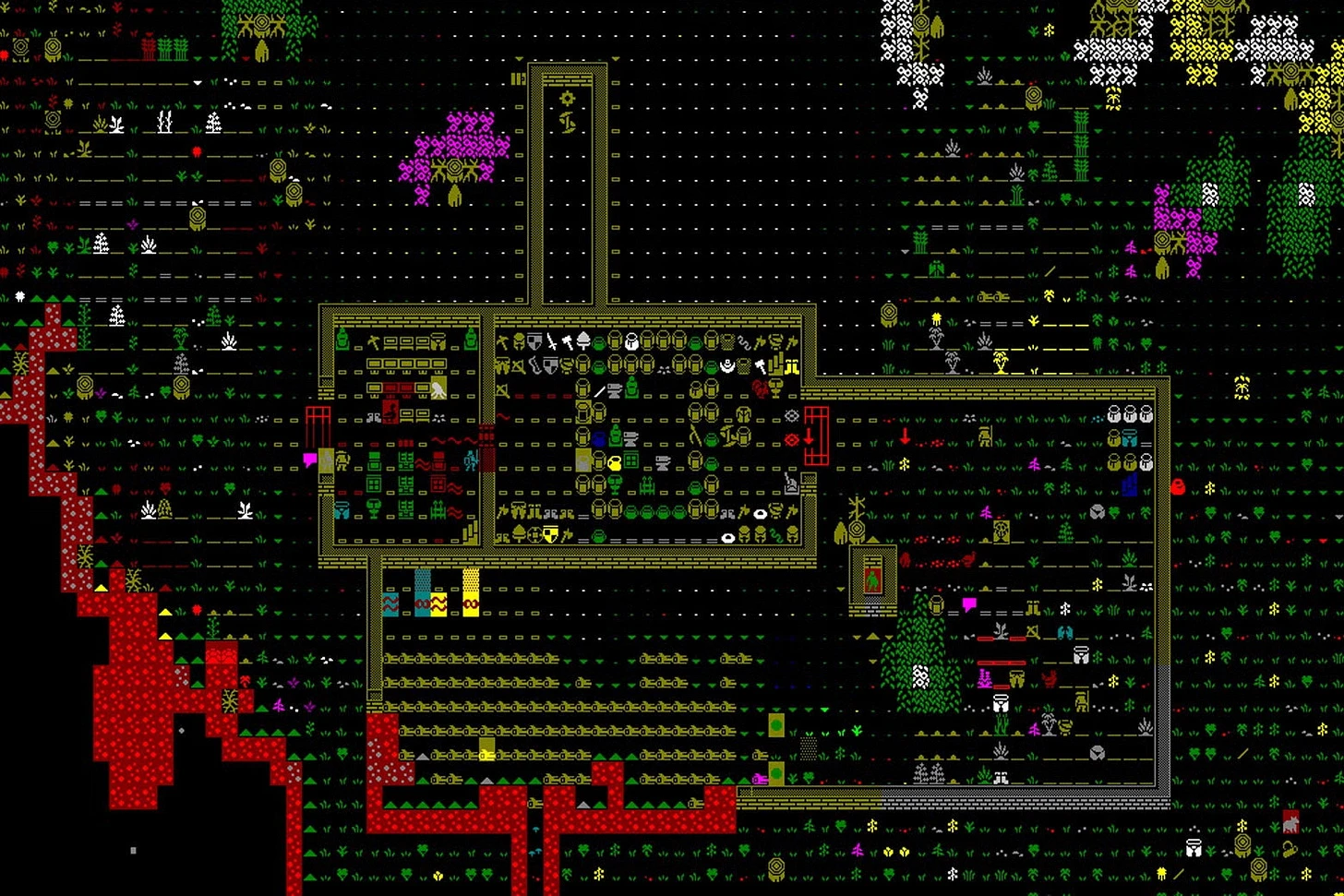
As obscure as it is for the mainstream audience, Dwarf Fortress has influenced games such as Minecraft, RimWorld, Terraria and Project Zomboid on many levels: procedural world generation with highly detailed worlds that have their own geography, history, civilizations and legends, the absence of set objectives or win conditions, persistence, the simulation of mental states, and more.
These are just a few examples, but my point is that the race for ever-better visuals is sometimes favored over game design.
For instance, I genuinely believe Fallout 2 is a far better game than its sequels, and I don’t think this is just nostalgia. The shift to 3D and first-person view narrowed the possibilities and reduced the role of the player’s imagination.
In Fallout 2 you could be or do a lot of things (that I will not describe here, since most of them are highly inappropriate in 2025), and most of it was conveyed through text rather than additional visual production cost, while still keeping the player immersed and engaged. The following episodes required skyrocketing budgets, while leaving players angry about the lack of content and not even satisfying them with design quality, rigid animation, draw distance and lipsync that they barely cared about before.
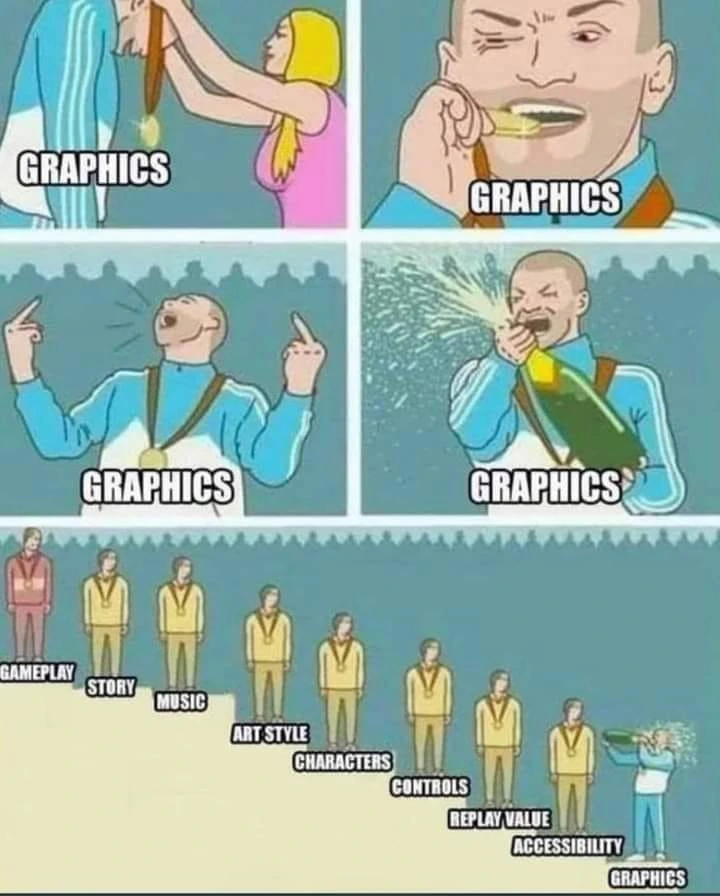
It does not mean good graphics are bad. They are great and should be celebrated like any technical, creative or artistic component of a video game. But a great game must be balanced. And graphics tend to attract all the attention, since marketing is driven mostly by screenshots and video trailers, and absorb too much of the cost, sometimes half of the budget. This increases the risk of failure for the publisher and makes AAA games boringly predictable.
Free the Creativity
People assume the luxury is being able to create a game with hundreds of collaborators, but it’s actually the opposite. The real luxury is being able to create a great game with a few friends, without being boxed into specific genres or production standards, and sadly this is almost never possible today. This is where AI could help creators by enabling them to build without necessarily becoming, or being financed by, a soulless mega-corporation.
I am confident that if you are a great artist with a unique touch, able to reinvent yourself and inspire the audience, you will always be part of the equation. If your job is to create small game assets all day with no perceived added value for the player or your employer, chances are you will be replaced soon.
Innovation works this way. Painters were not exactly thrilled by the invention of the camera. Photographers probably felt the same with Photoshop. What did cartoon studios think of CGI, and the toy industry of video games? Gen-AI is just the next evolution. None of these innovations killed painters, photographers, artists, or toys. They simply made the field more demanding and reserved for the best.
It is also interesting to see people who have mastered amazing tools that already do most of the heavy lifting compared to twenty years ago complain that AI makes things easier. Where do we draw the line? When do people stop being artists?
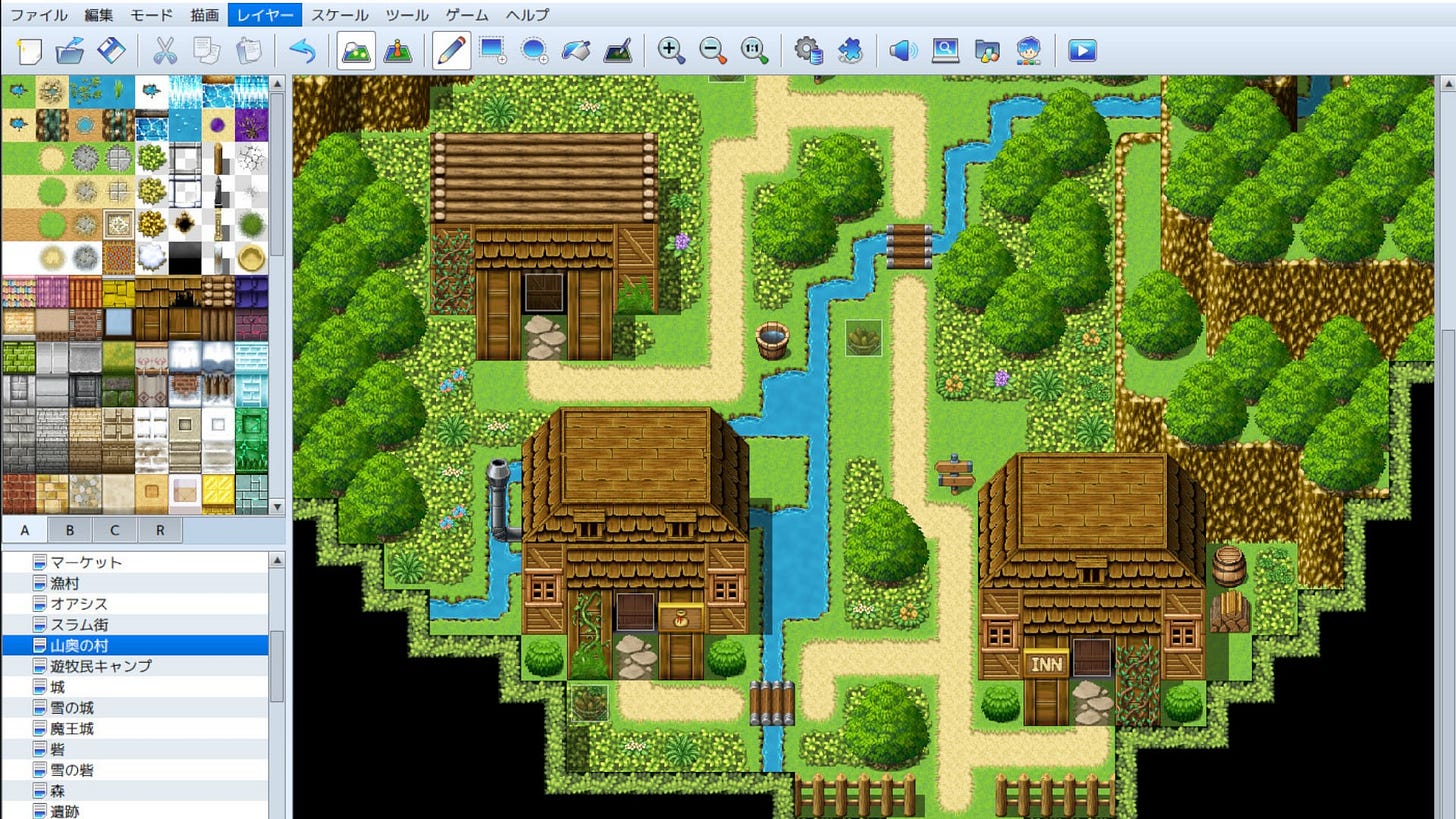
We all had access to RPG Maker, but none of us created Final Fantasy VI or Chrono Trigger. We all have access to Super Mario Maker, but among the millions of people who tried, only a handful of creators manage to build good level design. What makes you think that all of us having access to Midjourney and Genie 3 will produce anything other than AI slop?
The Shifting Norm
“The telephone is a great invention, but who would ever want to use one?” is a quote often attributed to Ulysses S. Grant, the eighteenth president of the United States in the nineteenth century.
We perceive the world, including what we consider right or wrong, through a lens shaped mostly by when and where we were born. Each generation grows up with technologies that feel obvious, innovations that seem amazing and others that look catastrophic and should be feared or even banned.
Try to explain to your kid what life was like before the internet and you would probably see a mix of stupefaction and pity in their eyes. And if you ask your great-grandparents, they would probably think that instant messages with emojis are not a respectful way to communicate, that paying to own music virtually is a loss of values and that video games are a complete waste of time, if not a sin.
They are neither right nor wrong. They were simply born in another time and a very different world. And maybe our (necessary!) debate about AI today will probably look as absurd as Grant’s quote in a few decades.
And the video game is all but immune to the shifting norm.
Game Dev in 2025 is Cheating, AI or Not
Unless you were lucky enough to be as smart as John Carmack (co-creator of Doom) in the 80s, you were likely limited to creating text adventures like Zork in BASIC. There were no specialized tools for game creation, no Stack Overflow when you were stuck and no libraries of textures or sound effects to draw from.

Developing a proper game engine in the Assembly dialect of your microcomputer was a lifetime achievement, and that’s before even mentioning drawing characters with a keyboard, composing music and sound effects in raw bytes, and squeezing everything into the 128 KB of memory on an Apple II. Some, like Jordan Mechner, the creator of Prince of Persia, made history with this.
It feels to me the gap between creating a video game back then and building one with Unreal Engine and almost infinite memory is probably larger than the gap introduced by using tools like Chat3D or Scenario to help you generate a few assets for populating your game. Does it make today’s video game creators who use engines and libraries lazy or incompetent, or their creations soulless? Absolutely not. They have access to amazing tools, and those tools give them more time to focus on what truly matters to them.
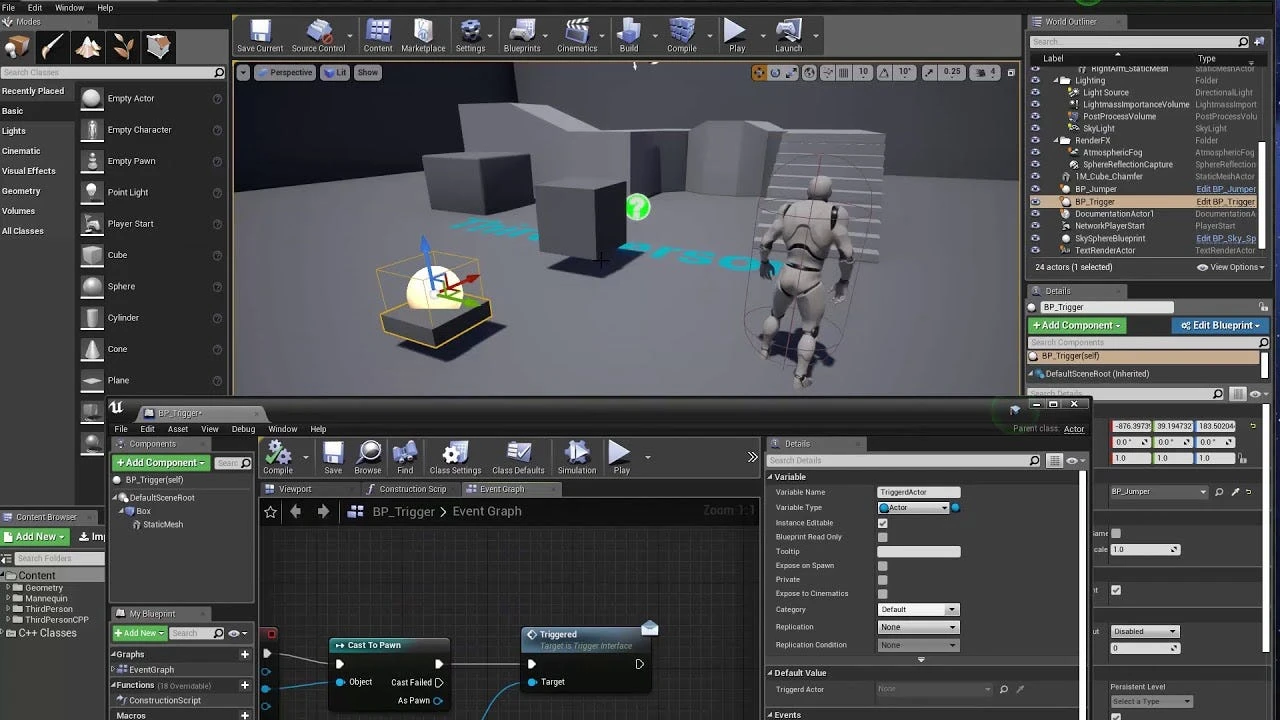
If you’re not convinced yet, check the hall of fame and you’ll see many games that began as simple mods (scripts changing a game’s rules) while relying entirely on its engine and assets. Counter-Strike, DOTA2, Team Fortress and PUBG are only a few examples. It’s hard to overstate the influence of these masterpieces, scripted by young creators who would never have been able to contribute at all if they had been forced to build everything from scratch.
Game Masterflash and Grand Theft AI
An unfortunate event, the 1977 New York City blackout, triggered widespread looting of electronics stores and put turntables, mixers, and sound systems in the hands of young local artists, including figures like Grandmaster Flash, DJ Kool Herc, and Grandmaster Caz. Many consider this moment the spark that helped shape the emergence of rap.
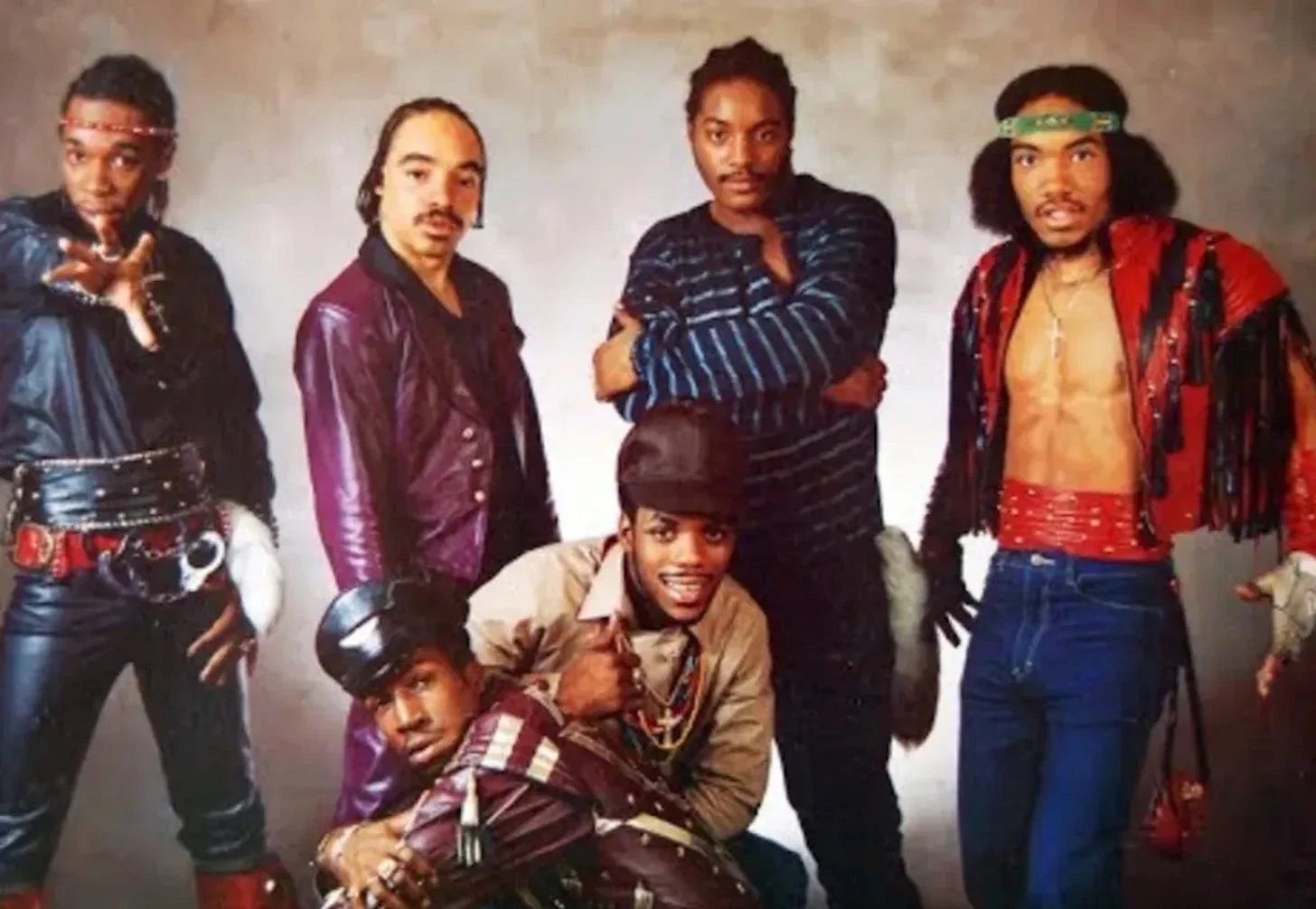
The genre did not stop there and started to sample without any legal basis all kinds of records. Grandmaster Flash, De La Soul, Public Enemy and the Beastie Boys built entire albums out of unlicensed samples, with trials starting in the 80s leading to the adaptation of the music economy through sample clearance.
The same dynamic appeared with piracy, which allowed young creators to download and use professional tools like Cubase or Pro Tools without spending thousands on hardware or licenses, lowering financial barriers for a generation of home producers and likely contributing to today’s far more decentralized music landscape. Then YouTube followed the same pattern, initially thriving on widespread uploading of copyrighted music and video content, creating a massive platform that eventually democratized distribution for all creators.
I am not advocating for looting or piracy. I also do not think the owners of those looted shops felt any consolation in having unintentionally contributed to the emergence of rap. Also, we can hardly compare these events from a different time and on a different scale. And more importantly in this case, it would be outrageous to suggest that OpenAI is the underdog of the narrative.
But if we put aside the damage to artists (with the hope that a new business model will emerge to account properly for copyright), the effect on creativity may be the same. What will a new generation of creators with almost unlimited access to these non-deterministic technologies actually do with them, and what will be the equivalent of rap for video games.
I believe giving a tool like Arcade AI to every kid and giving them a chance to express creativity with ambition without all the friction and obstacles, like raising money and hiring tons of people stacked in offices to build a city and design assets, is a great opportunity for creativity, not the death of it.
The same way current game creators using Unity with the help of tutorials online are contributing to the medium like any others.
Understanding Is Not Experiencing
A few days prior to publishing this article, I invited a bunch of friends, all game creators from the Bonfire community (our Discord, focused on indie game creation). The group was diverse, with very different roles in the industry, sometimes at opposite ends of the spectrum, from the AAA veteran to first-time game developers with no past engineering experience. And somehow, AI or not, they all spoke the same language.
During this gathering we talked for hours about their creative process, the games we loved and, more importantly, how to define game design. And the more we talked about it, the more it became clear that generative AI does not make it easier or faster. Game design is hard regardless of the tools or pipeline you use.
Video games are meant to be played by humans. Playing draws on our skills, our physical abilities, our past experiences and our emotions. Games can be very mechanical and stay on the surface or, on the contrary, very subtle and incredibly deep. No matter how precisely we describe to an agent what it feels like to play a video game, AI will never feel it the way humans do.
They do not have the controllers in their hands, they do not feel the haptics, they do not see the screen the way we do, they do not feel fear, anger, frustration or joy. They can make educated guesses based on the textual or visual data you fed them before, and they can help with suggestions and implementation during development. But in the end, AI needs humans to understand humans.
It is like trying to explain how a bat perceives the world through echolocation. You can understand the mechanism, but you will never come close to experiencing it. So AI agents will probably do most of the QA work, since this is mostly a technical matter, and they will find new exploits and new bugs and fix them afterwards, better than humans. And if AI can’t create an innovative game design (other than by pure luck), I don’t see creators being replaced anytime soon, just enhanced.
Like in every industry right now, the risk is the AI slop, the massive volume of crappy content about to arrive on our virtual shelves, and we will need excellent tools for curation. And the strongest tool will likely be word of mouth.
A human concept. Again.
Thanks to all the people mentioned in the article for their time, and also to Julien Millet, Karim Matrah (Half-Human, screenshot below <3), Felix Balmonet (Chat3D), Fiodor Tonti (No Ref Football), Samuel McFadden (Vid2Scene) and the people from the industry who preferred to stay anonymous. Their insights helped me prepare this piece by challenging me and opening my mind.