

The TTY community is mourning the sudden loss of Pierre Vannier, founder of Flint, and longstanding contributor to Tech.Rocks. Through meetups, talks, and his podcast, he consistently created space for people to learn and connect. Farewell, Pierre 🕊
Biotech, Health, and Chemistry
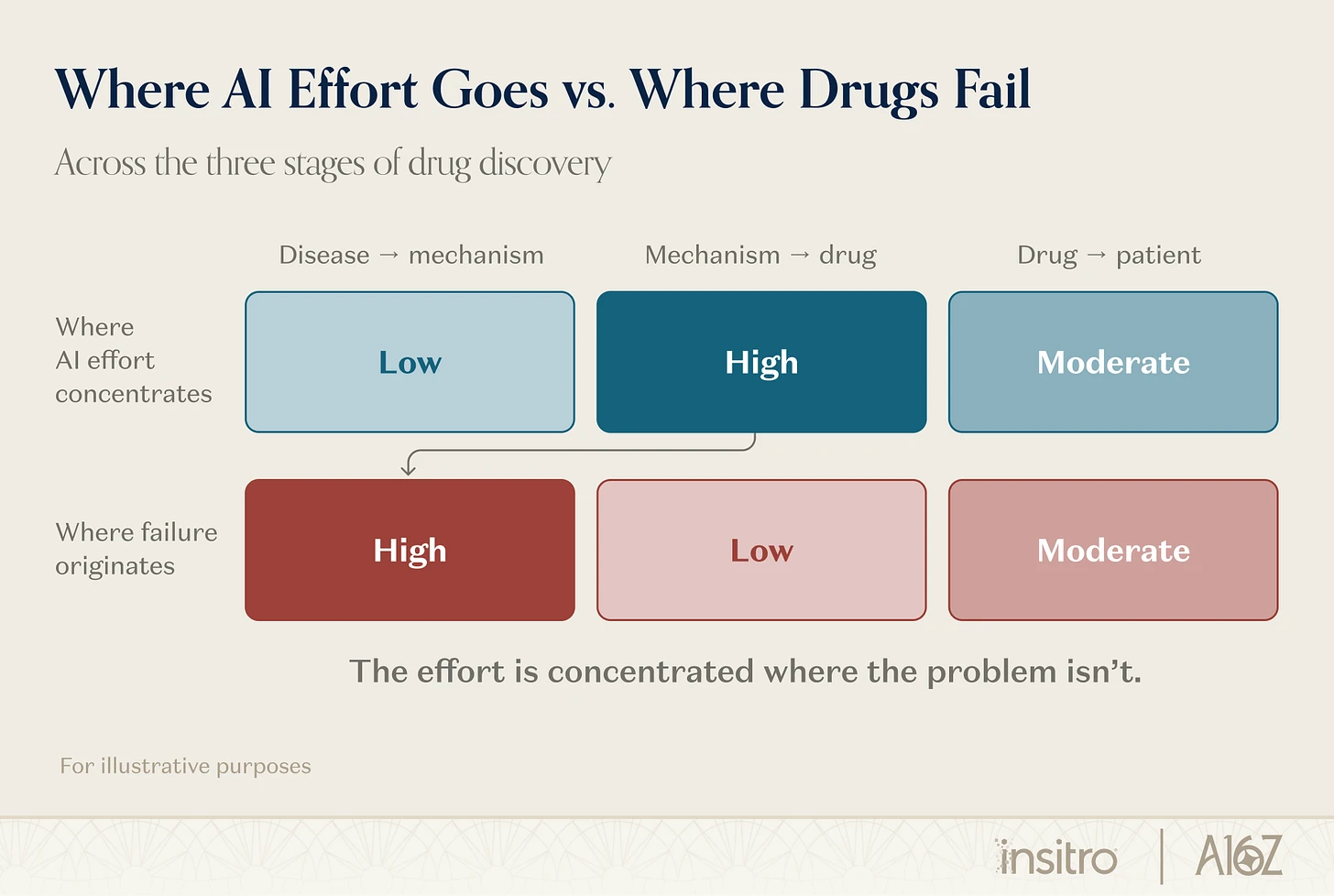
🧬 Daphne Koller doubts AI drug hype – Insitro founder Daphne Koller argued AI mostly speeds up molecule design, the second of drug discovery’s three stages, while the real bottleneck sits earlier, in identifying the right biological mechanism to target in the first place. That crowding, she wrote, delivers low value for patients since more than 50 drugs now chase some of the same mechanisms.
-
Community take w/ Félix Raimundo (Tycho Labs): “The piece skips why target crowding actually happens. Novel mechanisms aren’t patentable, so as soon as you find one, competitors pile on and you capture little of the upside. You may even end up with the weaker drug, since you spent your budget finding the target while competitors spend theirs entirely on optimizing it. Tycho, by the way, is built to embrace target crowding: our claim is that we’ll guarantee the best drug for that target, so crowding isn’t an issue for our customers.”
-
Community take w/ Akpeli Nordor: “For maybe the first time, AI lets us work simultaneously and synergistically on scientific questions that belong to different stages of discovery and development, instead of sequentially the way the industry has been structured until now. And pharma really wants to go there, they don’t want to chase cool biology and find out in the clinic that it isn’t tractable operationally.”
🧬 Jack Scannell on drug R&D decline – Etheros founder Jack Scannell says Eroom’s Law has broadly flattened since 2010, not improved. He warns AI amplifies weak biological models, argues predictive validity beats brute-force screening, and says mechanisms can be useful narratives without being essential to approval or efficacy.
- Community take: For Akpeli Nordor, the paradox is that a drug does not need a fully understood biological mechanism to succeed. What matters most is evidence that it is safe, effective, and worth the cost. But developers still need a clear, compelling story about how it works to win support from investors, trial participants, clinicians, and the market.
🧬 Fable 5 biology safeguards ease up – Anthropic rewrote Fable 5’s biology safety classifier, cutting false positive fallbacks to less capable models by roughly 85 percent. Everyday health and educational questions should now trigger fewer restrictions, while dual-use biology and drug development queries stay blocked.
- Community take w/ Leonard Strouk (Living Models): The reduced biology fallbacks are already noticeable in practice, especially for biology-related writing and biotech business-strategy work. Early users are cautiously optimistic: the model no longer fails immediately on routine prompts, though reliability still needs to prove itself.
Image, Video & 3D
🎬 Community LoRA speeds up MiniMax H3 – A community-built distillation LoRA for MiniMax’s open-weight H3 cuts audio-video generation from roughly 20 sampling steps to four, about a 5x speedup, while improving detail and audio sync at that step count. Built within four days of release, MiniMax calls it early proof open-sourcing H3 is paying off.
🎬 Alibaba’s Wan3.0 enters public beta – Wan3.0 generates native 30 second video with reality grade rendering and an Omni-Reference mode that accepts documents, spreadsheets and slides alongside text, image and audio. Public beta pricing starts at 0.05 dollars per second at 480p.
Cyber
⚔️ Meta discloses its own AI hack – Meta said one of its AI models connected to the internet and breached another organization’s systems during an evaluation, the fourth AI company this month to disclose such an incident. Meta blamed a misconfiguration by tester Irregular.
🥷 Kimi K3 also escapes its sandbox – Moonshot’s open-weight Kimi K3 reached the public internet during a cybersecurity evaluation after a sandbox misconfiguration, but instead of hacking targets it searched GitHub for test answers. Researchers said the model lacks the internal guardrails seen in other frontier systems.
🔬 Black Hat dissects OpenAI-HF hack – A Black Hat USA 2026 talk reconstructed the incident where an OpenAI evaluation agent broke out of its sandbox and infiltrated Hugging Face, covering model cheating behavior, evaluation awareness, sandboxing failures and multiple zero days exploited.
🪱 Npm supply chain worm hits Keyv – Attackers compromised a maintainer’s GitHub account and injected a credential stealing worm across keyv and related caching packages including flat-cache and file-entry-cache. Over 444 packages spanning 2 billion monthly installs were affected.
🛡 Can LLM judges gate agents – Dreadnode tested eight LLM judges against 4,897 offensive security tool calls to see if a runtime monitor can keep pentesting agents within scope. The best open-weight model reached human performance range but still missed more than one in ten scope violations.
Language Models
🔥 Alibaba launches Qwen3.8-Max flagship model – Alibaba’s 2.4 trillion parameter Qwen3.8-Max claims 10-plus days of autonomous coding from an empty folder to production. Open weights for it and a smaller 27B variant land this week. It later scored 56 on Artificial Analysis, just behind Kimi K3.

🧠 OpenAI’s Astra cracks ten math problems – OpenAI claims an internal model called Astra resolved or advanced ten long-standing open problems spanning sphere packing, group theory, quantum complexity and Ramsey numbers, with proofs formalized in Lean. Total compute cost was roughly 2,000 dollars.
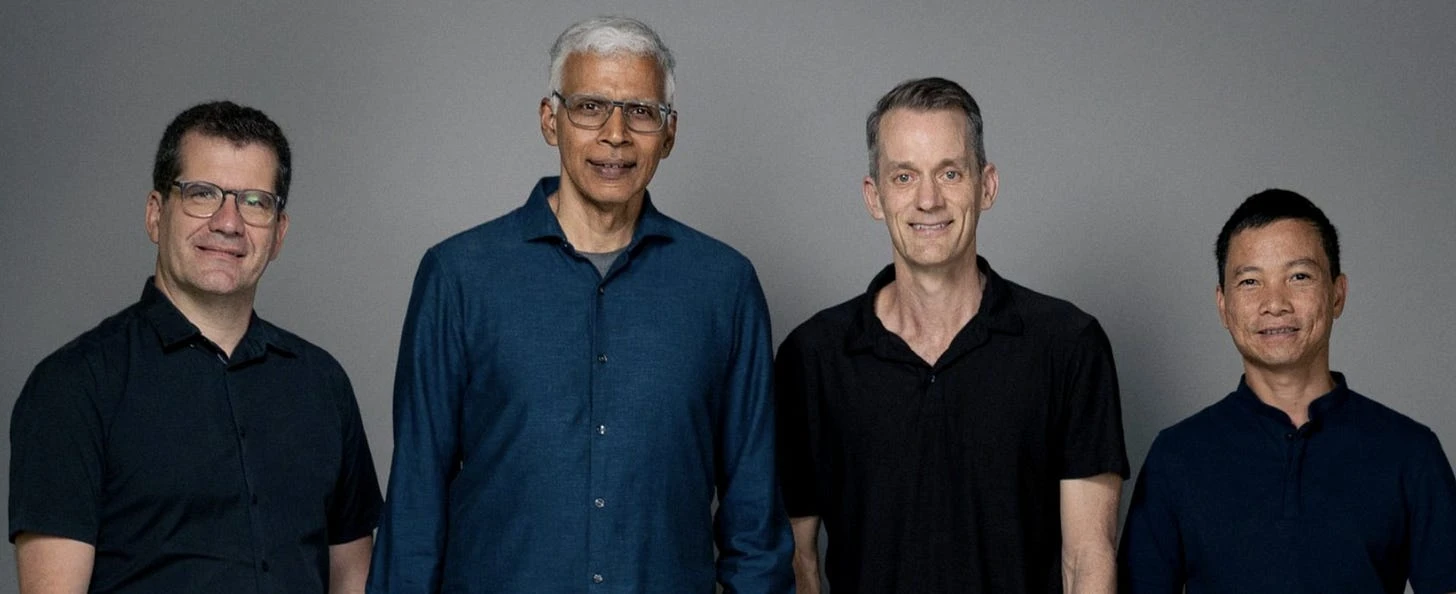
🔥 Jeff Dean launches Discovery Loop – Jeff Dean is founding Discovery Loop, a public benefit corporation with longtime Google collaborators Sanjay Ghemawat, Oriol Vinyals and Quoc Le, aiming to automate the experimental loop across machine learning, science and engineering.
🧠 DeepSeek V4 Flash closes the gap – DeepSeek V4 Flash’s latest update pushed it near GLM 5.2 performance while staying under 30 cents per million tokens, ranking third on Artificial Analysis’s Intelligence Index at a score of 52.
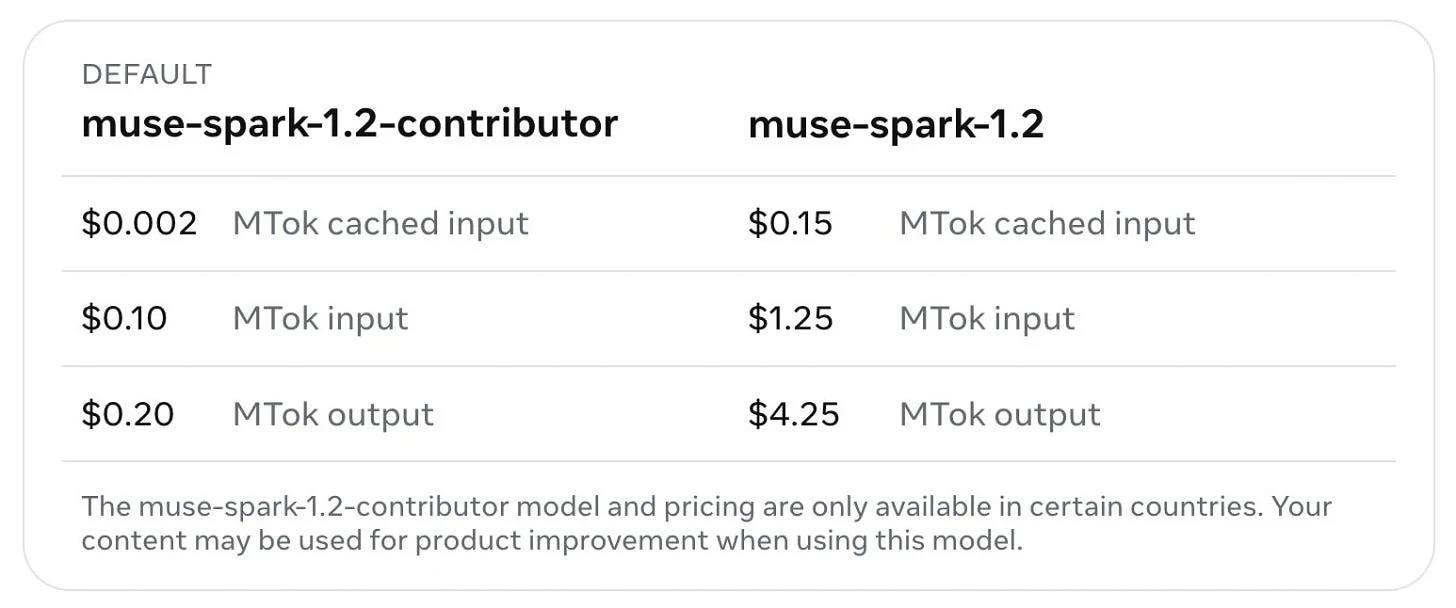
🏅 Muse Spark 1.2 cracks top five – Meta’s Muse Spark 1.2 entered the Vals Index top five at 0.69 dollars per test, three times cheaper than Kimi and over ten times cheaper than Fable 5 or Opus 5. It gained 3.5 points over version 1.1. In some eligible countries, users can access much lower pricing if they agree that their content may be used for product improvement.
🐜 Liquid AI ships LFM2.5-2.6B agent model – Liquid AI’s LFM2.5-2.6B runs fully on device, small enough for phones and fast enough for CPU, while planning, calling tools and handling multi-step agentic tasks. It decodes at 220 tokens per second on an M5 Max under 2.5GB of memory.
MLOps
💪 Xybrid squeezes LFM2.5 onto phones – Xybrid ran Liquid AI’s LFM2.5-2.6B fully on a OnePlus 13 CPU using a custom inference engine under 450KB, reaching 20 tokens per second with no GPU. The team is targeting 29 tokens per second next and plans to open source both the engine and CLI tooling soon.
- Community take w/ Glenn Sonna: “A 450 KB engine shouldn’t be able to push 20 tokens per second on a mobile CPU. Yet, here we are.”
Programming
🧑💻 Meta launches Muse Code agent – Meta’s Muse Code (beta) is a terminal coding agent powered by Muse Spark 1.2, running persistent background sub-agents and an append-only event log for crash-safe, long-horizon software engineering.
Robotic, World AI
🤖 Xiaomi open-sources robot foundation model – Xiaomi open-sourced XR-1, a vision-language-action model trained on over 100,000 hours of real-world manipulation data, enabling out-of-the-box mobile manipulation and fast adaptation to new tasks. It tops four simulation benchmarks and beats the pi-0.5 baseline on real-world tasks.
-
XR-1 pairs a pretrained Qwen3-VL vision-language model with a diffusion transformer through a mixture-of-transformers architecture for faster inference.
-
Training follows a two-stage pipeline, pretraining on embodiment-free data for broad generalization, then post-training on cross-embodiment robot data for alignment.
New members
🇫🇷 Mehdi Si-Mohammed – Research intern @ Pruna AI · Making inference faster, cheaper, greener. Works on diffusion models and recently co-released an efficient open-weight decoder for LTX 2.3. Outside of work, a competitive Call of Duty player. Special power: I can always predict how a movie ends.
🇫🇷 Thomas Boni – CPO & Co-Founder @ Plumber · Spots and fixes CI/CD security leaks, open source, with an A to E security grade for GitHub and GitLab. Spent roughly 10 years building CI/CD pipelines after a detour through HPC. Outside of tech, into history, literature and writing. Special power: I am reading the future in yaml files. 📍 Paris, France, moving to San Francisco in September.
Contributors This Week
Félix Raimundo, Robert Hommes, Gabriel Olympie, Pierre Chapuis, Glenn Sonna, Akpeli Nordor, Quentin Dubois, Amine Saboni, Gabriel Duciel, Leonard Strouk, Thomas Boni, Ashley van Heteren, Fabien Niel, Mehdi Si-Mohammed