

Events
🇫🇷 PAIR(ED) Summit in Paris (December 1) – Physical AI, robotics and drone teams will demo their own hardware at a free, builders-only day at CNIT Forest. Apply by November 27.
🇫🇷 À LA FRENCH conference in Paris (December 3) – Mehdi Medjaoui, Jean-Baptiste Kempf and Steeve Morin will host a French-language day celebrating builder tech, with 42 rare guests.
Audio
🗣️ Mistral shipped Voxtral 3 voice agents – Built on LiveKit, the SDK ran listening, reasoning and speaking as one stream, answering each turn in under a second while calling tools to verify an identity or book an appointment. Its new voices shifted emotion and pace with the conversation.
🔈 Gradium open-sourced Phonon on-device voices – Small enough to ship inside any app, the 31M to 40M parameter text-to-speech models ran offline on phones, laptops, a Raspberry Pi or in a browser, so text never left the device. Phonon-31m, under Apache 2.0, claimed a 1.7% word error rate on phone numbers and emails.

👂 Block’s Dessa learned speech without text – Most voice AI converts speech to text and back, losing tone and timing. Trained from scratch on conversation audio alone, the full-duplex model listened while speaking, so it could interrupt, laugh or catch sarcasm, faster than real time on a MacBook Pro M4 Max.
Autonomous Agents
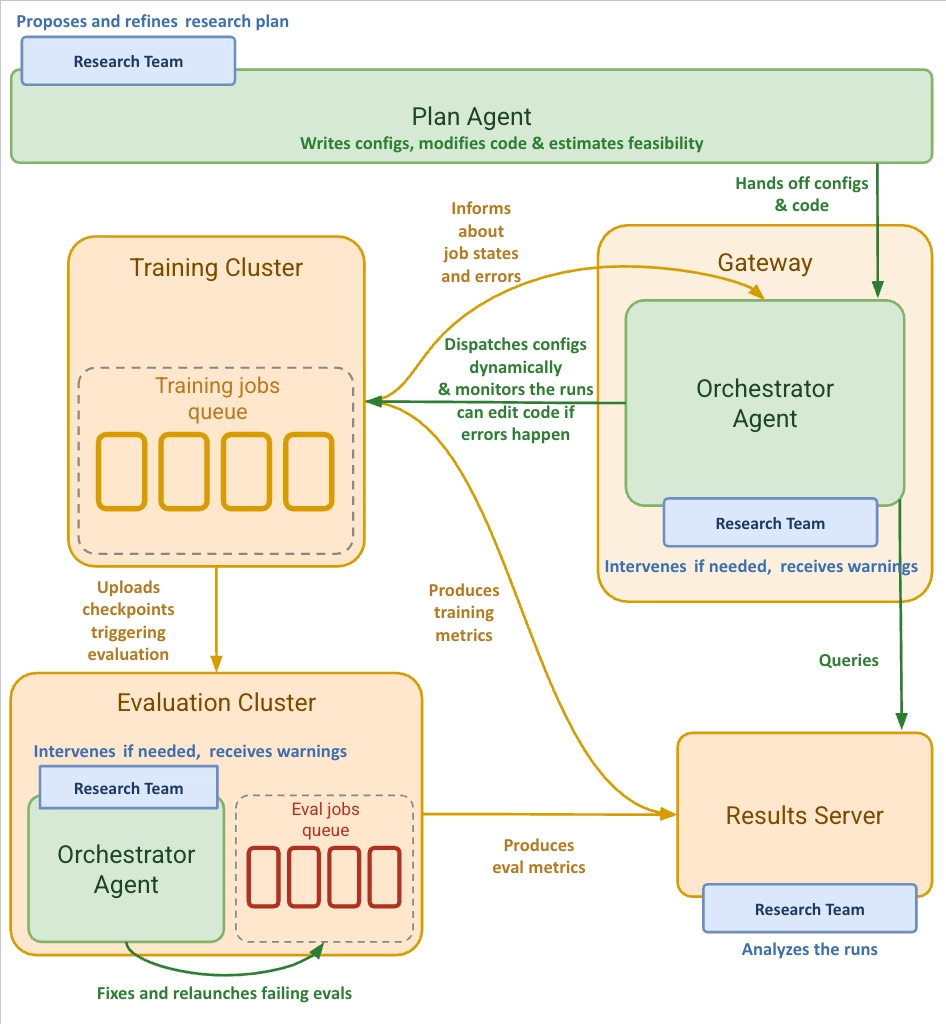
🌱 Living Models ran research with agents – With five researchers and 120 B200 GPUs to keep busy training genomics models, the team handed orchestration to an agent: it launched planned runs, watched their first minutes, killed unhealthy ones, queued replacements and pinged humans on Slack when unsure.
-
Plans came from whole-team whiteboarding sessions split into about three gated phases, with an AI assistant estimating time and hardware and every config checked programmatically for crashes or memory overruns before launch.
-
When a run failed, the agent favored config changes over code changes and logged surprises for the team.
-
Scoring a biology model takes fine-tuning or multi-step pipelines, so evaluation ran on a separate cluster, where a second mini orchestrator re-submitted failed jobs and missed checkpoints.
🪨 Cairn ran agent swarms on pentests – The open-source engine treated hacking a target as a search: worker agents never talked to each other, only read and wrote a shared graph of findings and planned explorations. It claimed to be the only entry to solve all 54 challenges at a Tencent Cloud hackathon.
- Community take w/ Gabriel Olympie of 2501.ai, who also shared his own agentic MCTS prototype: “I’m trying to wrap my head around how you can launch 10k agents on a complex problem and have them communicate effectively enough to solve it better than 10k independent agents. The orchestration layer is most likely where the gains come from at this scale.”
🚤 Agent sandbox Boat grew 3x monthly – Anicet Nougaret, CEO of Boat, took the product, which spins up persistent Linux, macOS and Windows cloud machines for AI agents, billed by the second and free when stopped, to 1,000 active subscribers, tripling month over month with fully product-led growth.
Biotech, Health, and Chemistry
🦠 Omnii-1 designed phages for a patient – Radical Numerics’ genome language model read 28 kinds of biological data in one system, from DNA to proteins and gene activity. In a claimed world first, phages it designed, viruses that kill bacteria, were given to a patient with an antibiotic-resistant infection.
-
With 11 to 15 amino acids changed in a phage’s receptor-binding proteins, 69.9% of Omnii-1’s designs came back viable, against 4.8% of random variants.
-
It claimed state-of-the-art variant effect prediction against AlphaGenome and Borzoi, and was also put to work on antibody design, cancer vaccine candidates and pathogen detection.
-
The patient was treated under compassionate use, the therapy had no regulatory approval, and the model stayed in research preview.
☢️ Marathon Fusion turned mercury into gold – Cancer radiotherapies need rare medical isotopes that existing reactors couldn’t supply fast enough. The startup claimed 10x CERN’s mercury-to-gold transmutation record and beat a 40-year-old Soviet enrichment record, then started building a San Francisco reactor.
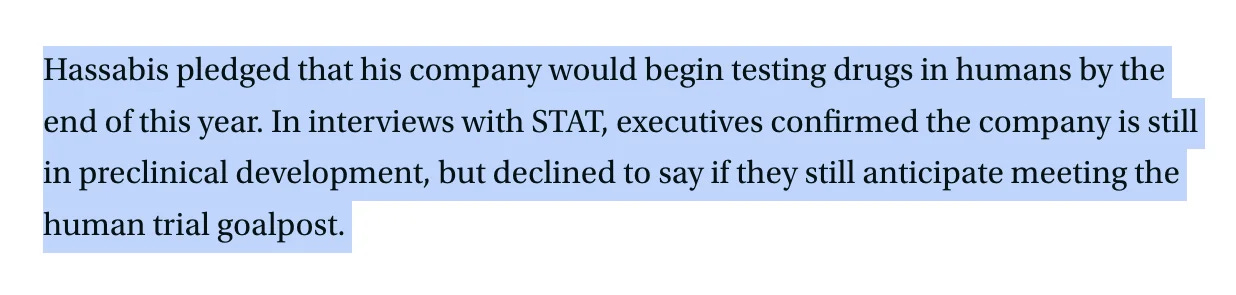
🧪 Isomorphic Labs got a reality check – Demis Hassabis promised human trials by year end, yet Isomorphic was still preclinical, with little public evidence of its pipeline. Félix Raimundo called entering the clinic months after preclinical work “just plain ridiculously impossible.”
-
The rare exception was gene-silencing ASO and siRNA drugs or CRISPR for monogenic diseases affecting fewer than 10 patients worldwide, where about three hospitals allowed the jump in two months, while six months counted as incredibly fast anywhere else.
-
An investigator-initiated trial in China could speed things up, but still took good contacts and a fair amount of animal studies, since China had proper regulations, just very efficient administration.
-
Isomorphic’s 2024 deals with Novartis and Lilly paid $37.5M and $45M upfront against $1.2B and $1.7B in milestones and royalties, a split he found heavily tilted toward performance and closer to young biotechs with few proof points than to preclinical Chinese drugs.
💰 Roche signed a $15B Hansoh pact – A year after licensing one antibody-drug conjugate, a cancer drug that carries a toxic payload straight to tumor cells, Roche returned to China’s Hansoh for a whole portfolio, paying $400M upfront with up to $15B in milestones, the so-called biobucks.
🚫 China proposed banning biotech platform sales – A draft export blacklist would bar foreign buyers from acquiring Chinese cell and gene therapy, siRNA and pathogen gain-of-function platforms, and require approval to transfer target discovery tech. Out-licensing stayed allowed, covering nearly all Western deals.
💊 Cost Plus Drugs bottled n-of-1 medicines – Drugs built for a single patient’s mutation stall on costly manufacturing. Mark Cuban’s company used its Dallas plant to vial two custom antisense drugs for $50,000 each, where others quoted $300,000 to $1M, and aimed for CRISPR therapies under $100,000.
Image, Video & 3D
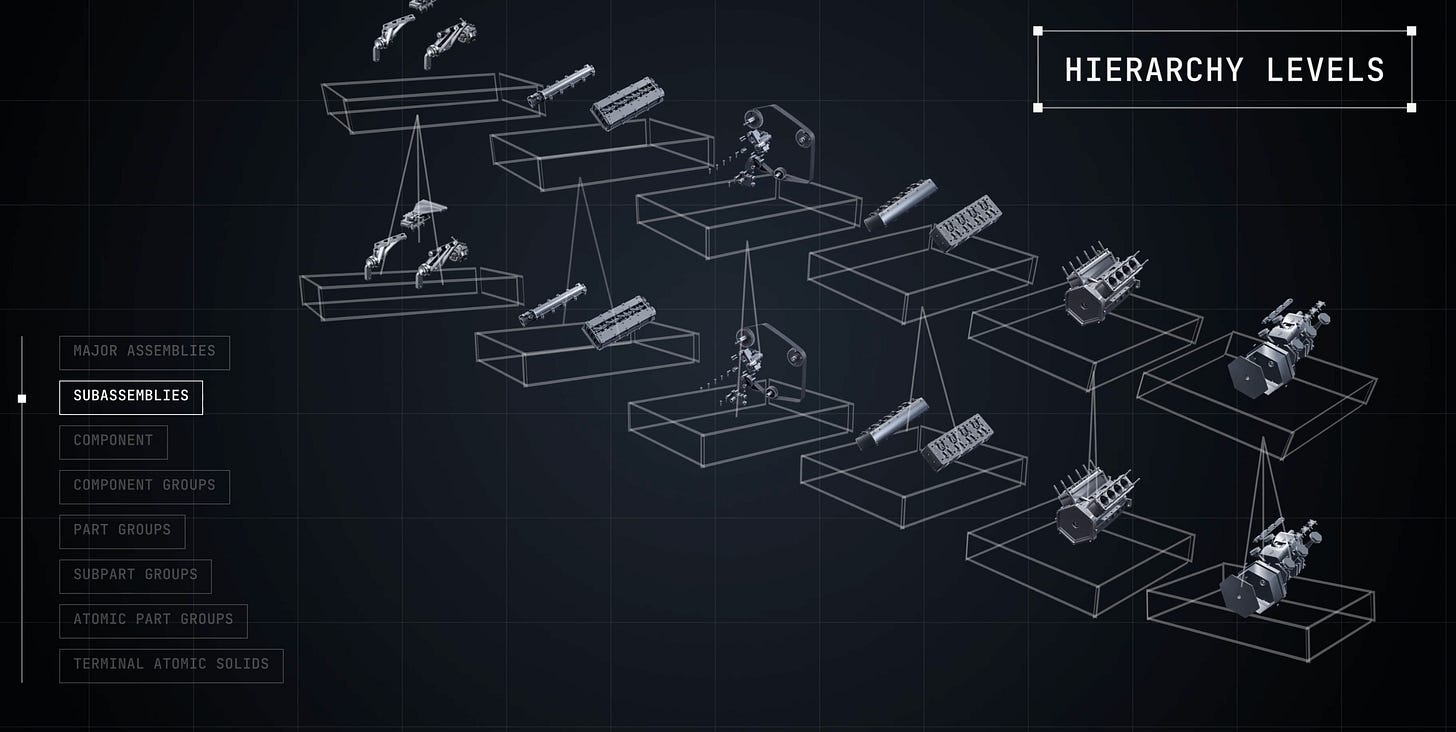
📐 Skyfall AI’s SKY-001 planned CAD visually – Rather than write CAD code token by token like an LLM, the engineering world model broke an object into a hierarchy of parts, then predicted the visual steps to build each one. On CAD and building plans, it claimed GPT-6 Astra-level accuracy at 51 to 125x the speed.
⚡ Qwen Image 2.1 went realtime – Image models usually take 20 to 40 denoising steps per picture. Linoy Tsaban’s distilled LoRA, a small add-on trained in 2,000 steps on one H100, cut Qwen-Image-2.1 to two passes, fast enough to generate and edit images live as users typed, on Hugging Face ZeroGPU.
Cyber
🐘 PHP2Shell broke WordPress, Drupal and Joomla – Bugs in how PHP’s core recovered from fatal errors, like running out of memory, left corrupted state that later requests could exploit, enabling code execution without login on WordPress, Drupal and Joomla, and leaks of passwords and keys from any PHP app.
-
Every PHP version from the past decade was affected, even a bare Hello World script, since the flaw sat in PHP itself rather than in application code.
-
A single Wiz researcher found and weaponized the chain in a week with Gemini 4 Argon and GPT-5.6 Sol, work that would previously have taken months.
-
Upgrading to PHP 8.2.35, 8.3.36, 8.4.27 or 8.5.12 was the only full fix, with an unlimited PHP memory limit capped by Linux cgroups as a stopgap.
🦊 GitLab patched a 12-year-old hole – A crafted regular expression could overflow an integer in Onigmo, the Ruby regex engine GitLab ships, letting attackers run code on self-managed servers without logging in. Rated CVSS 10.0, it hit every release since 7.0 in 2014. GitLab.com was already patched.
🔓 OpenCode allegedly leaked provider API keys – A breach notice posted on Reddit warned that someone had accessed a legacy system being decommissioned, possibly exposing the OpenAI, Anthropic and other provider keys users saved in their OpenCode cloud workspaces. Users were told to revoke and rotate them.
🔑 Claude traced the NSA’s ECDSA seeds – For 25 years, the unexplained seeds the NSA supplied for NIST’s elliptic curves, which secure TLS, Bitcoin and passports, fed backdoor suspicions. With no hint, Claude worked out in under 30 minutes that they came from a 1990s C random generator seeded with the clock.
Infrastructure
🧵 Shadow’s Fabric undercut Modal on GPUs – Pierre Chapuis reviewed Fabric, the serverless GPU side of Shadow’s new Blade platform: Modal with near-identical APIs, on older cards at half the price of Modal’s L4. He saw it for small model inference, batch data generation or dev work, not training.
Language Models
🌙 Moonshot released Kimi K3.1 Pro – Built to code whole projects, from games in Unreal, Unity and Godot to parametric 3D models in Blender and CAD, the multimodal mixture-of-experts model activated 104B of 2.8T parameters over a 1M-token context. Weights were due by November 4.
-
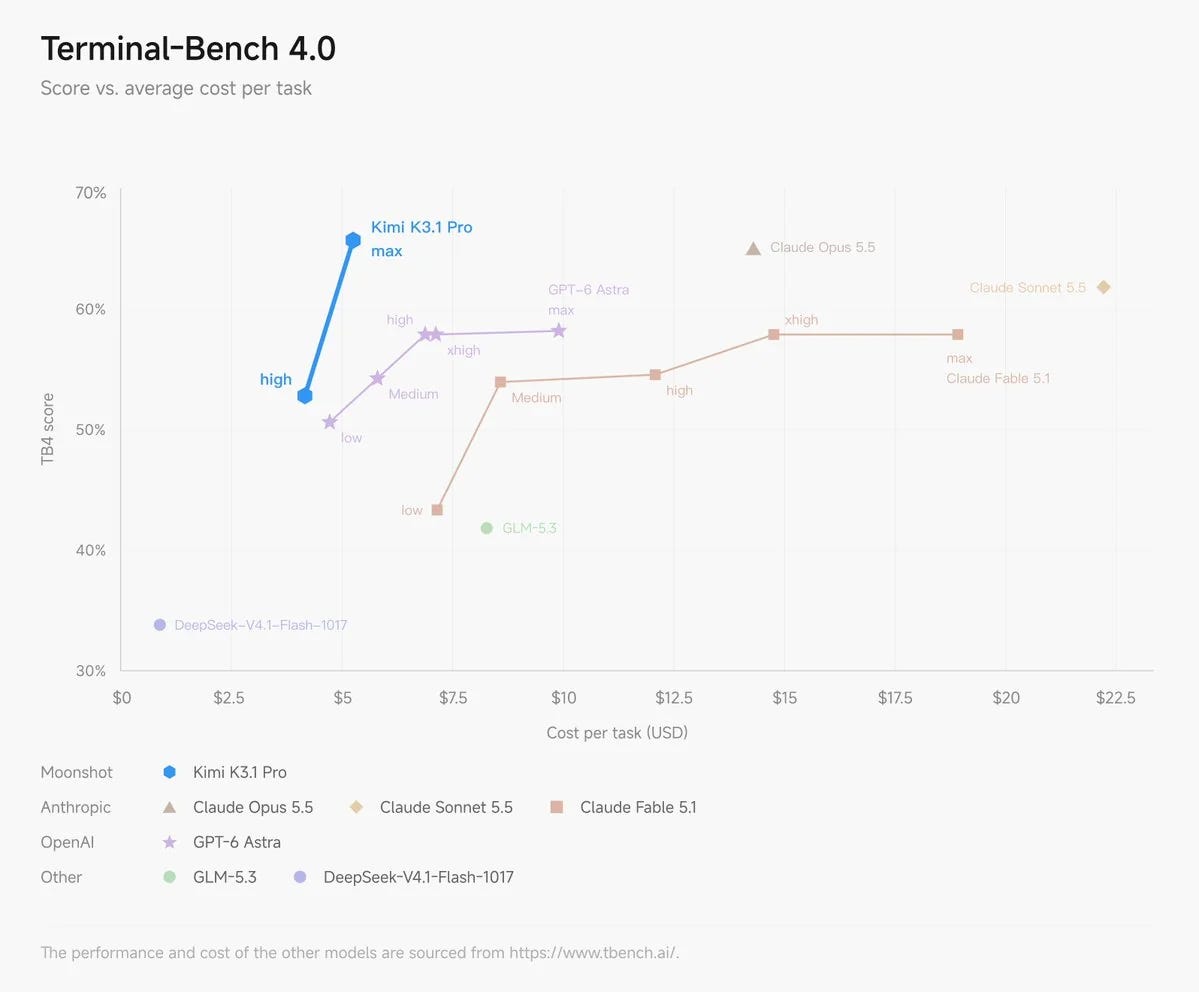
It scored 65.7% on Terminal-Bench 4.0, ahead of GPT-6 Astra at 58.2% and just behind Claude Opus 5.5 at 66.4%.
-
Its claim-level hallucination rate fell from 23.4% to 8.3%, with a state-of-the-art score on the OfficeQA Pro v2 fiscal analysis benchmark.
-
Moonshot deliberately removed cyber data from training, lowering its vulnerability research score from 90.5% to 81.0% to stay below frontier closed models.
🐦 Ornith-1.5-122B trained on its own tasks – Instead of fixed, human-curated tasks, the open 122B mixture-of-experts model kept generating its own training tasks, scaffolds and solutions, improving through reinforcement learning. It ran on a single NVIDIA DGX and scored 0.845 on SWE-bench Verified.
🔬 Shanghai AI Lab’s Sage-A1.5 punched up – Built for long research and engineering runs, the 35B mixture-of-experts agent model, with 3B active, split work across parallel subagents and checked its own evidence. It claimed wins over Ornith-1.5, Kimi K3, GLM-5.3 and GPT-5.6 Sol on several benchmarks.
🔥 Recursive’s Flint coded fast on laptops – The 40B mixture-of-experts coding model activated only 2.5B parameters per token, generating over 125 tokens per second on an M4 Pro MacBook while leading sub-50B models on agent coding benchmarks. Recursive’s automated research system built it in under four months.
🌊 Inception’s Mercury 3 scaled diffusion LLMs – Unlike standard LLMs that write one token at a time, diffusion models refine a whole passage in parallel. Mercury 3, 40x larger than Mercury 1 at the same speed, claimed better quality than GPT-6 Luna and Claude Haiku 5.5 at over 1,000 tokens per second.
🤖 Nemotron 3.5 Bolt ran in 4GB – NVIDIA’s model, built on Gemma 4 E4B for voice assistants, game characters and robots, held conversations and called tools in 4GB of VRAM, with reasoning switchable off for speed. It claimed 40% higher quality than Nano 4B with up to 80% fewer tokens.
🌀 MiniMax shipped M3.1 Flash for agents – Built for coding, computer use and security agents, the fast model cut agent task costs 70% against its predecessor and ran nearly 3x faster, above 200 tokens per second. It reportedly activated 23B of 428B parameters, with weights promised later.
🏛️ US agencies banned DeepSeek models – Homeland Security ordered civilian agencies, from Treasury to Justice, to remove DeepSeek and any technology built with its models, while defense agencies were left out. DeepSeek’s cheap models stayed popular with US firms such as Snowflake, Vercel and OpenRouter.
MLOps
🐳 DeepSeek open-sourced its DeepInfer engine – DeepSeek released the framework that serves its own production traffic, built for low latency and high throughput. It only ran DeepSeek-V4.1-Flash, on NVIDIA SM100 GPUs and Huawei Ascend 950 chips, and left out the KV cache and load balancing a full service needs.
- Community take w/ Amine Saboni of Plumber: “The repo claims deterministic sampling and batch invariance, which to my understanding could make it an infra layer for intensive RL tasks, maybe less for general-purpose serving as vLLM could be.”
Programming
🐛 Cindy Sridharan debugged with Claude agents – As agents write more code, engineers end up debugging systems they no longer understand. Working through a latency bug, a memory leak and a daemon hang in a decade-old codebase, she framed it as finding the one hypothesis that fits every hard fact in logs and traces.
Robotic, World AI
🦾 NVIDIA shipped Isaac Lab 3.0 – The robot learning framework let teams mix physics engines, for cables, soft materials or linked joints, and renderers from fast to photorealistic, then scale training from one GPU to a cluster and package policies for real robots with LEAPP.
🗺️ Niantic Spatial turned sites into simulators – Robot policies trained in synthetic scenes stumble on real clutter, uneven floors and glass. Five minutes of 360-camera or drone footage became a photorealistic, collision-ready copy of the real site within hours, and a policy trained there fell 13x less often.
🥋 Unitree’s H2-X turned kung fu guardian – Billed as a guardian built to serve and protect, the humanoid robot ran up to about 8 hours on a charge. Its launch video drew 10 million views, along with Unitree’s reminder to use the robot safely and in a friendly manner.
Other topics
🧠 Nick Cammarata found neurons mostly legible – Interpretability research long assumed networks cram unrelated concepts into single neurons, which makes them hard to read. Revisiting the problem with agentic tools, the former OpenAI researcher found that about 90% of neurons in Qwen3-32B had one main job.
Contributors This Week
Gabriel Olympie, Félix Raimundo, Pierre Chapuis, Amine Saboni, Mehdi Medjaoui, Quentin Dubois, Anicet Nougaret, Leonard Strouk, Akpeli Nordor, Alexey Eryshev, Mario Cornejo, Maziyar Panahi