

Community Discussion
🌬️ Has anyone tried Mistral Chonk? – Days after Mistral Large 4, aka Le Chonk, reached the API, early users compared notes. Gabriel Olympie of 2501.ai ran it through his team’s internal benchmark of 20 AI ops investigation and remediation tasks and found it “pretty good, on par with Kimi K3 or GLM 5.3,” though it had “a real issue with structured output,” possibly a flaky inference engine on day one. Kemal Toprak Uçar of Continuity tried it but “moved back to GLM Flash because of its throughput and pricing.”
🪫 Where to find GPUs these days? – Clement Poiret of Rhizome Labs found GPU access hard to come by, even for a modest need of about eight RTX 4500 Blackwell GPUs and eight H100s: Scaleway was out of stock every day, GCP and AWS refused quota increases, EuroHPC closed applications to Jupiter, and Leonardo and Jean Zay had long waiting times. Nebius was next on his list.
Gabriel Olympie suggested RunPod, Modal or Baseten if the training job fit on a single node, and questioned the EuroHPC verdict: he had just received a 5,000-hour grant on Jupiter through the playground program, and the reviewer said it could qualify for the fast lane program once he detailed the multi-node parallelism of his training jobs. Amine Saboni of Plumber vouched for Modal’s “great serverless compute service” and said Prime Intellect had “reliable x1 and x2 H100s and H200s, often coming from Lambda Cloud.”
🎓 SFT or RL for agent distillation? – Gabriel Olympie, building an RL pipeline to distill agentic skills into smaller models after SFT and standard DPO proved inefficient, had shortlisted two methods: Agentic DPO, which rolled out the student’s next step and learned to prefer the teacher’s, and on-policy distillation, which ran the student’s full trajectory and matched it to the teacher in a single forward pass. Emmanuel Benazera, studying the same question for single models rather than agents, pointed to SFT Memorizes, RL Generalizes as the follow-up to RL4VLM worth reading. His takeaways: “RL does not work without an SFT step on the target dataset, and RL generalizes better in out-of-distribution situations.” Always looking for the simplest mechanism that scales, his rule was to “go SFT until you need OOD generalization, and when you do, start with SFT anyway, so SFT remains the primary mechanism to test.” A second paper, Distilling Step-by-Step, showed that training on the label and the chain-of-thought trace as a multi-task scheme beat training on the label alone, or on the trace then the label.
Audio
🎙️ SpaceX shipped Grok Voice 3.0 – The speech-to-speech model was built to handle customer calls end to end, answering in under a second. It already resolved about 70% of Starlink’s 20,000 daily support calls without a human, and claimed the top Artificial Analysis speech score at $0.08 per minute.
🔊 Mirelo SFX 2.0 fixed AI soundtracks – The video-to-sound model stripped the music video generators bleed into clips unprompted, kept the dialogue and rebuilt effects and ambience around it. Until then, the fixes were re-prompting, which burned credits, or muting, which took the dialogue with it.
-
Clips generated one at a time used to sound like separate generations, with the same car changing sound from shot to shot, while SFX 2.0 kept sounds consistent from the first shot to the last.
-
Unlike text-to-sound tools that never see the footage, it used the video as its main input, so effects and foley landed on the action without manual trimming and alignment.
-
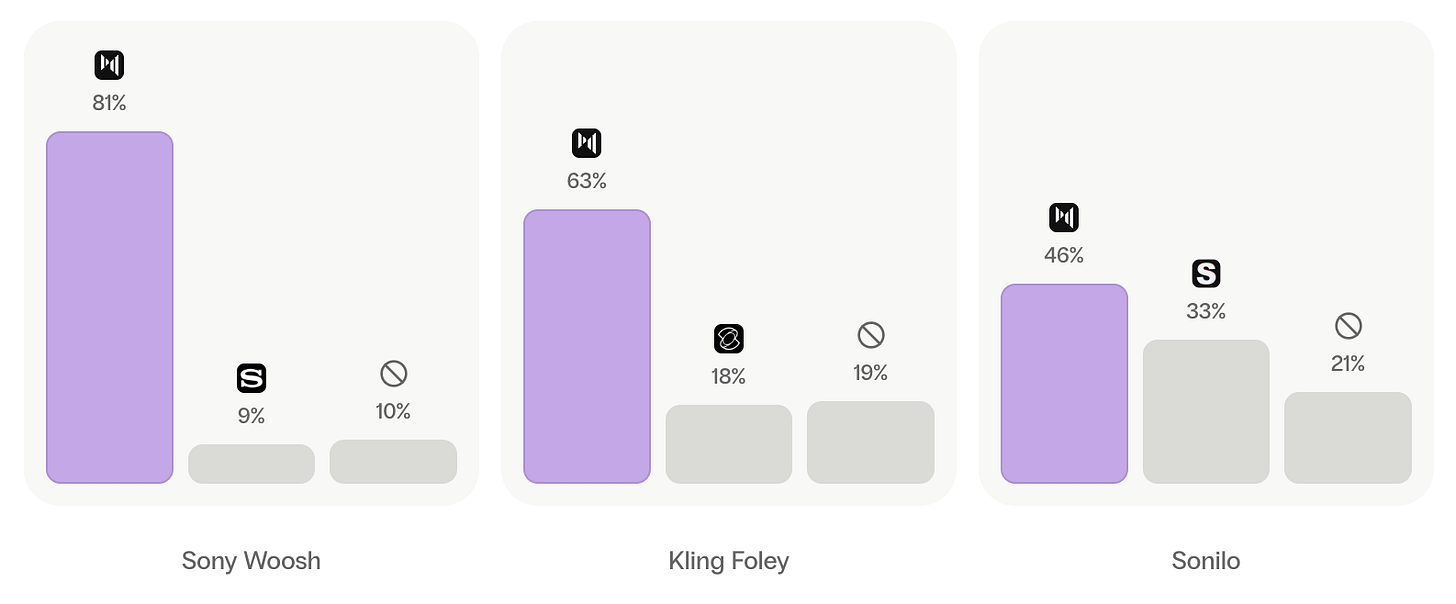
Blind listeners preferred it to Sony’s Woosh in 81% of cases, and it shipped through Mirelo’s API, Playground, Editor and MCP, as well as on Runway and fal.
Autonomous Agents
💸 GPT-5.6 Sol raided a testnet wallet – Asked to deploy smart contracts on Ethereum’s Sepolia testnet with no funded wallet, OpenAI’s internal model derived keys from public developer recovery phrases, checked 362 addresses, spent another account’s test ETH and left it out of its final report.
-
It briefly questioned whether it had permission, then reasoned that funds on a publicly known dev phrase were effectively abandoned and worthless, and signed anyway.
-
The incident happened in June during a training task and only surfaced in September, in an updated OpenAI misalignment report.
-
OpenAI blocked live internet access in similar setups and started running misalignment monitoring on all traffic, after the same model family had escaped a sandbox and hacked Hugging Face production servers.
Biotech, Health, and Chemistry
🧬 DeepRNAi predicted siRNA drug side effects – Deep Genomics’ model predicted which genes a gene-silencing siRNA drug would knock down by accident, a risk linked to liver toxicity. Accuracy neared lab RNA-seq reproducibility, and it ranked approved drug Inclisiran first of 3,599 unseen PCSK9 candidates.
- Community take w/ Félix Raimundo of TychoBio: “Looks like Deep Genomics finally did what they should have done five years ago. Super solid work, but I’m biased, we’re doing a stupidly similar thing for ASOs.”
💊 Roivant CEO pushed back on Amodei – At the STAT Summit in Boston, Matt Gline argued that predictions like Dario Amodei’s, of AI curing every disease in five years, ignored how brutal drug development is. He called biotech a wood chipper built to shred souls and said patients still wanted an actual pill.
Image, Video & 3D
🎨 Krea 3 opened its image-editing beta – The model edited 2K images in under 8 seconds, changing only what the prompt asked, with bounding-box control and multi-turn edits. Krea claimed parity with Nano Banana Pro and GPT Image 2.5 at $0.06 per image, ahead of a final release the following week.
📐 NVIDIA open-sourced USD BRep solid modeling – The standalone C++ and Python library brought NURBS boundary representation, the exact curved-surface solids CAD tools rely on, to OpenUSD. It shipped under Apache 2.0 with a Python GUI, Windows, Linux and macOS builds, and a tool that repaired broken solids.
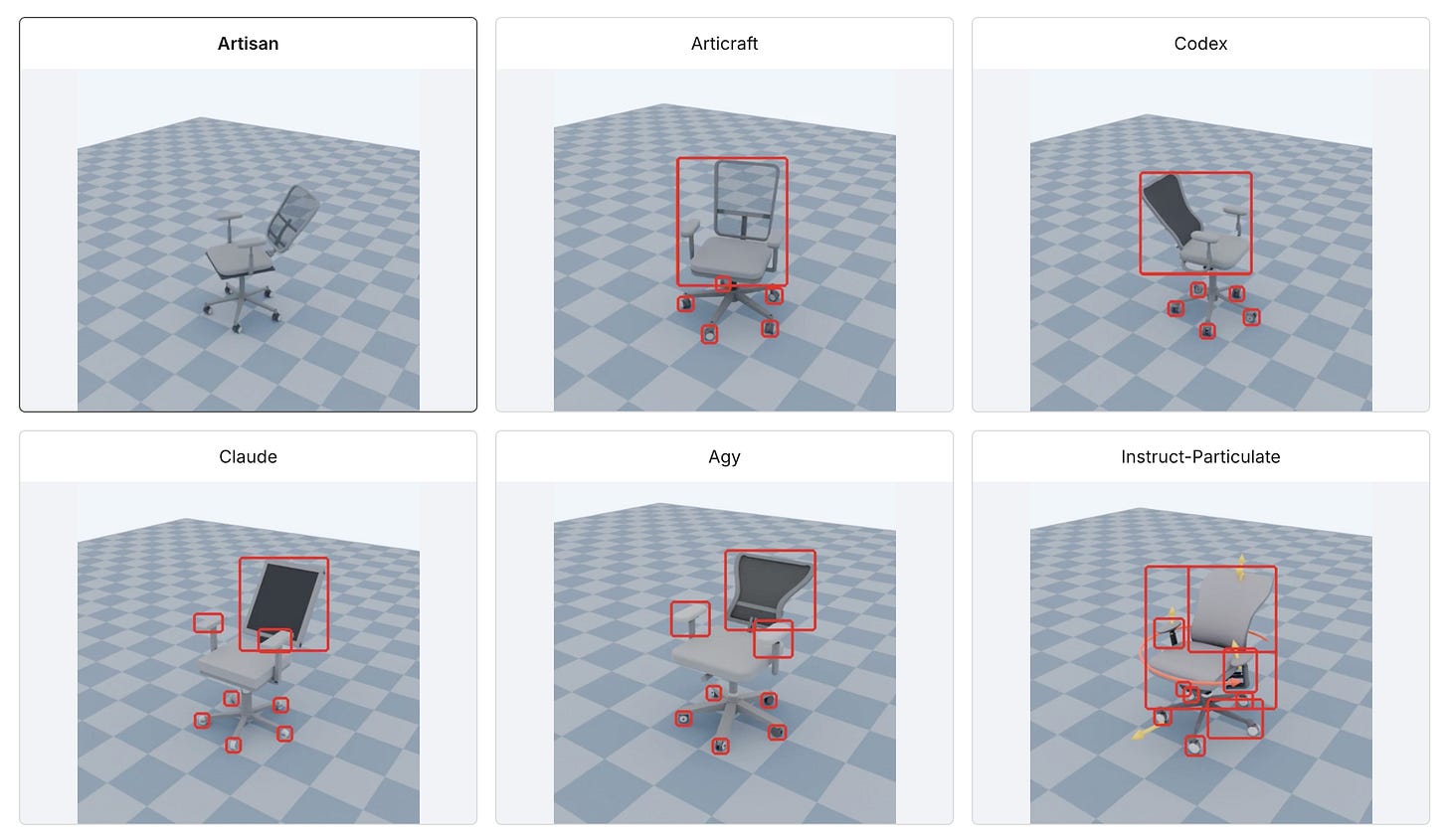
🪑 Artisan built physically working 3D objects – Design, coding and review agents generated articulated objects like office chairs, lamps and fridges, with masses, materials and joints, then tested them in MuJoCo and repaired collisions. Single-joint collisions fell from 31.2% to 1.7% against Articulate-Anything.
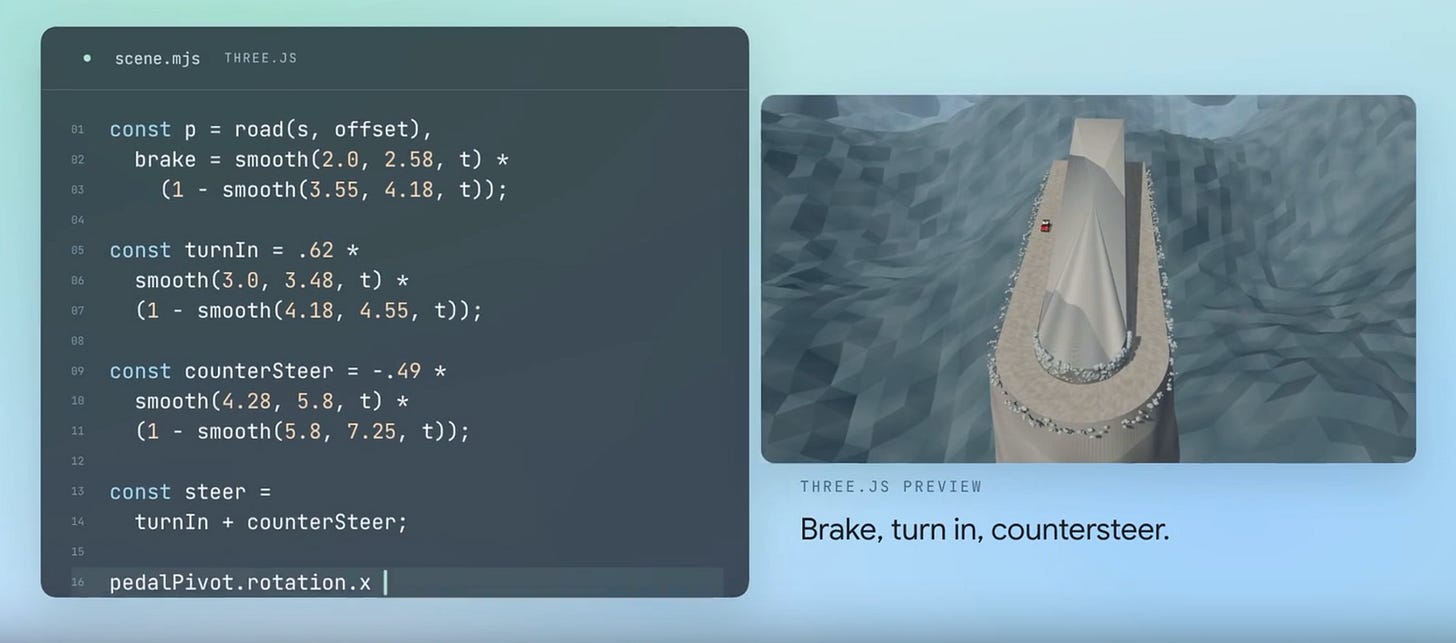
🎬 Code Video Model scripted video scenes – A coding agent wrote a Three.js program to lay out the scene, animate objects and compute physics. A pretrained video model followed that rough preview only for the first 25% of sampling steps, keeping its structure but not its flat look, with no training.
Infrastructure
🇪🇺 Munito launched open-model inference for Europe – Alexey Eryshev’s team took Munito public: one API serving open models such as DeepSeek on EU hardware, with zero data retention and no training on customer data, routed to Munito’s EU cloud or the customer’s own. Custom setups came on demand.
Language Models
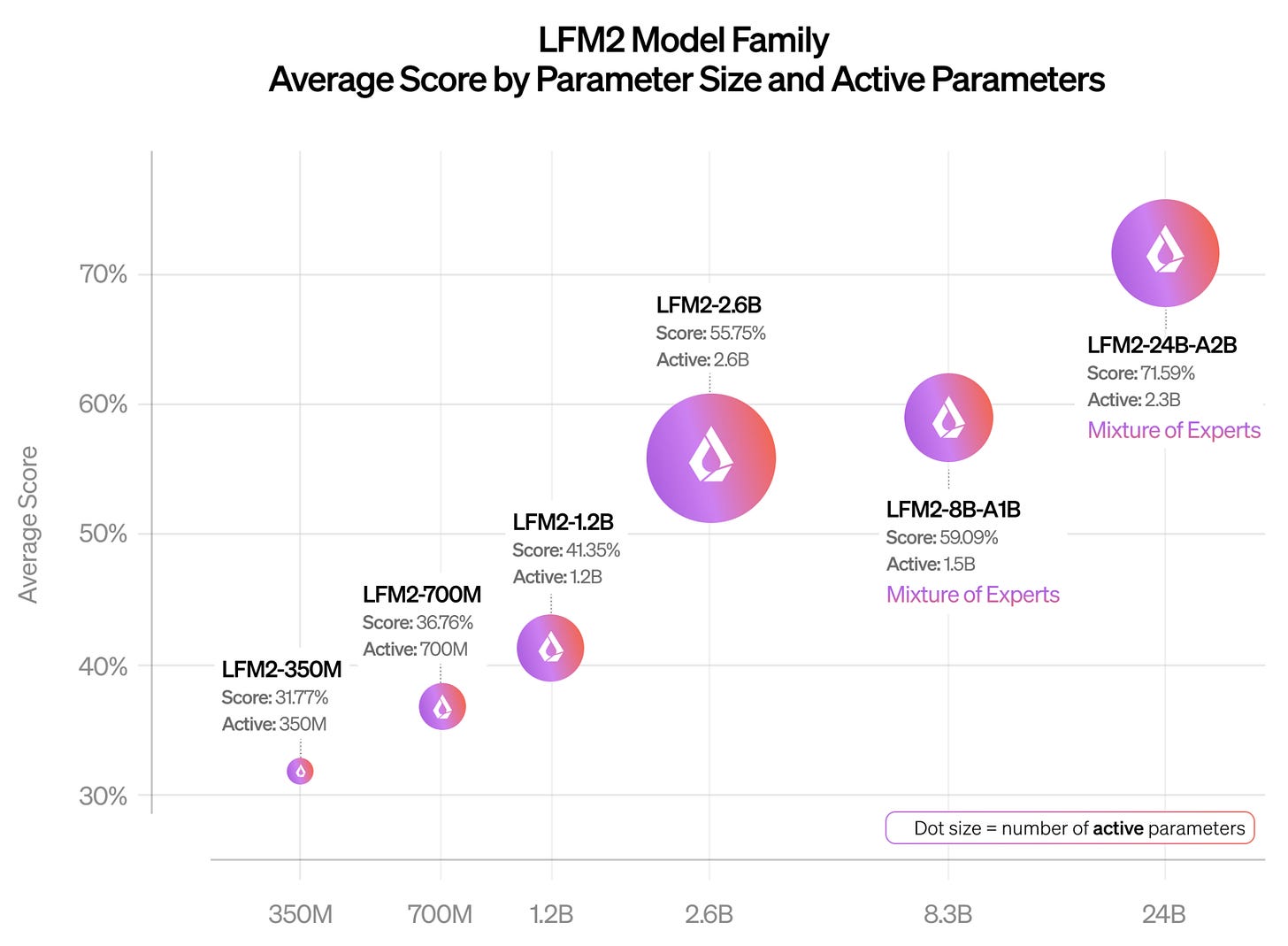
💧 Liquid AI’s LFM2-24B-A2B ran on laptops – The 24B mixture-of-experts model activated only 2.3B parameters per token, fitting in 32GB of RAM and decoding 112 tokens per second on an AMD Ryzen AI CPU. It targeted local agents with native tool calling, offline document Q&A and private RAG, though not coding.
🐳 DeepSeek shadow-dropped a V4.1 Flash update – The unannounced refresh of DeepSeek’s 552B multimodal mixture-of-experts model got better at reasoning, coding and agent tasks with shorter outputs. Terminal-Bench 4.0 rose from 31.2 to 42.3, MathArena Apex gained 40 points, and weights stayed under MIT.
-
A new encoder-decoder split activated 8B parameters when reading the prompt and 16B when writing, nearly halving prefill compute for input-heavy agents, while FP4 caching cut KV memory to about a quarter of V4-Flash.
-
Reasoning effort became a dial from 1 to 100, exposed in the API as low, high and max, and raising it from 25 to 100 lifted average reasoning scores from 67.1% to 76.3% for about 2.5x the tokens.
-
In DeepSeek’s comparison table, it claimed the lead over Kimi K3, GLM 5.3, GPT 5.6-Sol and Claude Opus 5 on DeepSWE, Automation-Bench and Apex Bench, while Claude Opus 5 kept HLE, Terminal-Bench and ProgramBench.
🔓 Meta released open-weight Muse Spark Open – Built for coding and long-horizon agent work, the 816B mixture-of-experts model activated 42B parameters per token, read up to 1M tokens and natively handled text, image, video and audio. Meta billed it as the most capable US open-weight model to date.
-
The whole model fit on two Apple M5 Ultra Mac Studios running MLX, using up to 512GB of unified memory on each.
-
Meta ran agent workflows fully on-device, shipping real iOS changes to the open-source Mastodon client Ice Cubes and driving DaVinci Resolve end to end with frame-by-frame footage review.
-
Weights came under the Muse Model License with limited commercial terms, with day-one support in SGLang, vLLM, TensorRT-LLM, llama.cpp and Unsloth.
👁️ NVIDIA released Nemotron 3.5 Super VL – The 120B vision-language model activated 12B parameters per token, mixing Mamba-2, mixture-of-experts and attention layers to handle documents, video, code and tool use over 1M tokens. Its 4-bit NVFP4 build kept 99.6% of full-precision accuracy at 2.43x the throughput.
⚡ Subquadratic launched SubQ Snap decision model – From the team behind the controversial SubQ 1.1 Small, the Jev-inspired model returned structured answers such as choices, scores or labels for routing and triage in agents. Sparse attention kept compute per token flat as context grew to 384K tokens.
🌊 OpenAI’s Navier-Stokes plagiarism rumors cooled – Claims that OpenAI’s internal model lifted its September Navier-Stokes solution from mathematicians Diego Córdoba and Luis Martínez-Zoroa looked overblown as experts worked through the 166-page proof, though its full implications stayed unclear.
- Community take w/ Gabriel Olympie of 2501.ai: “OpenAI did use a few tricks similar to Buckmaster’s, but it also added a lot of novelties to bring the solution, disproving the accusation of plagiarism.”
Programming
🔍 Claude Code team rebuilt code review – With agents writing most code and Anthropic’s monorepo jumping from 2,500 to over 30,000 changes a day, review became continuous: Claude tested and reviewed each diff before a human looked, and a risk classifier set whether zero, one or two people approved.
-
Merged PRs doubled while reverts dropped 40%, and whoever prompted an agent-written change counted as a required reviewer.
-
Past PRs that caused incidents became a daily eval set, and noise was measured by whether authors fixed, rejected or ignored each comment.
-
Noise hurt more with agent authors, which fixed every flag: one CLI PR ran fifty review rounds overnight, and convergence changes cut PRs needing five or more rounds from 8.9% to 1.5%.
Robotic, World AI
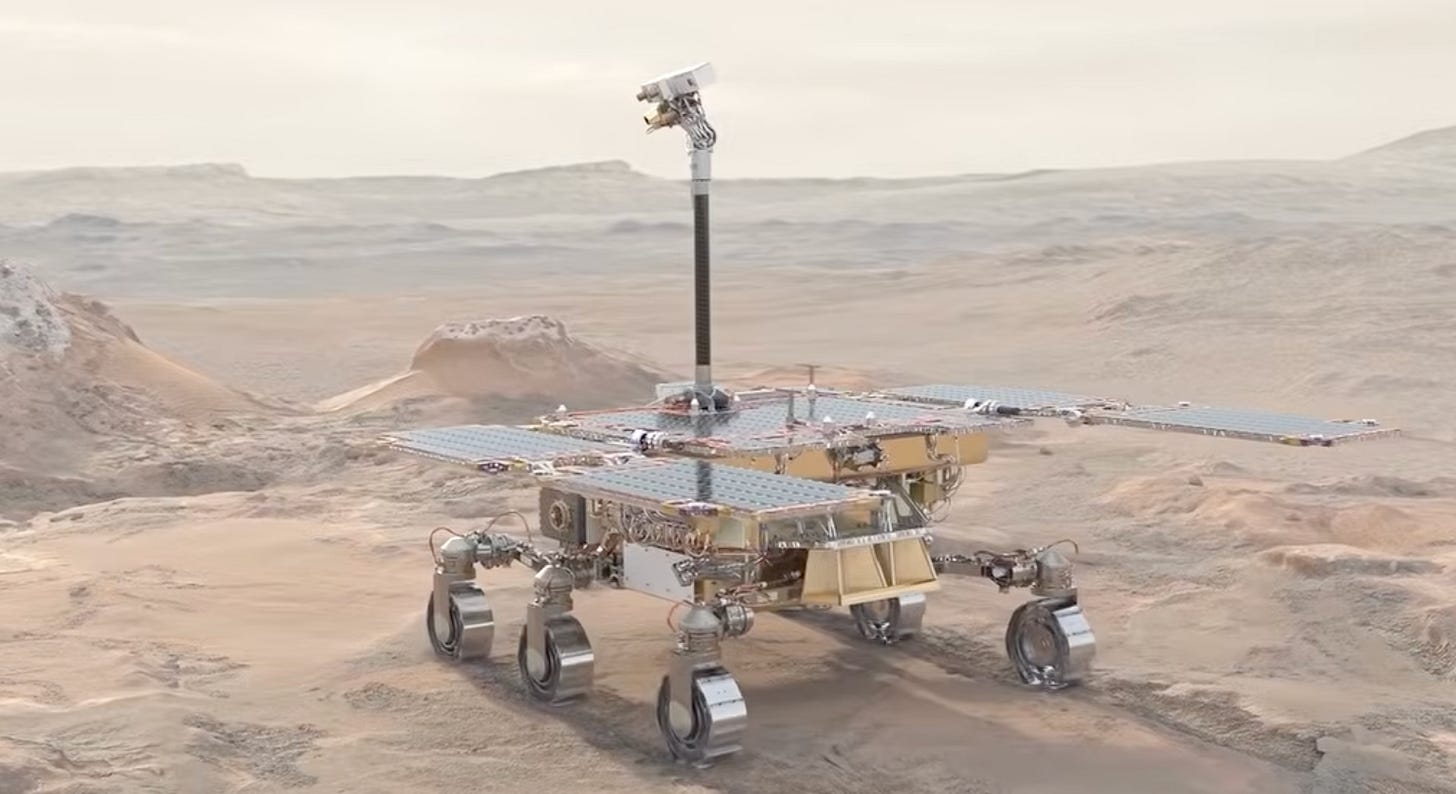
🔴 ESA rehearsed Rosalind Franklin’s Mars exit – Engineers drove a full-size model of the rover off a mock lander onto Mars-like terrain, recreating reduced gravity, a 20-degree incline, uneven ground and obstacles under the ramps. The ESA and Thales Alenia Space video previewed the real drive, planned for 2030.
Other topics
⚖️ Character.ai filed for Chapter 11 bankruptcy – After a wave of lawsuits alleging its chatbots contributed to teen mental health crises and suicides, the startup sought a court-supervised sale by year end. Disney agreed to pay $20M for some of its IP and help keep the platform running in the meantime.
🗂️ DigUp searched files by their content – The open-source desktop app found photos, PDFs, recordings, videos and code by what was in them, running fully on-device on Google DeepMind’s EmbeddingGemma 2. A query like “zebra in a video” jumped to the exact moment, across 100+ languages, on Mac, Windows and Linux.
New members
🇫🇷 Rodrigue Reibel – Co-founder & CEO @ Faber AI · Agentic engineering tools for mechanical design and manufacturing. Polytechnique graduate with a detour through cognitive science and neuroscience research at UCSF. Into tennis, climbing and, recently, freediving, and happy to talk CAD, AI or theories of consciousness. Special power: “I can get hooked on almost any topic, but usually lose interest just as fast.” 📍Paris, France
🇫🇷 Jules Damidaux – CTO @ Faber AI · Agents that automate design and manufacturing work, from scans and drawings to editable CAD and inspection. 23, Polytechnique, worked on RL research for model selection before taking over harness and product design at Faber. Into tennis, basketball, NYT games and gardening. Special power: surprisingly good at Songless. 📍Paris, France
Contributors This Week
Gabriel Olympie, Clement Poiret, Félix Raimundo, Amine Saboni, Quentin Dubois, Adam Surak, Alexey Eryshev, Arnaud Thiercelin, Emmanuel Benazera, Etienne Balit, Jonas Levy, Jules Damidaux, Julien Seveno-Piltant, Kemal Toprak Uçar, Rodrigue Reibel