

Events
🇫🇷 AI Engineer Warmup in Paris (September 22) – H Company, Modal and Black Forest Labs host food, drinks and informal chats by the Seine from 18:00 ahead of the conference. Approval required.
🇫🇷 AI Engineer Paris at Station F (September 23-24) – Second edition organized by Mistral: 1,000 engineers, 30 talks and launches, 16 workshops, evening opener on the 23rd and full conference day on the 24th.
🇺🇸 WeAreDevelopers World Congress in San Jose (September 23-25) – 10k developers. Justin Halsall (rrweb) speaks with Fullstory CEO Scott Voigt on closing the autonomous software development loop, from code to real user behavior.
Autonomous Agents
🦆 Conception launches Reduck MCP for agents – The Chrome extension let agents discover, run and create browser scripts that executed as tools inside the user’s logged-in session, in parallel from one tool call. Pitched for lead gen, GEO monitoring and invoice downloads where raw computer use proved slow and costly.
🗑️ Invalidate expires stale agent memories – The open-source library from Headroom Labs asked every stored memory one question after each event, is this still true, and flagged stale ones without rewriting. Built on Jev at 150 ms and $0.00006 per check, it fronted Mem0, LangGraph, Chroma and Qdrant with 89.2% strict accuracy.
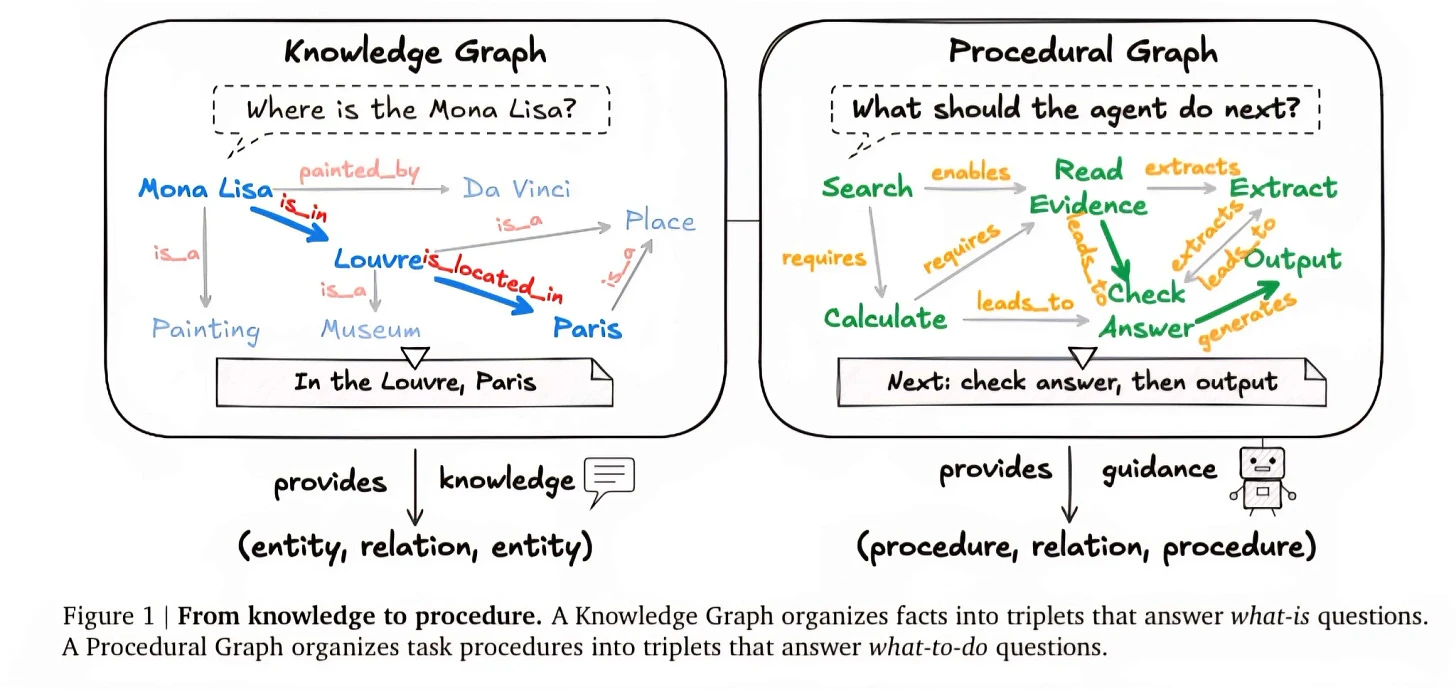
🕸️ Procedural Graphs store what-to-do agent knowledge – The paper organized procedures into (procedure, relation, procedure) triplets, the what-to-do counterpart of knowledge graphs, to keep agents coherent over long horizons. A guidance model biased the next action from the active subgraph, while an offline LLM refiner contrasted failed and successful runs to edit the graph, beating memory baselines.
Biotech, Health, and Chemistry
🧬 OpenAI Foundation bankrolls health datasets – The second science program committed over $125M to datasets no single institution would fund: OpenADMET benchmarks for how small molecules move through the body, CTD Commons to preserve regulatory files from failed drug programs, and UNC data for personalized cancer vaccines.
- Community take w/ Ashley van Heteren (Radiogenesis): “OpenADMET is particularly interesting, although hopefully it evolves beyond small molecules. Having a searchable regulatory path would be incredible as well.”
🔬 Periodic Neon masters X-ray diffraction – Neon read X-ray diffraction patterns to identify which crystal phases formed in a synthesized powder, a task where overlapping peaks cost experts hours per sample. Post-trained from Kimi K2.6 on lab data with RL, it hit 55.3% on 134 hard samples, from a 2.7% baseline, ahead of GPT-6 Astra and Fable 5.1 at lower cost.
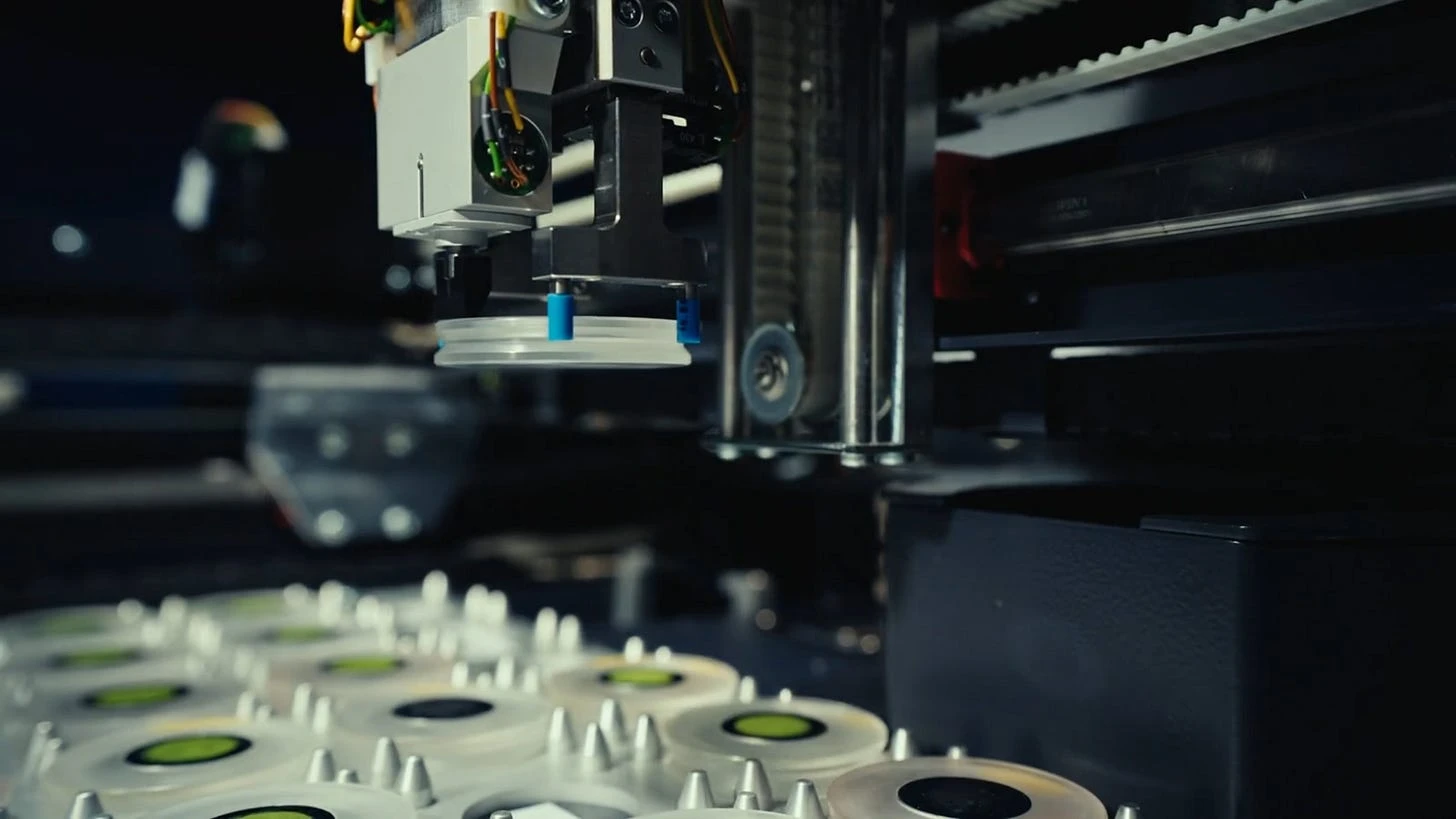
🧫 Claude speeds up 30 biomolecular models – Anthropic reported Claude optimizing over 30 open-source structure prediction, protein design and genomics tools in under four weeks, roughly 4x faster on average. FlashPairformer kernels and a low-memory mode folded a bacterial ribosome on a single GPU node. Code is open.
Image, Video & 3D
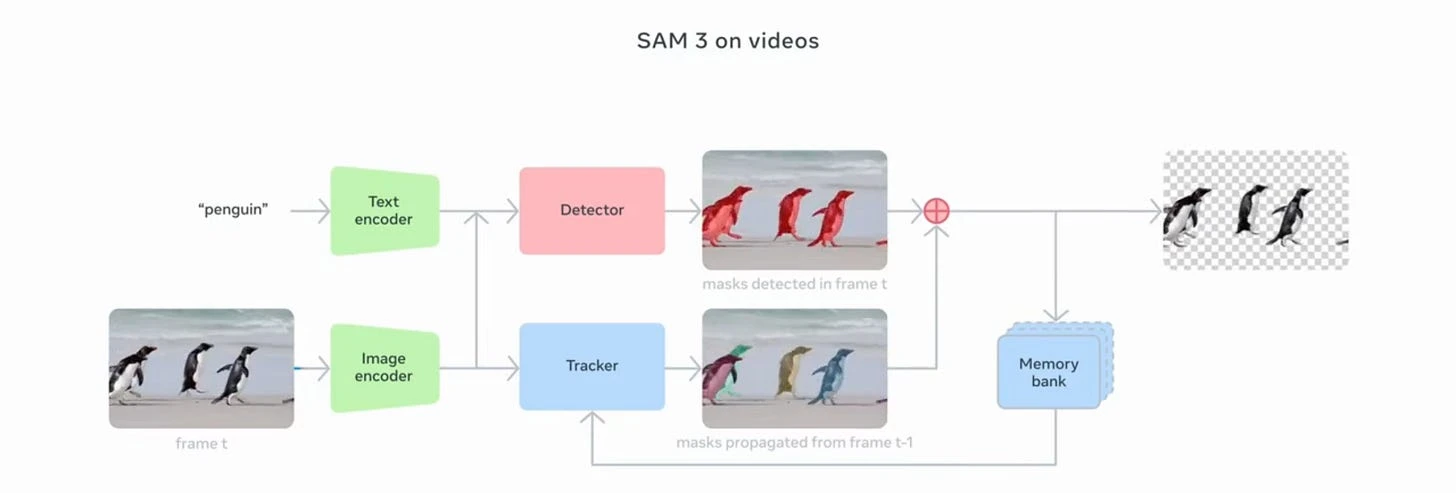
🎯 Meta serves SAM 3.1 via API – Segment Anything 3.1 returned detections, pixel-precise masks and identity-preserving video tracks from one zero-shot text prompt in a single call, on inference tuned for its DETR architecture. Pricing: $2.50 per 1,000 images and $0.20 per 1,000 video frames.
🕺 DiscoSea rigs characters from video meshes – Volumetric Motion Rigging turned unstable per-frame 3D reconstructions into an animated character by splitting coarse motion volumes from detailed surfaces. Voxelized regions carried the transforms, and the result played in Blender and Unity as a 52-pose baseball swing.
Cyber
🛡️ Mistral denies rumored system breach – A rumor of a severe hack circulated on September 18. Mistral stated that a thorough investigation found no evidence of unauthorized access and that its systems were not compromised. The story looked like a rerun of an older incident rather than fresh news.
Infrastructure
🖥️ NVIDIA lists RTX PRO 5500 Blackwell – The workstation card packed 21,760 CUDA cores, 84 GB of ECC GDDR7 on a 416-bit bus at 1,398 GB/s and a 600W limit, filling the gap between the PRO 5000 and the 96 GB PRO 6000. No pricing yet, but the consumer RTX 5090 already crept toward PRO 6000 territory, with an ASUS ROG Astral edition listed at close to 7,500 euros in France.
Language Models
⚡ TypeSafe unveils Jev decision model – TypeSafe AI left two years of stealth with Jev, a “System One” model returning typed values with calibrated probabilities instead of text, trained with RLCD. It claimed 70 to 500 ms responses, $0.042 per million input tokens and free output.
-
Parallel sampling produced every output field in one query rather than token by token, which TypeSafe positioned as the source of its 40 to 200x speedup over frontier LLMs.
-
Target uses were routing, risk classification, scoring and jailbreak detection on LLM outputs, demonstrated by a Doom bot issuing ten queries per second for about $7 an hour.
-
Schema-valid output did not mean correct output, and the team’s own workflow benchmarks used the average of GPT-6 Astra and Fable 5.1 as reference answers.
-
Community take w/ Quentin Dubois (OSS Ventures): “A future use case might be Jev to route, classify risk, choose the tool and evaluate the result, with an LLM only when actual generation or reasoning is needed.” Amine Saboni (Plumber) added: “The risk classification and reflection on LLM-generated output use case seems quite strong. I’m currently testing it in a synthetic data pipeline to select the most useful mutants to generate, where it seems pretty efficient too.”
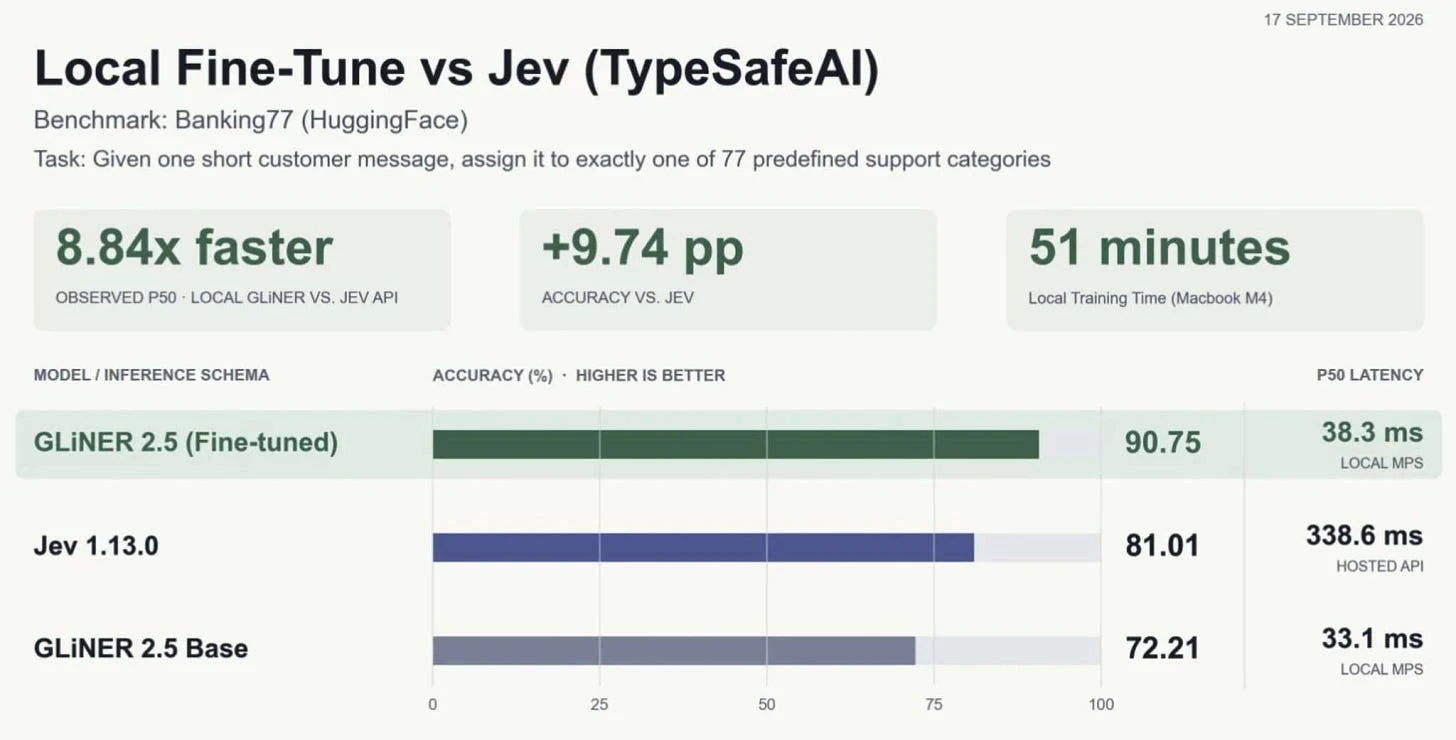
⚖️ Jev benchmarked against open-weight encoders – On banking77 intent routing, Jev hit 0.782 macro-F1 versus 0.712 for ModernBERT-large and auto-handled 67.5% of traffic at 90% precision, double the encoder. It lost on calibration, with a worse ECE and zero probability on the correct label 6.6% of the time.
🧩 GLiNER2 offers open schema-based extraction – An open and possibly more accurate alternative to Jev: the Fastino encoder family handled entities, classification, records, relations and span attributes from one schema in a single pass, on CPU, with models from 74M to 340M parameters plus PII checkpoints.
- Community take w/ Clement Poiret (Rhizome Labs): “GLiNER Multitask is from 2024 and GLiNER2 was published in November 2025. But it’s cool to see people popularize such an approach. It makes so much more sense than using generative models for these use cases, and it’s way more practical than training a head over BERT or DeBERTa-style encoders.”
📝 Cua open-sources CUA-S1-FORMS decision model – One of the first Jev-inspired models: Cua borrowed the System One idea for a 706K-parameter, 2.8 MB model that scored form-filling options in one forward pass instead of generating text. Its card claimed 99.95% on synthetic tests and 100% on 196 real decisions, though the task is narrow and the checkpoint skipped RLCD calibration.
🌳 PrismML ships Ternary Bonsai 2 27B – Built on Qwen3.8 27B, the Apache 2.0 model used ternary weights at 1.76 effective bits to fit in 5.9 GB, nine times smaller than full precision while keeping 98.2% of aggregate benchmark scores, with gains concentrated in agentic coding and tool use. Up to 143 token/s on an RTX 5090.
- Community take w/ Amine Saboni (Plumber): “Performance is similar on our internal benchmark, a specific set of coding tasks, compared to Qwen 3.8 in 8 bits. That is pretty impressive, as the model size shrinks from 30 GB to 9 GB in GPU memory. I would have expected a much slower throughput.”
🏗️ Real-SWE benchmarks agents on production code – Specific Labs scored eight model and harness setups on ten tasks from licensed private codebases covering billing, taxes and customer migrations. Fable 5.1 with Claude Code led at 38.8%, GPT-6 Astra followed at 33.8%, and the median task touched 11 files.
-
The dominant failure modes were missed requirements, building on unverified assumptions about the workspace, and integration errors where the right idea was wired incorrectly.
-
Rollouts under ten minutes failed 71.4% of the time, almost identical to the 73.4% failure rate of longer runs, so more time did not buy correctness.
-
Six of ten tasks sat below 15% resolution, with tax jurisdiction and analytics stream reducer tasks near zero, and scores reflected model plus harness rather than models alone.
🍎 Qwen-2.5-1B-RLCD open-sourced on Apple Silicon – A developer answered TypeSafe’s two years of stealth with a two-hour build: parallel constrained decoding over an MLX cache that scored every schema field at once. On an M4 Max it cut latency 5.6 to 7x, a 28-field triage case dropping from 1,900 ms to 270 ms.
🔁 Looped flows hit 58.8% on ARC-AGI-1 – The paper trained recurrent models with local denoising objectives at decreasing noise levels instead of backpropagating through many updates, then ran inference as integrating a probability flow. Finer time grids bought more compute, and ARC-AGI-2 landed at 12.2%.
Programming
🏭 HumanLayer on why software factories fail – The essay argued that unattended agent loops with tests and automated review shifted the bottleneck to code review and maintenance, since models are rewarded for bounded tasks, not design. Its fix: humans own product, architecture and program design, agents ship vertical slices.
Robotic, World AI
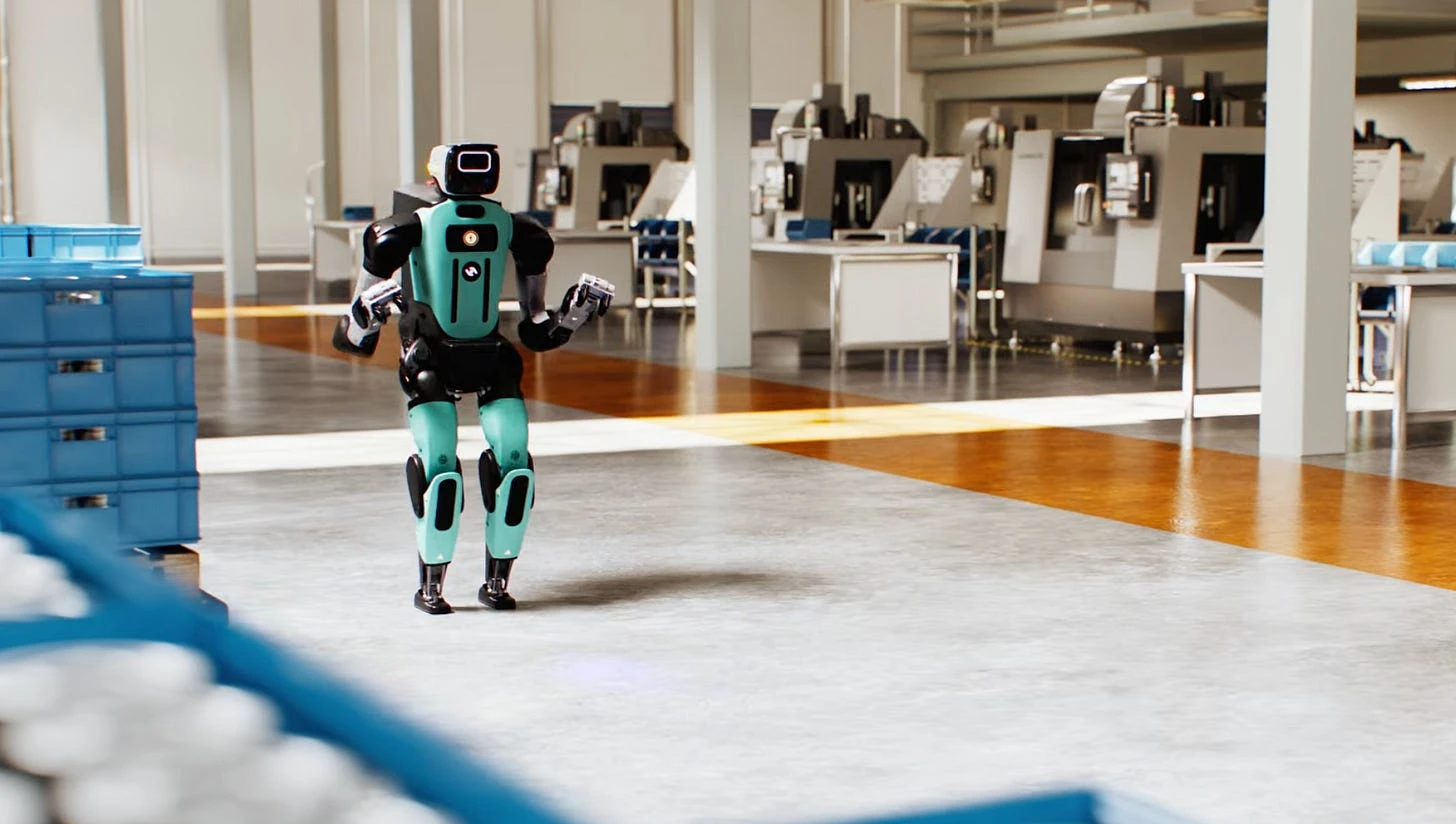
🤖 Agility Robotics previews Digit 5 humanoid – The fifth-generation humanoid targeted cooperative work next to people without safety cages, with preliminary specs of a 23 kg payload, 2.2 m reach, a 10:1 run-to-charge ratio and swappable grippers, trained on 65,000 hours of operational data.
- Community take w/ Arnaud Thiercelin: “Special attention to leg and arm motions, gripper choices and the hint at a wheeled base.”
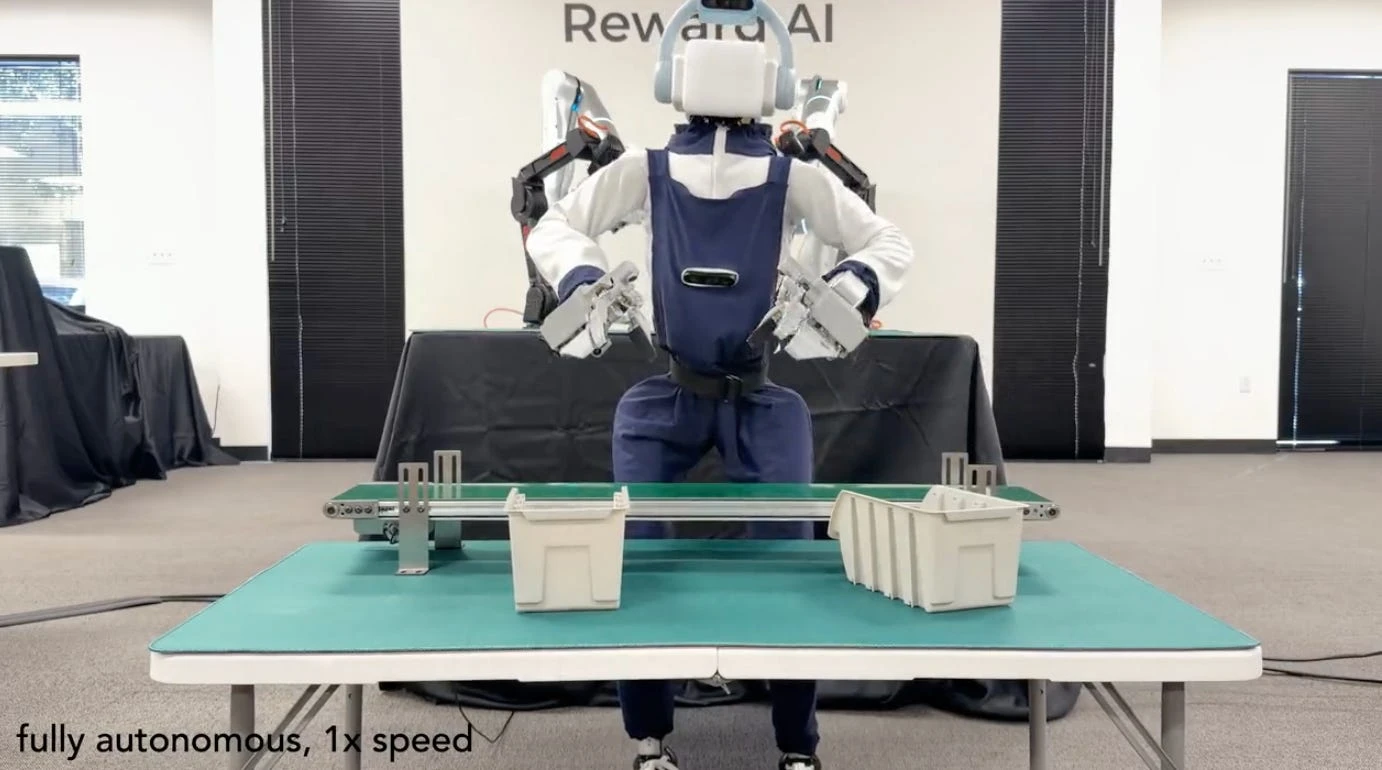
🖐️ Reward AI learns OM-1 from humans – The manipulation policy learned from people wearing a seven-degree-of-freedom Omnibody Hand, with no teleoperation or on-robot data, and ran on arms and humanoids at human speed. New tasks reportedly needed under 30 minutes of demos.
Other topics
📐 PC-ALM makes predictive coding match backprop – A Lagrange multiplier per layer that accumulated prediction errors let local-learning networks recover exact backprop gradients in the linear case and match BP up to depth 128, where plain predictive coding collapses. The weight-transport problem stayed unsolved.
TTY Lunches
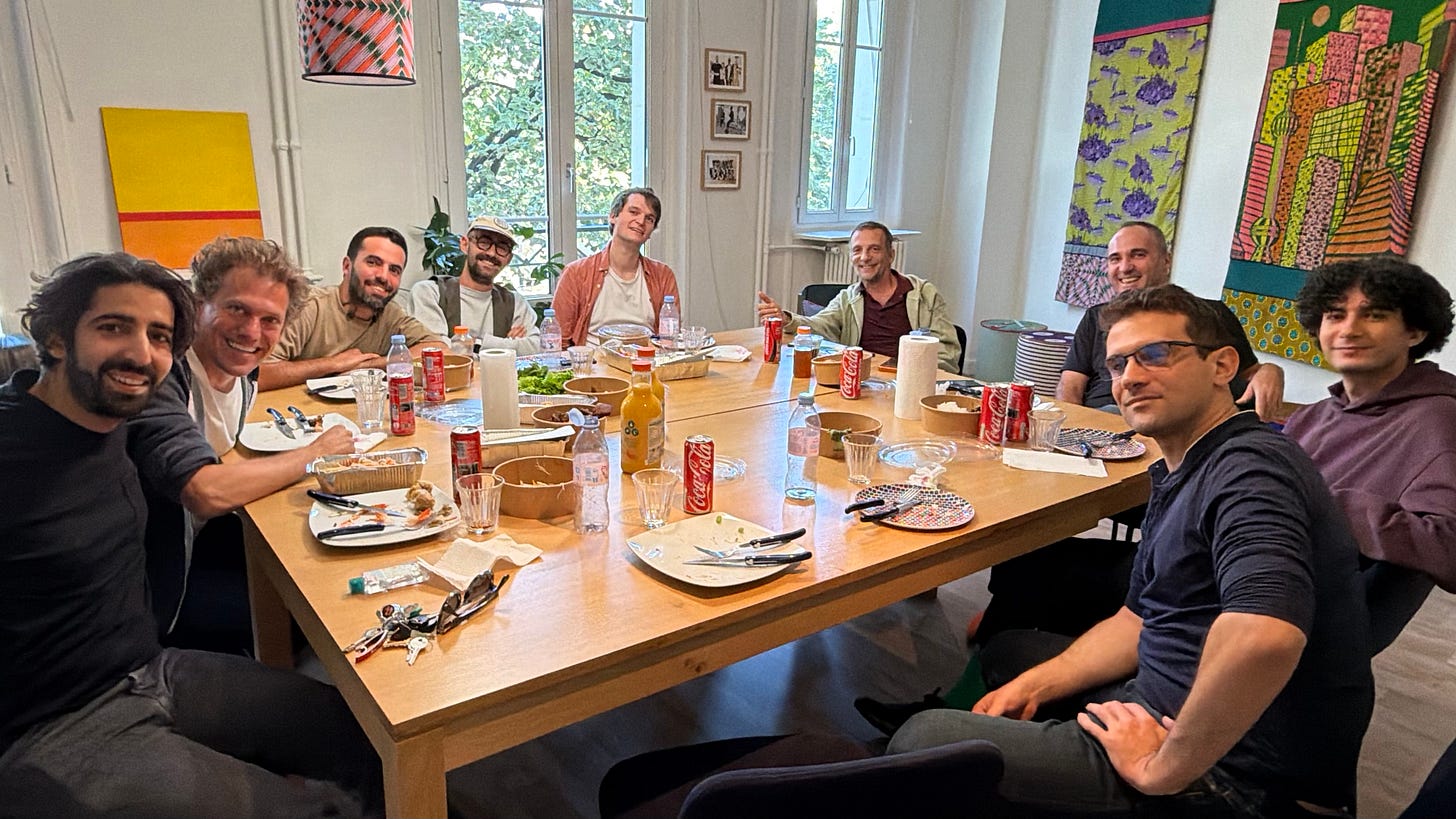
Last week’s lineup included our special guest Mathieu Kassovitz, who joined us to share his take on generative AI and what it means for his craft as a director. Around the table with him were Charles Sonigo @ Alpic (cloud platform for MCP-based AI apps), Gabriel Olympie @ 2501.ai (enterprise-grade AIOps), Hugo Venturini @ SkipLabs (revolutionizing cache invalidation), Ihab Bendidi @ Recursion (AI drug discovery), Jules Belveze @ H Company (computer-use agents), Neil Zeghidour @ Gradium (real-world voice models), Philippe Langlois @ P1 Security (securing critical mobile infrastructure), and Pierre Manceron @ Raidium (universal AI for radiology).
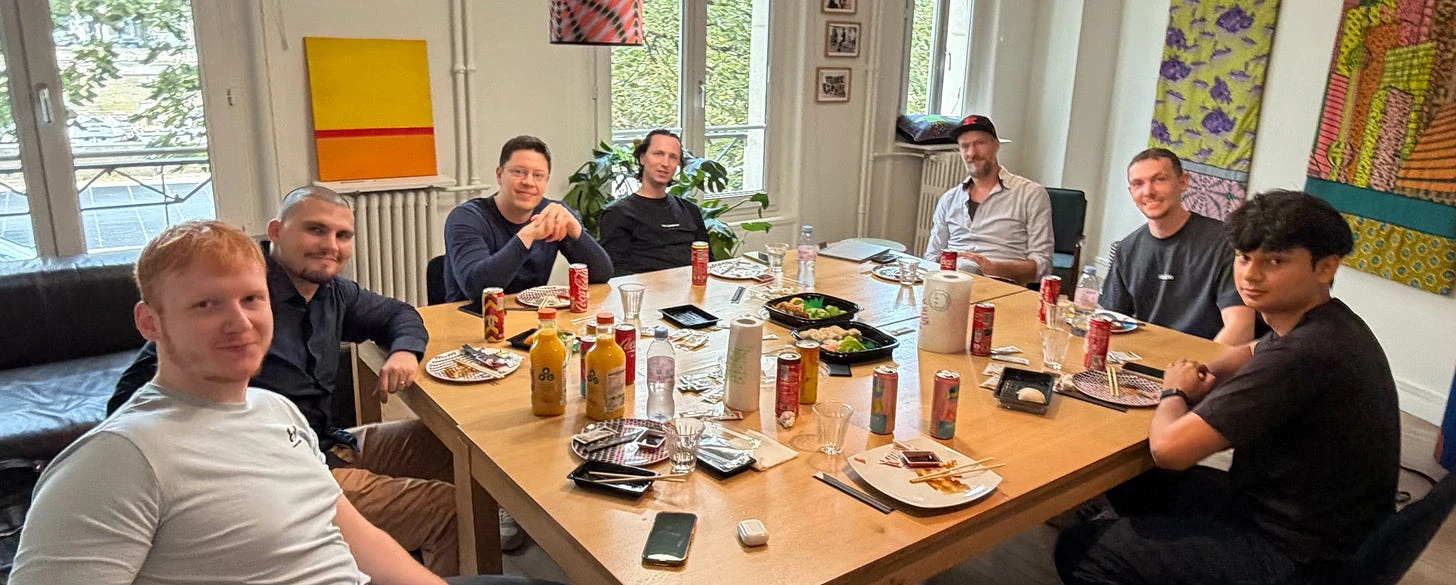
And this week’s lineup included Alex Zhuk @ 2501.ai (enterprise grade AIOps), Alvaro Lamarche Toloza @ Mago (AI film studio on every laptop), Hugo Le Belzic, Mehdi Si-mohammed @ Pruna AI (performance models), Mehdi Merabet @ Wazza (AI production partner for studios), Julien Millet, and Yannick Utard @ Altertable (AI-native data lakehouse).
Contributors This Week
Gabriel Olympie, Amine Saboni, Félix Raimundo, Clement Poiret, Quentin Dubois, Pierre Chapuis, Arnaud Thiercelin, Christophe Lesur, Glenn Sonna, Justin Halsall, Kemal Toprak Uçar, Tejas Chopra, Ashley van Heteren, Etienne Balit, Ihab Bendidi, Julien Duquesne, Julien Seveno-Piltant, Louis Abraham, Noé Charmet, Robert Hommes, Victoire Cachoux