

Events
🏅 Servier AI health challenge – Servier and the Paris Region opened a 500k euro AI for Health Challenge around a rare colorectal cancer dataset: 151 patients with single-cell RNA-seq and whole-exome sequencing, 650k plus cells spanning primary tumors and liver metastases. Applications are due September 14, 2026.
Biotech, Health, and Chemistry
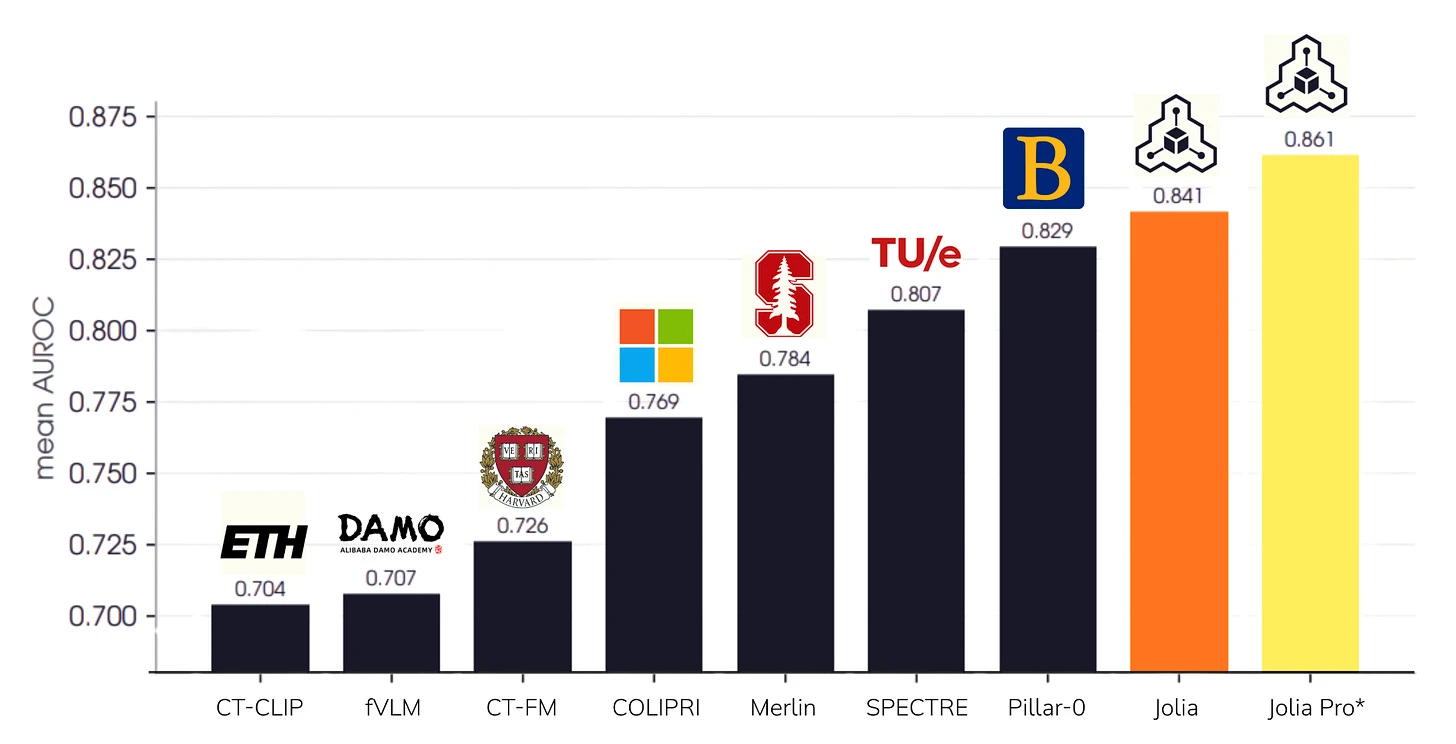
🩻 Jolia Pro proves bigger isn’t better – This AI reads CT scans and describes them in a radiologist’s words. The new version is nearly four times larger and trained on more real hospital scans, mostly abdominal. Accuracy rose modestly, with almost all the gain in the abdomen and chest reading unchanged.
-
Simply making the model bigger backfired until the training settings were re-tuned for the larger size.
-
The biggest win came from balancing chest and abdomen scans, since one lopsided dataset was drowning out abdomen examples.
-
Instead of treating a report as one block of text, it links each part of the scan to the words describing that organ.
🧬 EDEN scales metagenomic foundation models – A family of metagenomic foundation models scaled to 28 billion parameters on 9.7 trillion nucleotide tokens found that Transformers outscale Mamba and Hyena on dense biology, holding semantic fidelity where linear-time models drift past their training window.
Image, Video & 3D
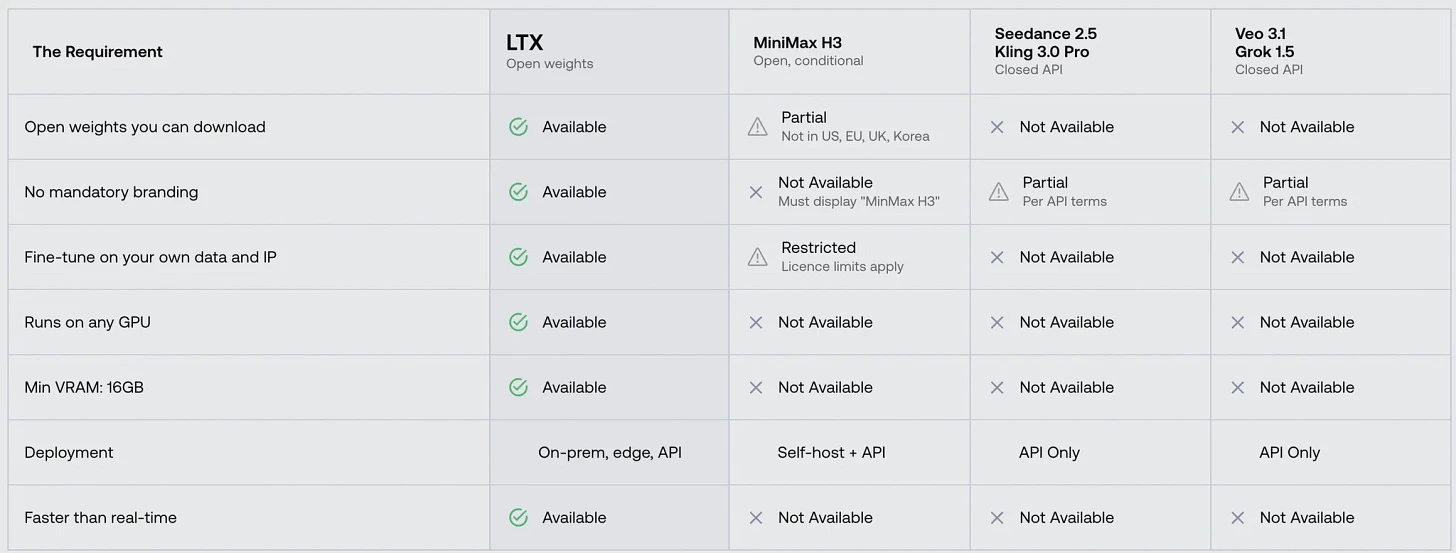
🎬 LTX-2.5 ships open video weights – An open video generation model shipped downloadable weights with native multi-shot scenes, 4K HDR, and a new rendering trick that spends more compute on the complex parts of a shot. It runs on any 16GB GPU and stays free to fine-tune under 10M dollars in revenue.
-
It renders a 10-second clip in under 7 seconds on-prem, where closed rivals take 50 to 400 seconds.
-
Weights download with no forced branding and can be fine-tuned on your own footage and characters.
-
A community library already adds LoRAs for face swap, green screen, and drone-style FPV motion.
🌍 Tencent WorldClaw builds 3D worlds – An agentic framework turned open-ended text prompts into large, explorable 3D worlds. Planning agents draft terrain and assets, then a coarse-to-fine pipeline holds global coherence while producing editable, instance-level meshes ready for game engines and animation.
⚡ MiniMax LoRA speeds video sampling – Four days after weights went public, the community shipped a distillation LoRA that cut video sampling from 20 steps to four to eight, roughly five times faster generation. The lab highlighted it as proof of why open releases pay off.
🖼️ Grok Imagine Image 2.0 arrives – A precise image generation and editing model with region-level magic-wand edits, segmentation, background removal, and up to five reference images per generation. It ranked second on Arena for both text-to-image and editing, although some noticed the renders still look too AI-ish.

🕺 Wan-Animate-2 drives character animation – An end-to-end framework fed driving videos straight into a redesigned Diffusion Transformer, dropping motion extractors for high-fidelity results and strong identity preservation. A Lite variant reached real-time streaming, with weights under Apache 2.0.
Cyber
🔓 Anthropic, OpenAI reasoning traces leak – Encrypted chain-of-thought blocks returned by frontier APIs turned out to be interchangeable across a provider’s models. Injecting a strong model’s trace into a weaker sibling forced it to decode the reasoning verbatim, no jailbreak of the flagship required.
-
The trick circumvented anti-distillation defenses across Anthropic, OpenAI, and Google.
-
Decoding 315,320 public reasoning blocks recovered 367 PII artifacts and 182 credentials!
-
Attackers could also hide prompt injections entirely inside the encrypted blocks.
Language Models
🐋 Qwen3.8 2.4T flagship ships open – The flagship open Qwen brought Qwen-Max-class capability to open weights, with 2.4T total parameters and 95B active, a hybrid DeltaNet-and-attention stack, 512 experts, and 262K native context extensible past a million tokens. Strong on coding and agentic benchmarks.
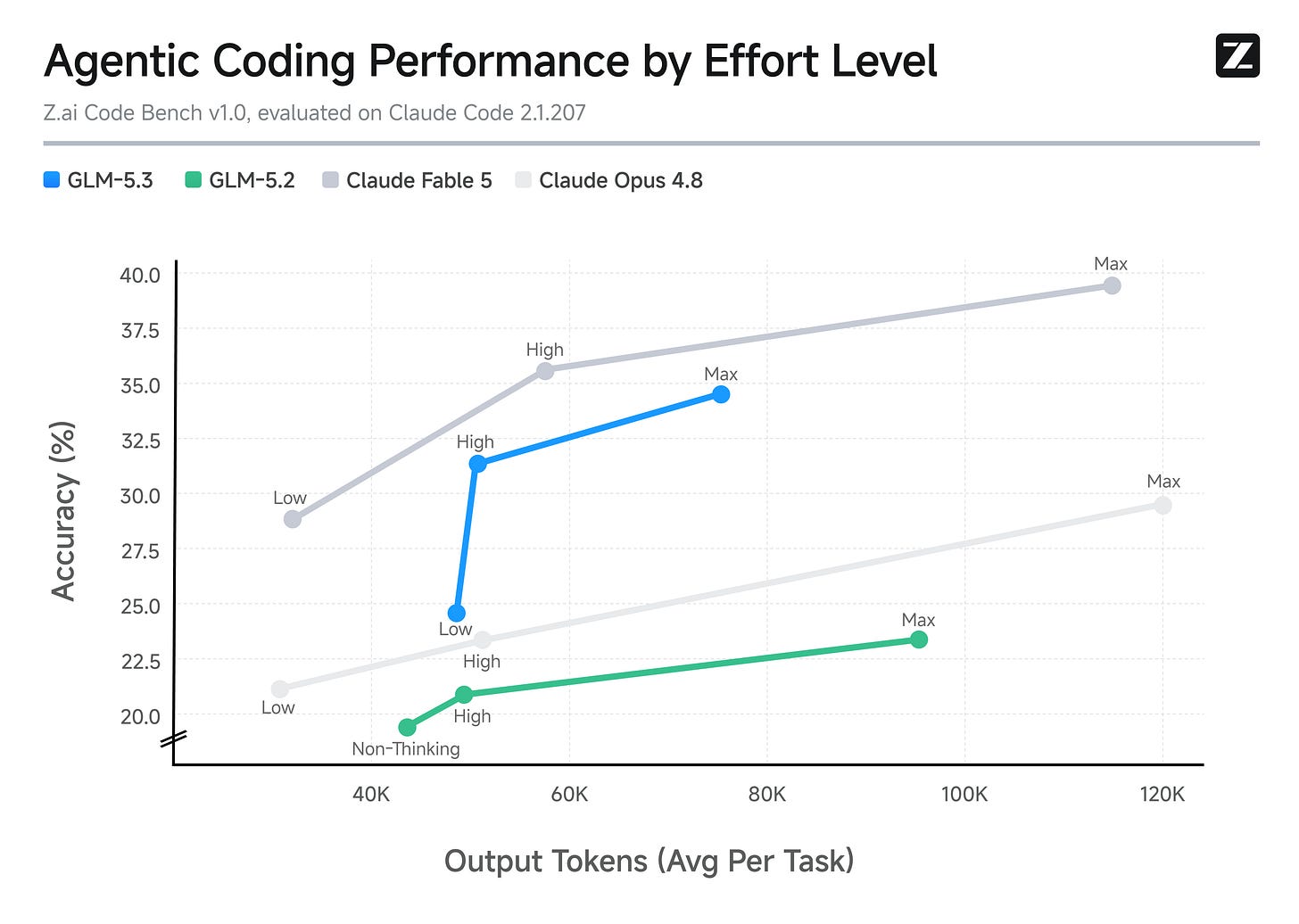
💻 GLM-5.3 targets coding and cyber – Pure post-training scaling on a 743B base pushed open coding to a new state of the art, roughly doubling the prior model on exploitation tasks. Emergent cyber skills surprised the team, flagging 2,436 real vulnerabilities across 269 projects in testing.
🖥️ Meta Muse Glimmer runs locally – A 30 billion parameter open agentic model from Meta Superintelligence Labs, tuned for always-on local workflows on a single consumer GPU. Quantization squeezes it under 20GB, and it ships a speculative-decoding drafter for real-time tool use and coding offline.
- Community take w/ Gabriel Olympie: “Early feedback places it slightly behind Qwen3.6 27B, which is a power beast, and with Qwen3.8 27B landing soon it may not stay competitive for long.” (indeed:)
👁️ Qwen3.8-27B rivals Opus locally – A 27 billion parameter open model with native image and video understanding, tuned for coding and long-horizon agents. Apache 2.0, with 262K context extensible to a million tokens and benchmark scores placing it near much larger frontier systems.
⚡ Gemini 3.7 Flash speeds coding – Google’s workhorse model returned three weeks after 3.6 Flash with sharp coding and web-dev gains, higher first-pass accuracy, and stronger document reasoning. It launched at half the prior price, 0.75 and 3.75 dollars per million input and output tokens.
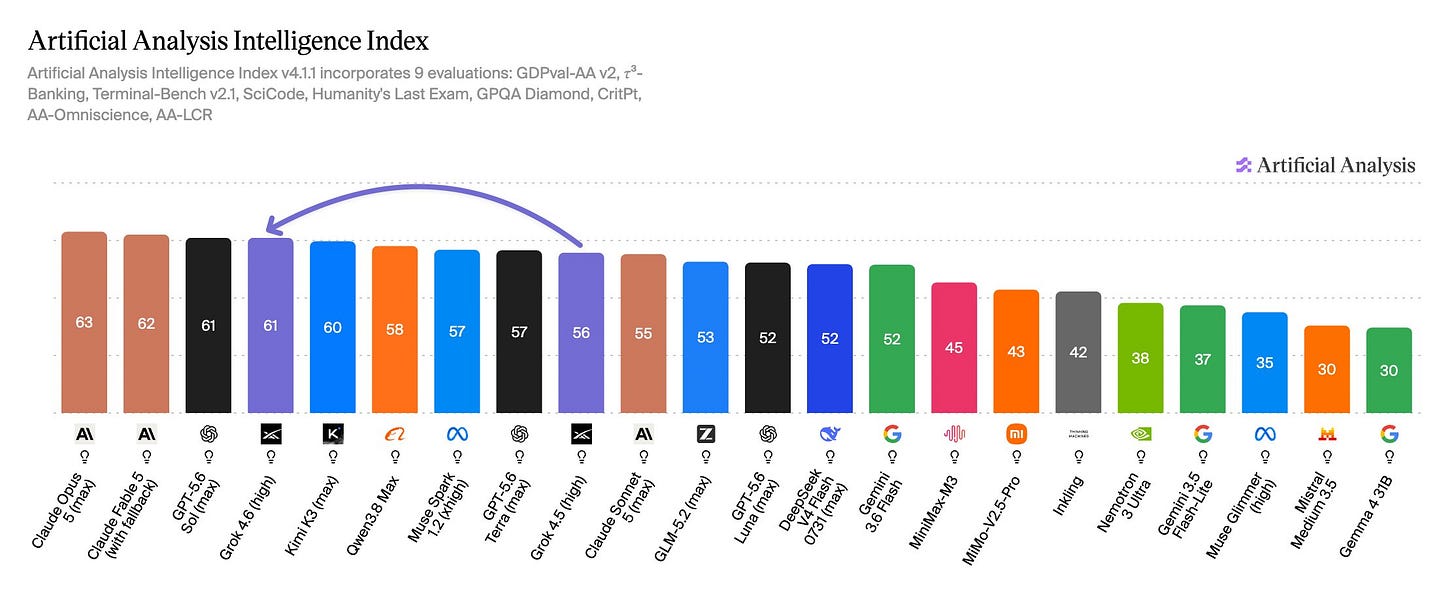
🐽 Grok 4.6 rejoins AI frontier – A benchmark roundup put Grok 4.6 at 61 on the Artificial Analysis Intelligence Index, level with GPT-5.6 Sol and just behind the Claude frontier. It gained five points in a month, with strong agentic scores and pricing roughly 60 percent below Opus.
💧 Anthropic watermarks Claude text output – Anthropic will watermark text and files from its models to meet the EU AI Act transparency code that took effect August 2. The mark is applied at the model level and travels through copy-paste, though how much editing removes it stays unclear.
🏎️ NVIDIA Nemotron Lightning targets agents – NVIDIA extended its Nemotron 3 family with a 30 billion parameter mixture-of-experts model built for high-volume agents, claiming up to four times faster output and 30 percent quicker task completion. It runs from RTX PCs and Jetson edge devices to the cloud.
MLOps
🔀 NVIDIA NeMo Switchyard routes agents – An open routing library sent each agent step to the best-fit model using tuning-free and learned routers that weigh capability, cost, and latency. NVIDIA reported frontier-level accuracy at close to a third of the cost of running Opus alone.
Robotic, World AI
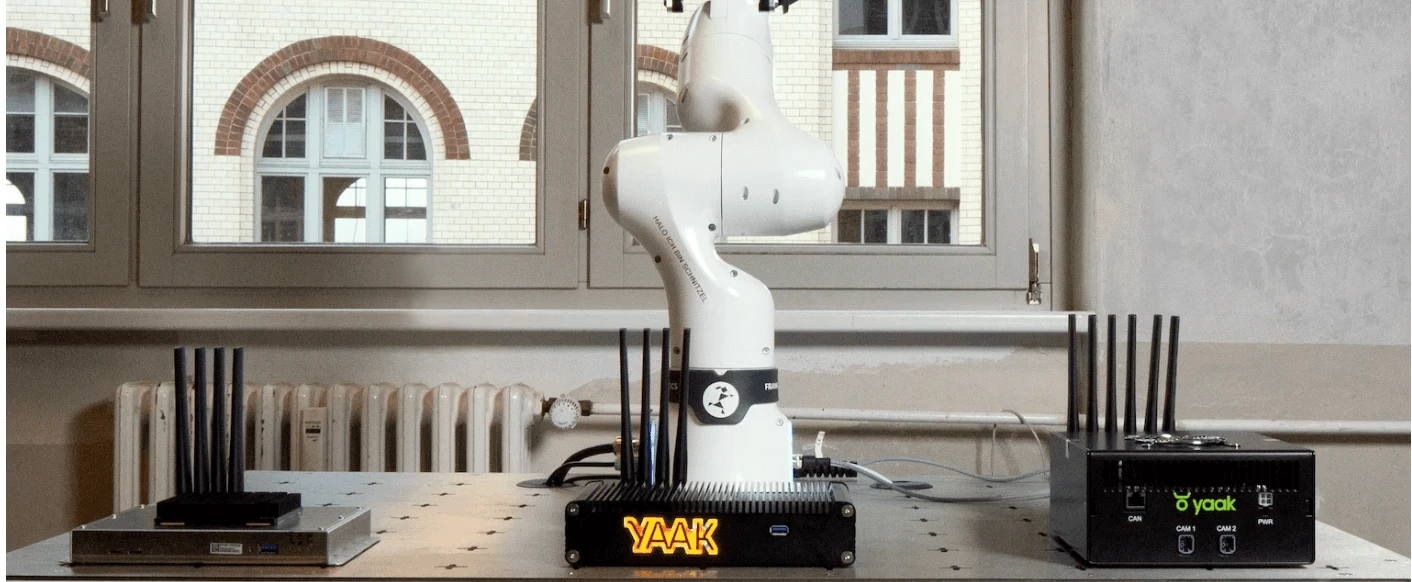
🤖 Yaak builds full physical AI stack – Two releases sketched an end-to-end physical AI stack. A hardware kit pairs onto any asset in hours, learns from daily operation, then redeploys a small on-edge model so the asset joins the fleet autonomously. A companion piece paired the kit with Copper, an open Rust robot OS, arguing the moat is the whole stack, not the model. Also: Physical AI OS: copper-rs.
-
An efficient on-edge model, rmind zero, runs the control loop with no real-time cloud dependency.
-
Copper is a deterministic, replayable Rust runtime, with Yaak claiming 100x better latency and 10x logging throughput.
-
The kit already gathers petabyte-scale expert driving data from class B vehicles, feeding the L2D open dataset.
New member
🇨🇦 Jeremy Ringard – CIO @ Tardigrade Animation · An animation studio producing feature films. An INRIA Human-Computer Interaction alumnus and self-taught artist, 15 years in the movie industry, with a chapter building AI workflows at Amazon before returning to films. Back into skateboarding thanks to his son. Special power: I have a weird obsession with learning useless skills. Most recently I started building a trebuchet in my backyard because, well, I do not know yet, but if you can find me a valid casus belli I would be happy to start a siege. 📍 Montreal, Canada
Contributors This Week
Gabriel Olympie, Pierre Chapuis, Pierre Manceron, Quentin Dubois, Harsimrat Singh Sandhawalia, Akpeli Nordor, Glenn Sonna, Ashley van Heteren, Christophe Lesur, Jeremy Ringard, Jules Pondard, Nancy Wang