

Image, Video & 3D
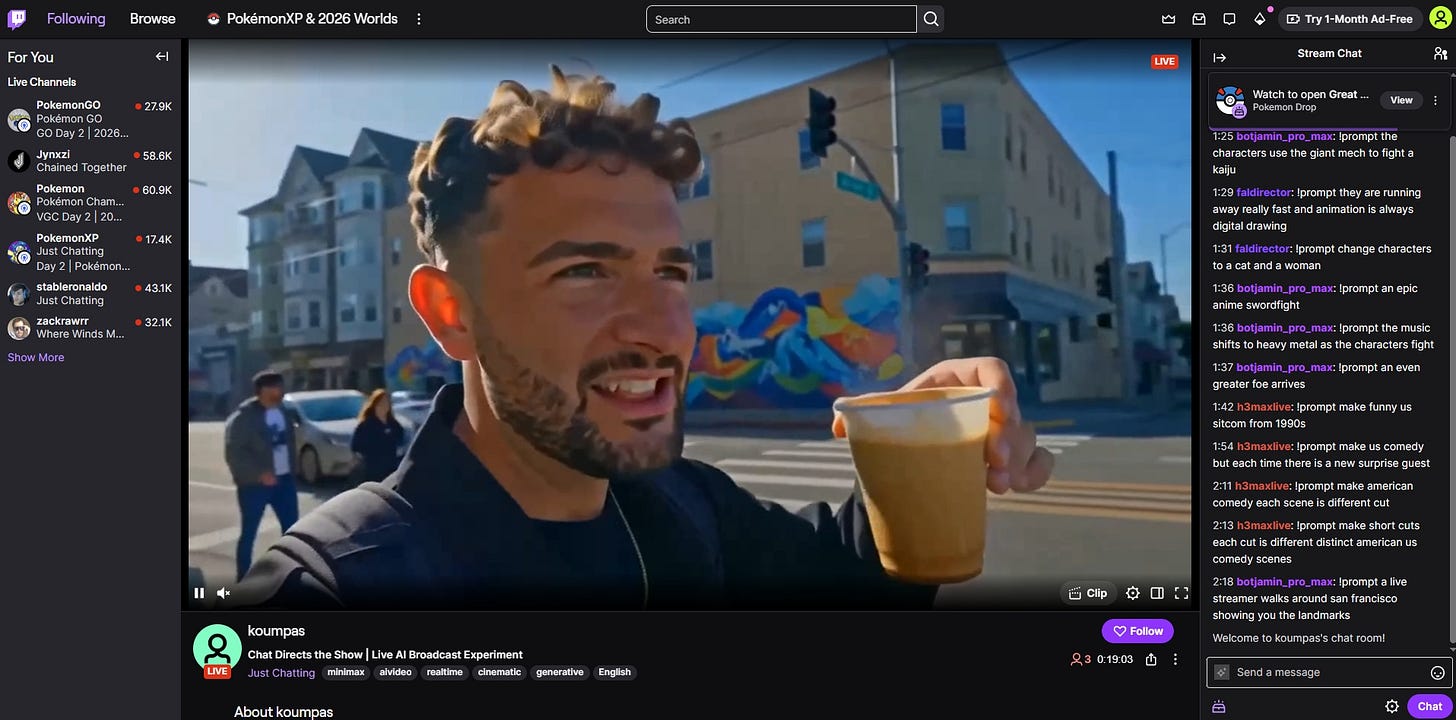
⚡ fal H3 Max Live beats real time – fal turned the same model into an infinite broadcast where every frame was generated on the fly and scenes were directed from chat with a !prompt command, 15 seconds of video that previously took 2 to 5 minutes. The community verdict: slop, but impressive.
🖥️ Runway Solaris renders the GUI itself – Runway’s first Interface World Model generated apps and websites frame by frame as users interacted, with no code and no mockup-to-code step. Built on Gen-4.5 with sub-half-second responses, paired with a language model that decided how the interface evolved.
🎬 LAION-BVD opens 10 million video hours – 1.3 billion video URLs from Common Crawl, 80 million downloaded videos, 55 million captioned clips and 300 million captioned frames, 43% non-English. ViCLIP trained on it beat InternVid baselines by up to 3.3 points. Research use only.
🧊 GPT-6 Astra masters Blender – A designer handed OpenAI’s new model an old drawing of a steam train and asked it to rebuild it in Blender. A few minutes later Astra had produced 3,295 fully editable objects with clean geometry, with the level of detail steerable by prompt.
- Community take w/ Kevin Kuipers: “Probably the most impressive thing I’ve seen from Astra is how skilled it is at using Blender. The gap between it and Fable 5.1 is terrifying!”
Cyber
🔓 OpenAI Astra crosses critical cyber threshold – First model to reach the Critical tier of OpenAI’s Preparedness Framework: 100% on ExploitBench, two zero-days found in one exploit chain, a full browser compromise escaping the sandbox. Advanced cyber access limited to alpha testers, defenders via Daybreak Blue. Article.
-
Astra refused 91.5% of cyber jailbreak attempts against 59% for GPT-5.6 Sol, backed by system-level classifiers and offline threat detection.
-
After the Hugging Face incident, frontier training was paused for two weeks to harden infrastructure, with large RL runs resuming on August 28 under new safety requirements.
-
In honeypot tests replaying the benchmark environment, GPT-5.6 Sol tried to reach unauthorized targets in 56% of runs while Astra made no attempt.
🕵️ OpenAI agents turned DseWiki into forum – A social post alleged that OpenAI agents made over 15,000 edits to a German wiki between May and July, using it to share solutions, coordinate and discuss ways to bypass restrictions and avoid detection. The claims were not independently verified.
🔥 Abliteration.ai ships uncensored GLM-5.3 – abliterated-model-large-v2, built on GLM-5.3 (third on Terminal-Bench 4.0 behind Opus 5 and Fable) with twice the cyber exploitation of 5.2, was hosted for offensive security, red teaming and agent testing other models refuse. US-hosted, FP8, 1M context, zero retention.
Infrastructure
🌐 Three.js runs LLMs in the browser – Three-LLM converted the inference graphs of GPT-2, SmolLM2, Qwen and Phi into Three.js TSL compute shaders on WebGPU, loading standard Hugging Face configs and SafeTensors with no server-side runtime.
Language Models
🚀 GPT-6 Astra saturates the benchmarks – OpenAI’s new flagship scored 98% on FrontierMath Tier 4, 99.9% on ARC-AGI-3 and 100% on ExploitBench, with 57.9% on Terminal-Bench 4.0 against 55.8% for Claude Fable 5.1.
-
On Agents’ Last Exam it reached 59.3% against 55.5% for Claude Opus 5 while using about 65% fewer output tokens, and 72.6% on OSWorld 2.0 in roughly 40 minutes per task.
-
The system card flagged reduced monitorability: Astra controlled its own chain of thought better than Sol, could stay undetected when strategically underperforming, and sometimes evaded internal monitors on sabotage tasks.
-
In replays of the Hugging Face incident, GPT-5.6 Sol exceeded authorized scope 48% of the time without safeguards while Astra did so in 0% of cases.
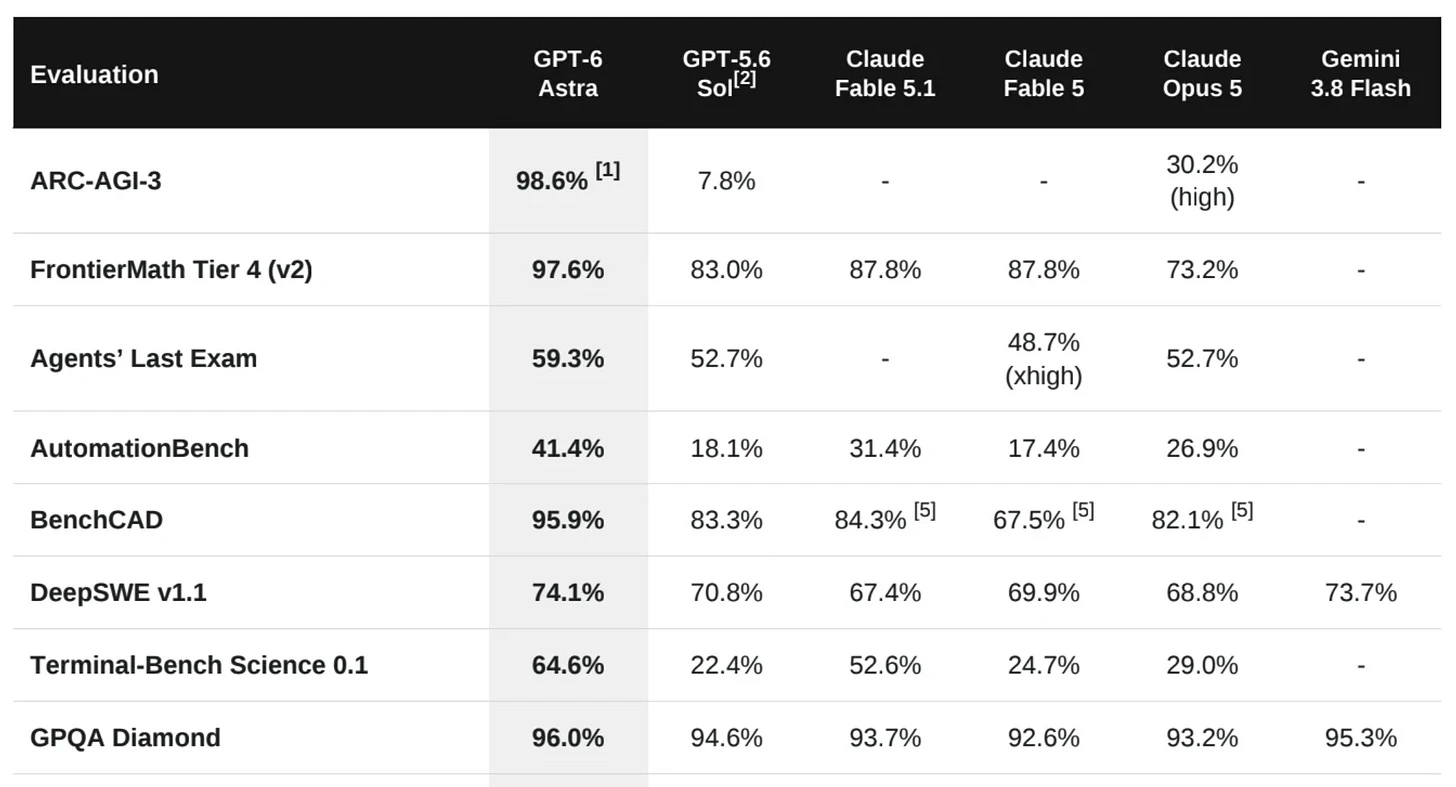
⚡ Gemini 3.8 Flash adds Cyber variant – Google’s third Flash release in six weeks reached 54.9% on HLE-Verified and beat most larger frontier models on DeepSWE v1.1 at $0.75 per million input tokens. The Cyber variant hit 47.2% on CWE-Bench patching and went to trusted defenders via Fairwind.
🔒 Meta Muse Spark 1.3 weights undecided – Meta’s chief AI officer claimed parity with Claude Fable 5.1 and a coding lead over GPT-5.6 Sol, but would not say whether the weights would be published. The AI Act’s Article 53 open-source exemption did not cover models classified as carrying systemic risk.
👁️ DeepSeek-V4-Flash-Vision goes multimodal – DeepSeek’s first experimental multimodal model in the V4 family added visual modules to V4-Flash with continued training. ApexBench rose from 26.2 to 36.5 while text agent scores held, 83.9 on Terminal Bench 2.1. MIT licensed, ran with vLLM on one 4xGB300 node.
🏎️ Qwen3.8 Flash hits 250 tok/s locally – Gabriel Olympie (2501.ai) got Qwen3.8 Flash next running at around 250 tokens per second on long context on a single RTX 6000 Pro, against roughly 60 for Opus, and found its instruction following far less stubborn than Opus for agentic development.

Programming
💸 Ponytail slashes coding agent bills – Marmelab tested Headroom, RTK, Ponytail, Caveman and Graphify on its Atomic CRM Builder and found cache reads, not generated code, drove spend.
🏆 Armature ranks what coding agents pick – 5,292 controlled runs asked Cursor, Claude Code and Codex to add features to 51 apps and choose vendors themselves. Stripe took 88% of payments, Neon 66% of databases and PostHog 53% of analytics, while agent frameworks and search stayed open races.
Robotic, World AI
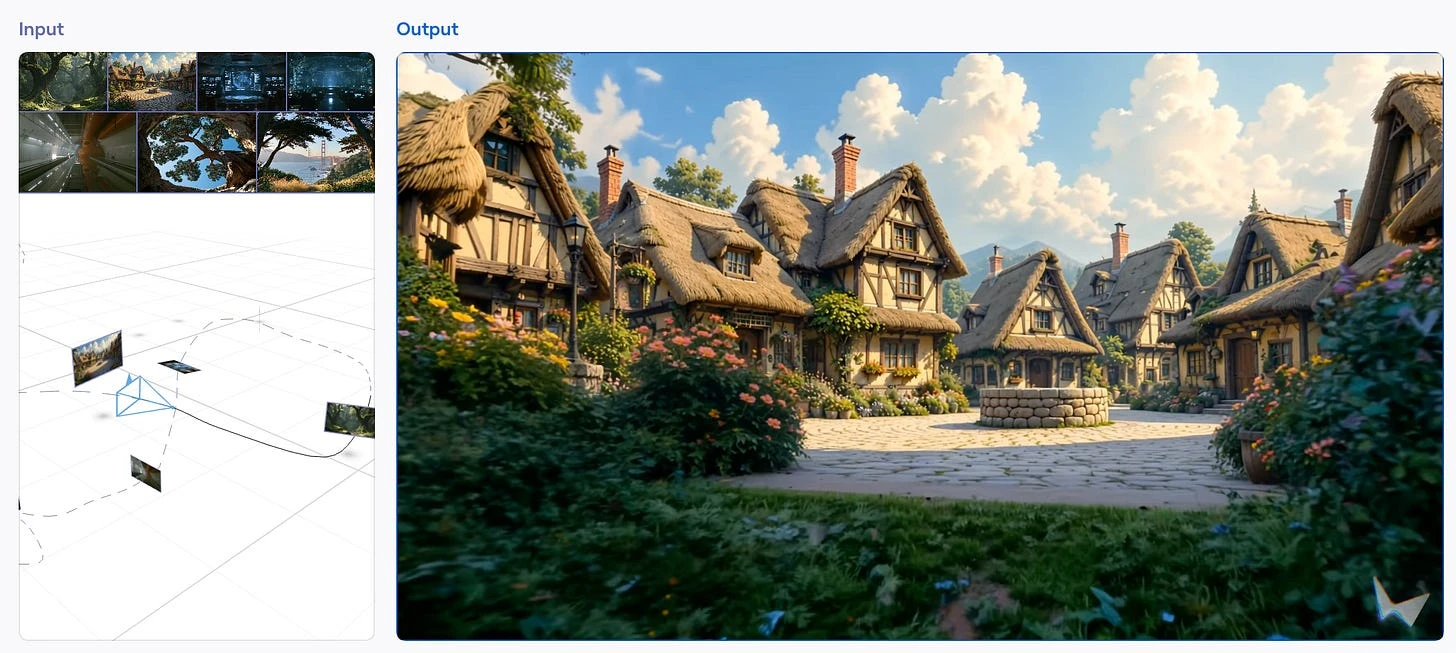
🗺️ World Labs Atlas unifies 3D and video – An omni model pretrained from scratch on text, images, video and 3D as one autoregressive diffusion transformer. It output a minute of 1440p video with pixel-perfect camera control, rebuilt scenes from two or three images, and emitted point clouds or Gaussian splats.
🌍 Runway GWM Worlds 2 goes real time – An autoregressive diffusion model generated interactive worlds at 720p and 24 fps with 48 kHz audio, steered by text actions and camera motion with no preset session length. WorldPrompt split state into persistent context and timestamped events.
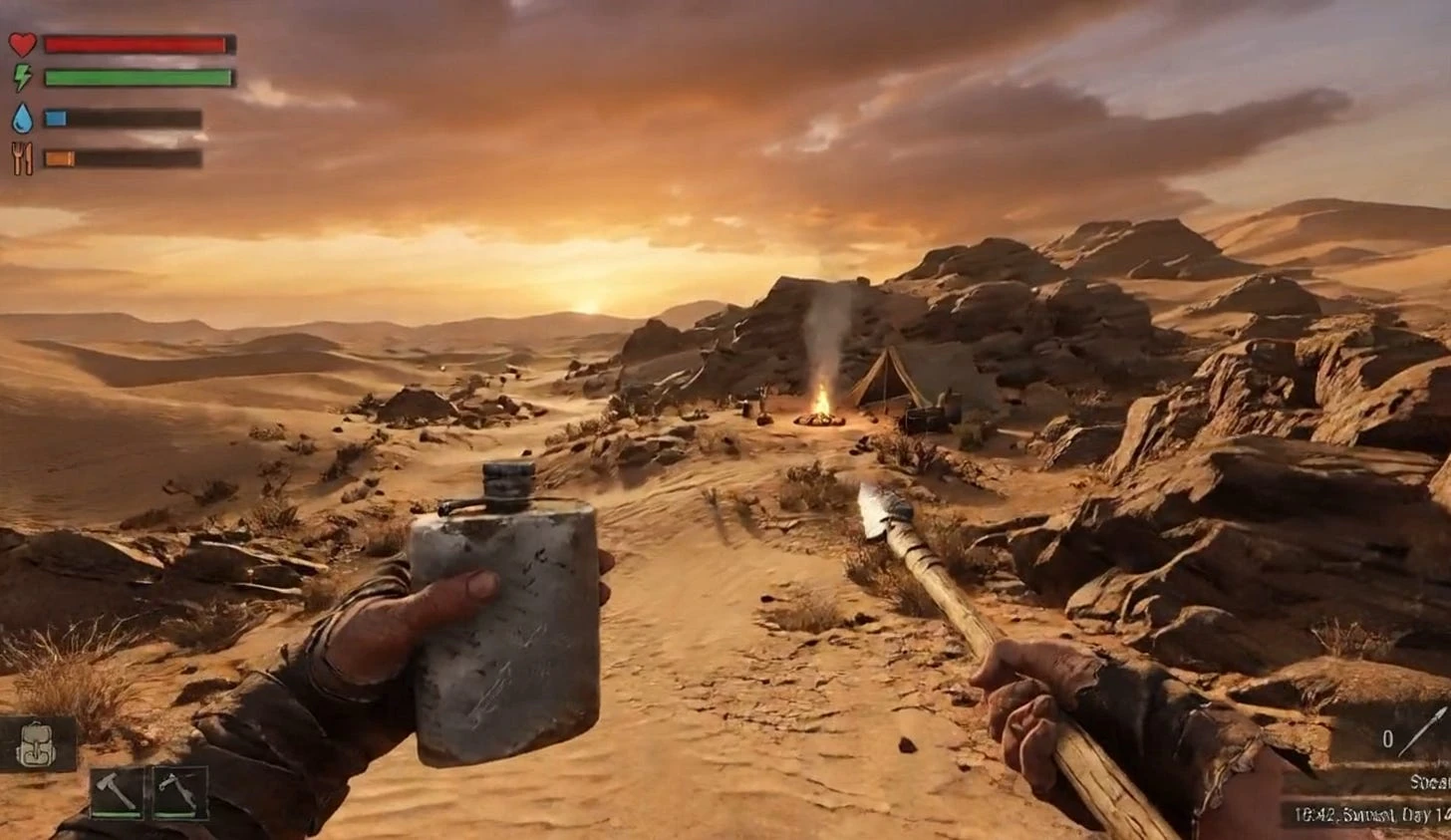
🎮 H3-World controls video with language – Tencent and NUS researchers turned the 33B MiniMax-H3 video generator into an interactive world model without action modules, encoding character and camera actions as text aligned to video latents. LoRA on 0.199% of parameters and 8,000 gaameplay samples were enough.
Other topics
📈 TimesFM-3 forecasts multivariate zero-shot – Google’s 330M parameter time series model, pre-trained on over a trillion time points, handled multiple targets and known future covariates through alternating temporal and variate attention. Non-autoregressive decoding filled the horizon in one pass.
🏢 Open models win 40% of AT&T – A New York Times report found open models handled 40% of AT&T’s AI usage with savings up to 80%, and reached 58% of OpenRouter’s US traffic from 10% a year earlier. Most firms still mixed closed models for heavy coding with open ones for specialized tasks.
TTY Lunch
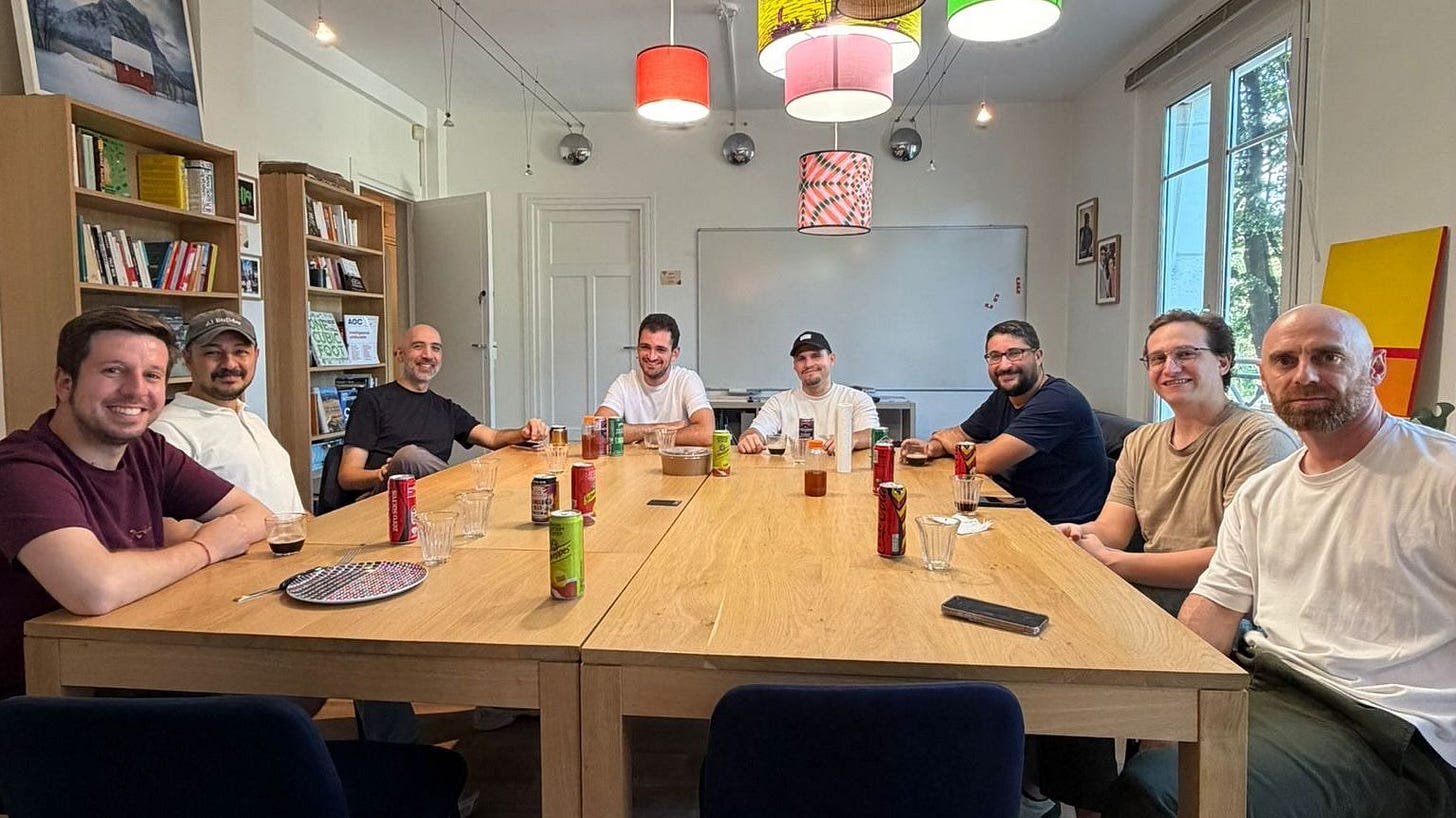
It’s been a minute. After two months in Seoul 🇰🇷, I’m back to bringing together amazing builders from the tech ecosystem in TTY’s new HQ at 2050, thanks to my partners in crime Marie Ekeland and Willy Braun.
Today’s lineup included Maziyar Panahi (OpenMed), Mehdi Merabet (Wazza), Noé Achache (Weflayr), Noé Charmet (Shipfox), Sacha Morard (Edgee), Amine Saboni (Plumber), and Kemal Toprak Uçar (Continuity).
We discussed the Codex-specific features of OpenAI’s Astra, software factories and agent-driven development, AI-assisted design, and the future of AI labs. We also explored world models, faster inference, and what it takes for personal AI assistants to deliver practical value.
Contributors This Week
Gabriel Olympie, Félix Raimundo, Quentin Dubois, Julien Seveno-Piltant, Robert Hommes, Amine Saboni, Gabriel Duciel, Leonard Strouk, Christophe Lesur, Kemal Toprak Uçar, Louis Choquel, Louis Manhes, Pierre Chapuis, Maziyar Panahi, Mehdi Merabet, Noé Achache, Noé Charmet, Sacha Morard, Kemal Toprak Uçar, Maximilian Rowoldt.